II Vessels and forms · Plate 028
Bule (teapot)
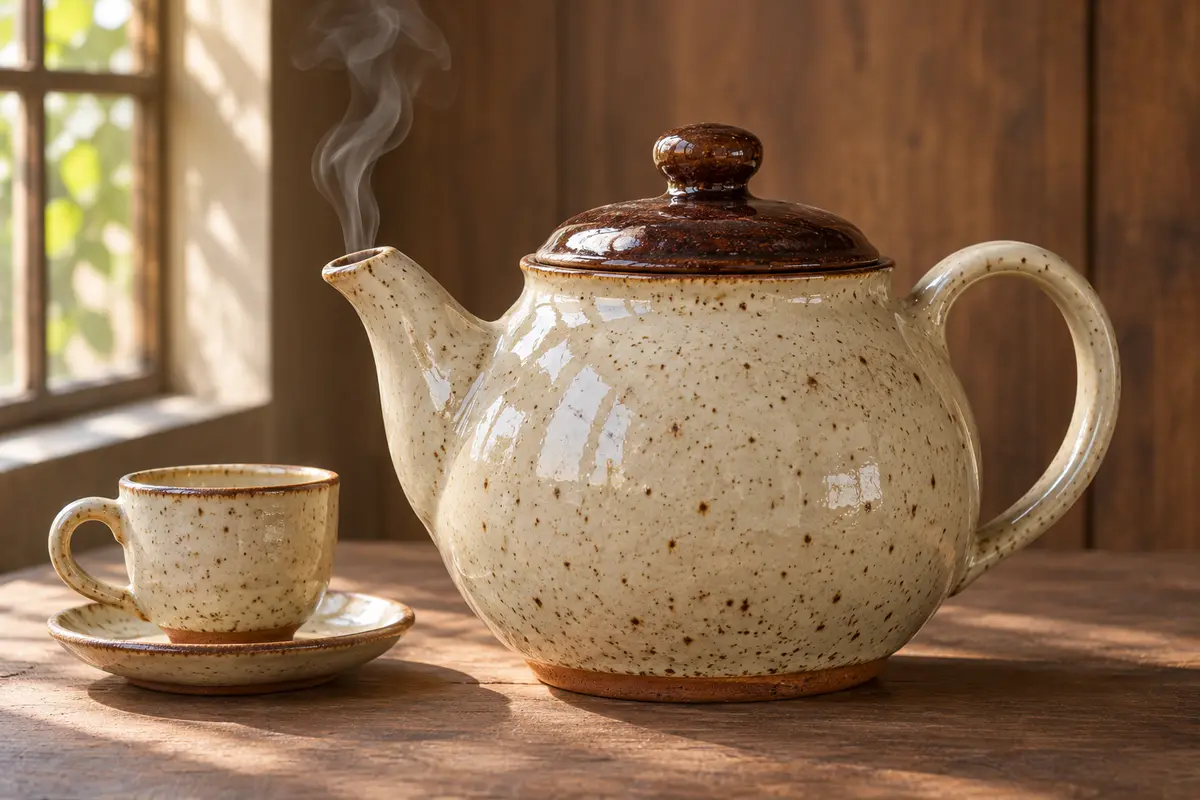
A vessel with spout, lid and handle for making and serving tea. In ceramic it is made in glazed clay, faience or porcelain.
Vessels like teapots existed in China from the Neolithic, but held water or wine. Tea preparation turned to infusion in the late Yuan dynasty, using an ewer-like vessel, and teapots were widespread by the Ming dynasty. The earliest surviving teapot made for tea is dated 1513 and attributed to Gong Chun, called the father of the Yixing teapot. Yixing ware is unglazed clay, which is said to absorb flavour from the teas brewed in it and so improve later brews. Stoneware is said to hold heat better than porcelain, while silver conducts heat so well that handles were made of wood or ivory.
In Europe, Yixing teapots that arrived with tea were called boccaro, which the English article derives from the Portuguese for 'large mouth'. The first known order for teapots 'with covers and handles' dates to 1639; Fulham Pottery in London was copying Chinese earthenware teapots by 1670. Meissen porcelain began in 1710, and Staffordshire made earthenware teapots from 1720 to 1780. Lids evolved from sitting in a recess to resting on top to deep flanges; a vent hole or loose lid lets air in as the tea is poured, and the built-in strainer in the spout was borrowed from coffeepots.
This is a general description, not confirmed to a single source.
Source: en.wikipedia.org
AI-generated illustration in the manner of the tradition, not a photograph of a specific object.