II Vessels and forms · Plate 020
Candeia (oil lamp)
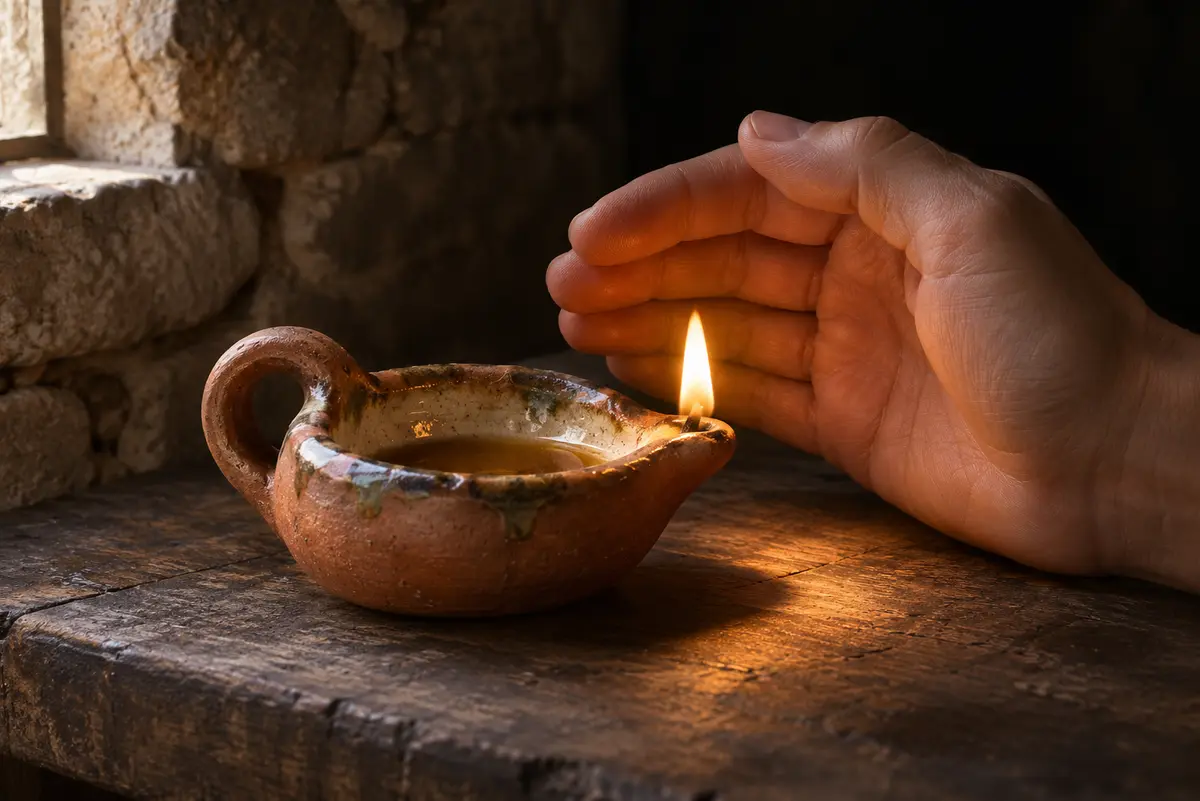
A lamp of metal or ceramic, with a fuel reservoir that feeds a wick. The dictionary notes that it was hung from a hook on the wall.
Priberam defines the candeia as a lamp of metal or ceramic with a fuel reservoir that feeds a wick, usually hung from a hook on the wall; the word can also mean the light it gives, and comes from Latin candela, taper or candle. In the plural, candeias is the Catholic feast of Candlemas, on 2 February. In Madeira, a candeia is also a candle lit for a dying person. Two sayings keep the old lamp alive: comer candeias de sebo, to go through hardship, and andar de candeias às avessas, to be at odds with someone.
Oil lamps in general work like a candle that burns liquid: a textile wick dips into the oil and draws it up as it burns. A clay lamp has a fuel chamber (a typical terracotta one held about 20 mL), a refilling hole, a nozzle for the wick and often a ring handle. Olive oil was a common fuel. The first manufactured red pottery lamps date to the Chalcolithic, about 4500-3300 BC. Roman factory lamps of the 1st to 3rd centuries AD were mass-produced in northern Italy and southern Gaul, often stamped with the maker's name, and exported across the provinces. Kerosene lamps replaced most older ones around 1850.
Source: dicionario.priberam.org, en.wikipedia.org
AI-generated illustration in the manner of the tradition, not a photograph of a specific object.