II Vessels and forms · Plate 055
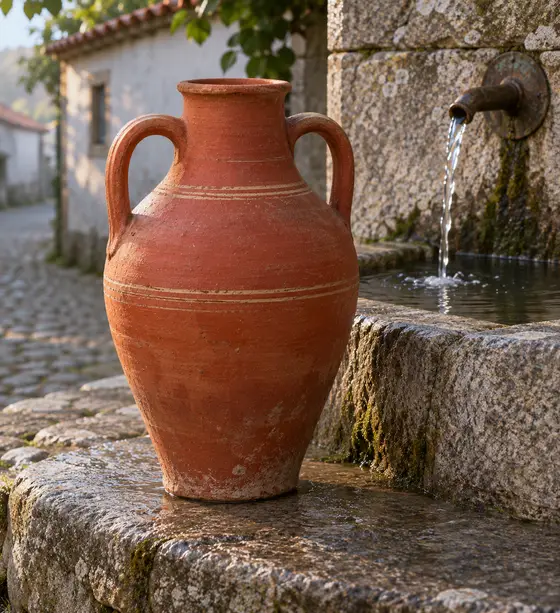
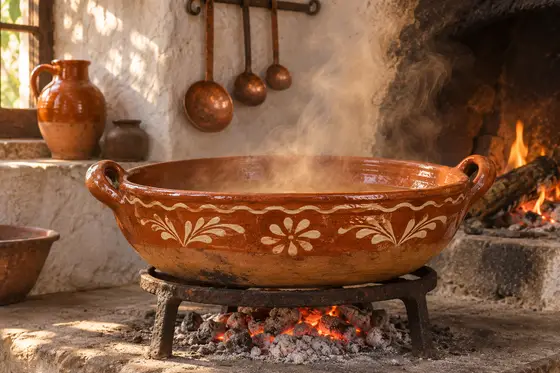
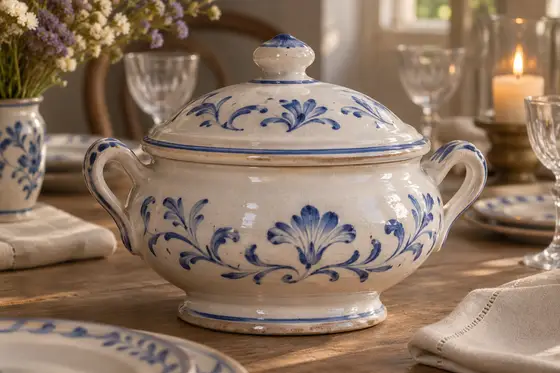
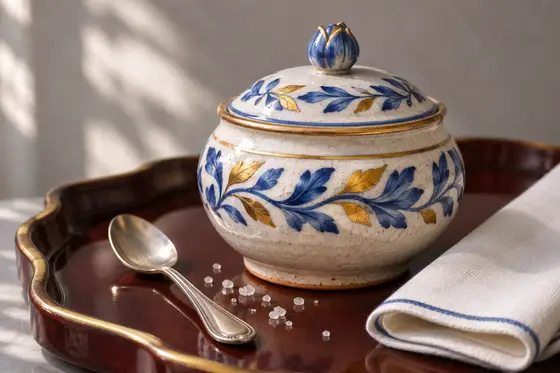
Pot from Nisa (decorated clay)
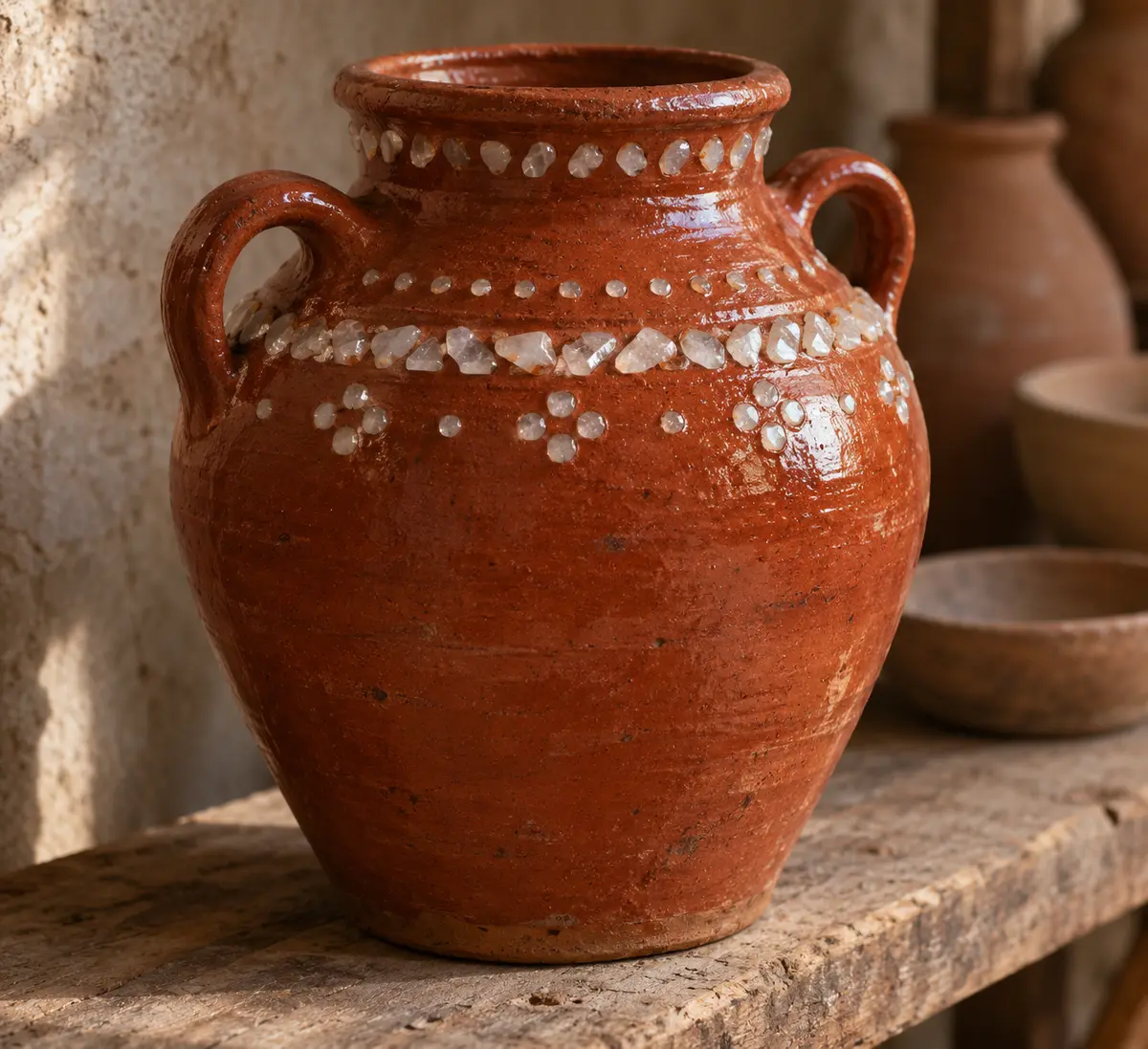
In Nisa, in the Alto Alentejo, small fragments of quartz are applied to the outer surface of clay pieces in geometric and floral motifs. The decoration is traditionally done by the potters' wives.
Nisa pottery begins with three clays, according to the town's pottery museum. White clay, dug at Estibas about 12 km away, is the base of the paste. Black clay from Fonte Seca, about 3 km away, is more workable and goes in at one part to two of white. Red clay is rare and only colours. The potter throws each ball on a wheel turned by pedal or, now often, by an electric motor. Handles and spouts are made separately from a finer clay and stuck on after about twelve hours of drying. The piece is then dipped in red slip and polished by hand while still damp.
The decoration is mostly women's work, often the potter's wife. Milky quartz is fired to make it brittle, crushed with a granite block and sieved into three grades. The design is scratched into the damp piece with a sewing needle, using lids or thimbles for circles. The chips are pressed into the lines point first with a thumbnail, leaving the surface smooth. Firing has two stages. For about an hour, thick firewood and a low flame leave the piece black with smoke. When the flame turns orange, at roughly 800 to 900 degrees, fine brushwood gives a fast, high flame that burns the black off and turns the clay red.
Source: museubordadoebarro.cm-nisa.pt, museubordadoebarro.cm-nisa.pt
AI-generated illustration in the manner of the tradition, not a photograph of a specific object.