II Vessels and forms · Plate 016
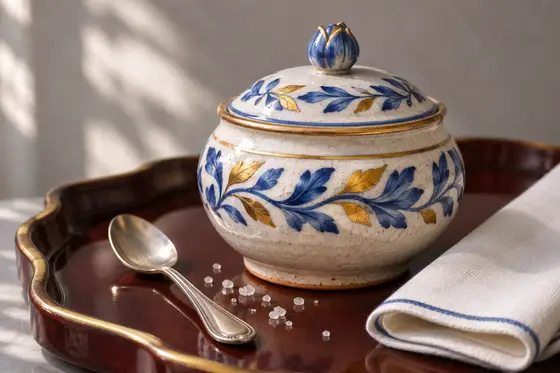
Terrina (tureen)
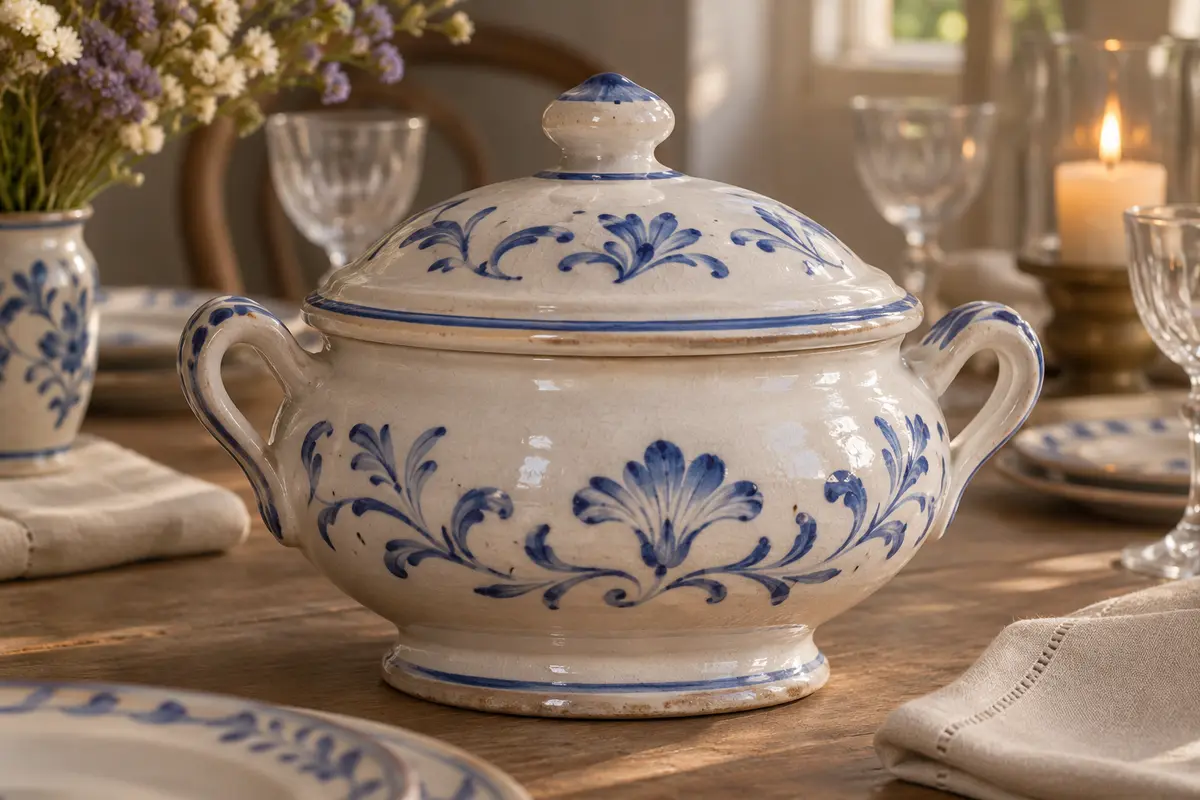
A wide container, usually of ceramic or metal and with a lid, for bringing soup to the table; the dictionary gives sopeira as a synonym. The word also names a type of pâté.
Priberam defines the terrina as a wide container, usually of earthenware or metal, with a lid, for serving soup at table, and gives sopeira as a synonym; its second sense is a pâté made in a long, deep dish and served in slices. The word comes from the French terrine. A tureen of this kind is typically broad, deep and oval, with fixed handles and a low domed cover topped by a knob or handle, and it usually stands on a matching undertray or platter. Tureens have been made in glazed earthenware (faience), porcelain and silver.
As tableware, the tureen appeared in late 17th-century France as the pot à oille; the English article offers two other possible sources for the name, the earlier word terrine or Marshal Turenne. Under Louis XIV it became one of the most ornate centrepieces of formal dining, and soup still opened most meals. Makers also gave tureens naturalistic shapes: in the mid-18th century cabbage-head tureens were popular, and a 1755 Chelsea catalogue advertised a rabbit tureen 'as big as life'. Most French silver tureens of the 17th century were melted down to pay for the king's late wars. A tureen suits about six diners.
Source: dicionario.priberam.org, en.wikipedia.org
AI-generated illustration in the manner of the tradition, not a photograph of a specific object.