II Vessels and forms · Plate 005
Talha (large storage jar)
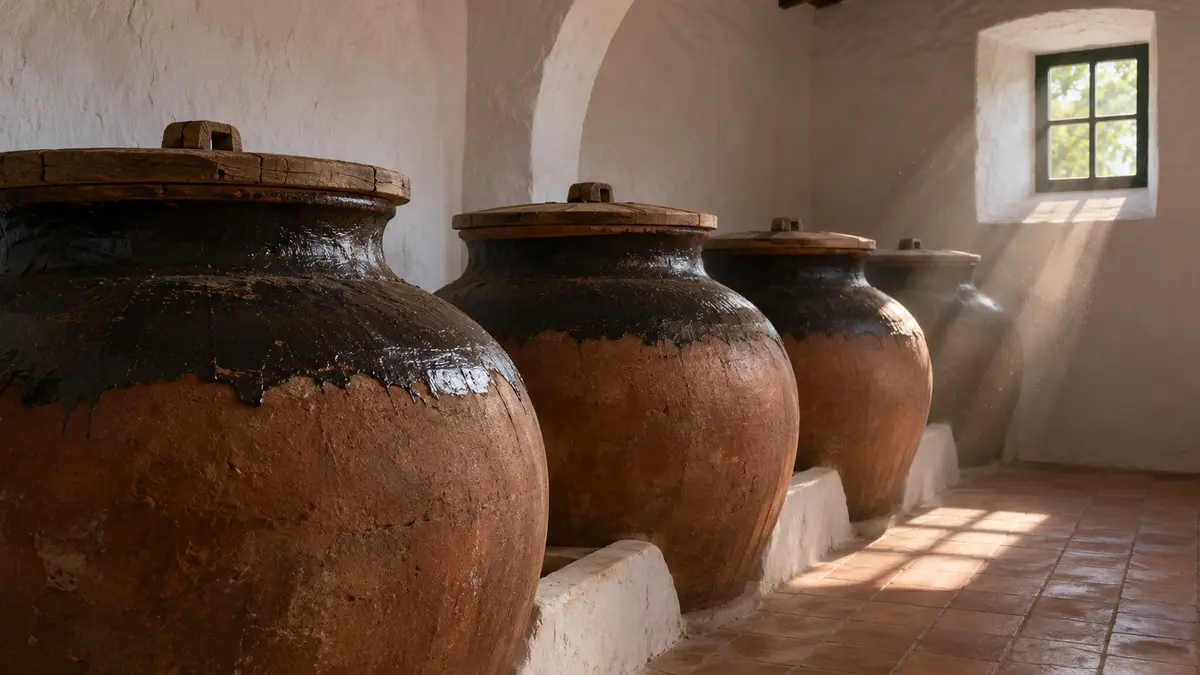
A vessel, usually of clay, with a narrow mouth and a large belly, for storing oil, wine or grain. In the Alentejo, talha wine is still made, a process listed in Portugal's national intangible heritage inventory.
Priberam defines the talha as a large vessel, usually of clay, with a narrow mouth and a deep belly, used to store oil, wine, grain and similar goods; a second sense is a large jar for keeping water. The word comes from Vulgar Latin tinacula, a diminutive of tina, a Latin word for a wine container. In the Alentejo, making talhas was the speciality of particular clay towns: accounts of the region's pottery name Amieira do Tejo (talhas and roof tiles) and Montalvão (talhas) as once major centres.
The talha is still at work in vinho de talha, an Alentejo winemaking practice that the regional wine commission describes as a Roman process, changed little in over two thousand years. Crushed grapes go into the clay vessel and ferment spontaneously. The skins rise into a solid cap, which is stirred with a wooden rodo and pushed back into the must; afterwards they settle at the bottom, and wine drawn from a tap near the base passes through them. Vila de Frades, in Vidigueira, calls itself the capital of the style. A 2018 bid for UNESCO recognition brought together 20 municipalities and seven entities.
Source: dicionario.priberam.org, rtp.pt, dn.pt
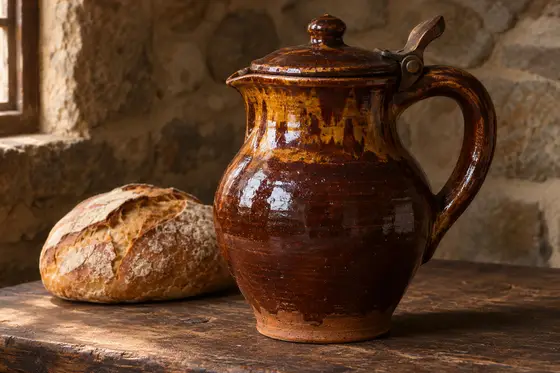
AI-generated illustration in the manner of the tradition, not a photograph of a specific object.