V Ceramics in place · Plate 045
Douro quinta terrace
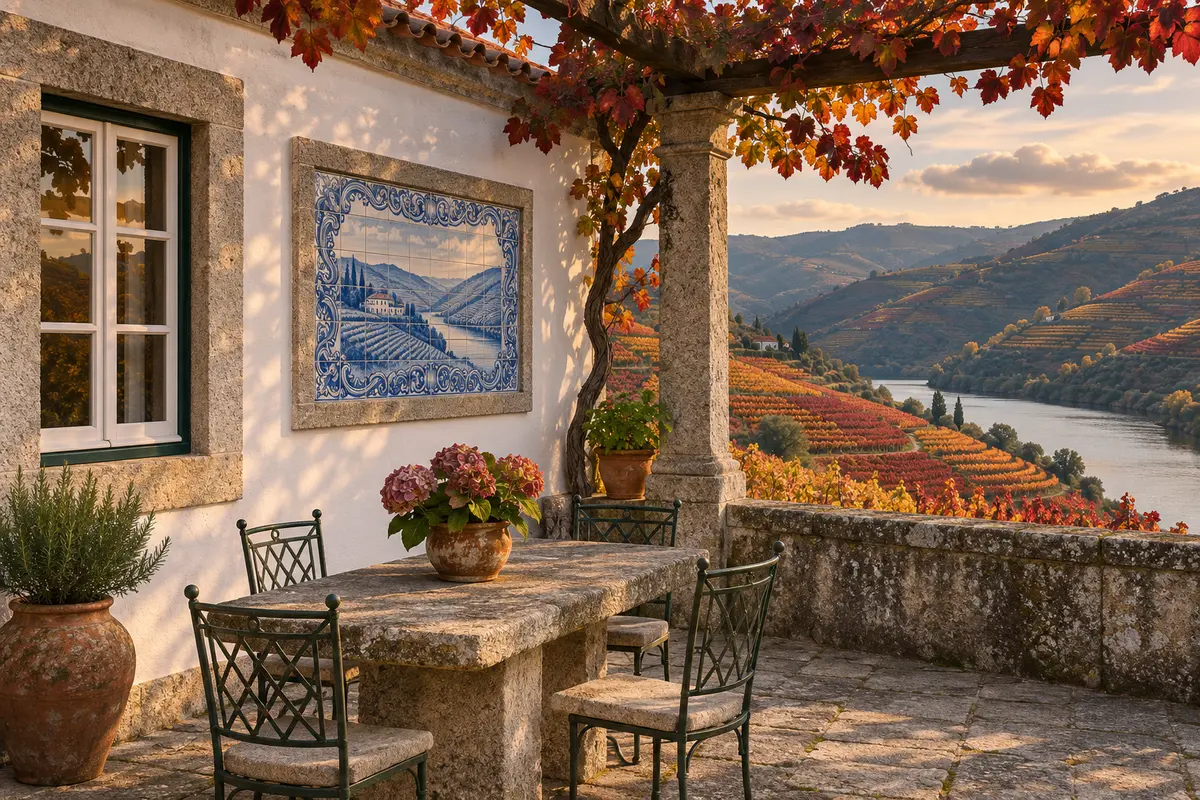
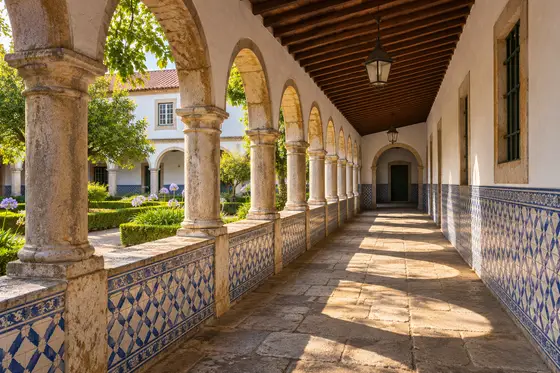
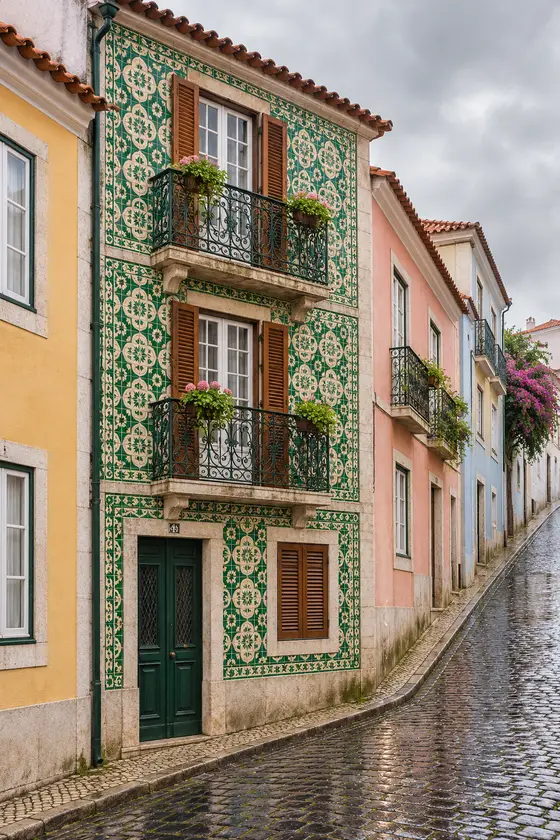
Douro wine estates often have tile panels on their houses and chapels, set against the terraced vineyards.
The Douro wine region was established in September 1756 by a royal charter (alvará) of King D. José I, which makes it one of the oldest demarcated wine regions in the world. It lies in north-eastern Portugal along the Douro river and is traditionally divided into three sub-regions: Baixo Corgo, Cima Corgo and Douro Superior. Each has its own soil and climate, which shape the wines. In December 2001 part of the region was inscribed by UNESCO as the Alto Douro Wine Region. The vineyards cover about 45,000 hectares.
Beside Port, the region makes table wines called vinhos do Douro, in red, white and rosé. The main red varieties are Touriga Nacional, Touriga Franca, Tinta Roriz (Aragonez), Tinta Barroca and Tinto Cão; the main whites are Malvasia Fina, Viosinho, Gouveio and Rabigato. Reds are described as complex and structured, whites as fresh and floral, and rosés as fruity and suited to young drinking. The source describes the demarcation, sub-regions and grapes but does not discuss terraces, quinta houses or their tile panels, so those are not covered here.
This is a general description, not confirmed to a single source.
Source: pt.wikipedia.org
AI-generated illustration in the manner of the tradition, not a photograph of a specific object.