III Regional wares · Plate 009
Fired and unpainted figures
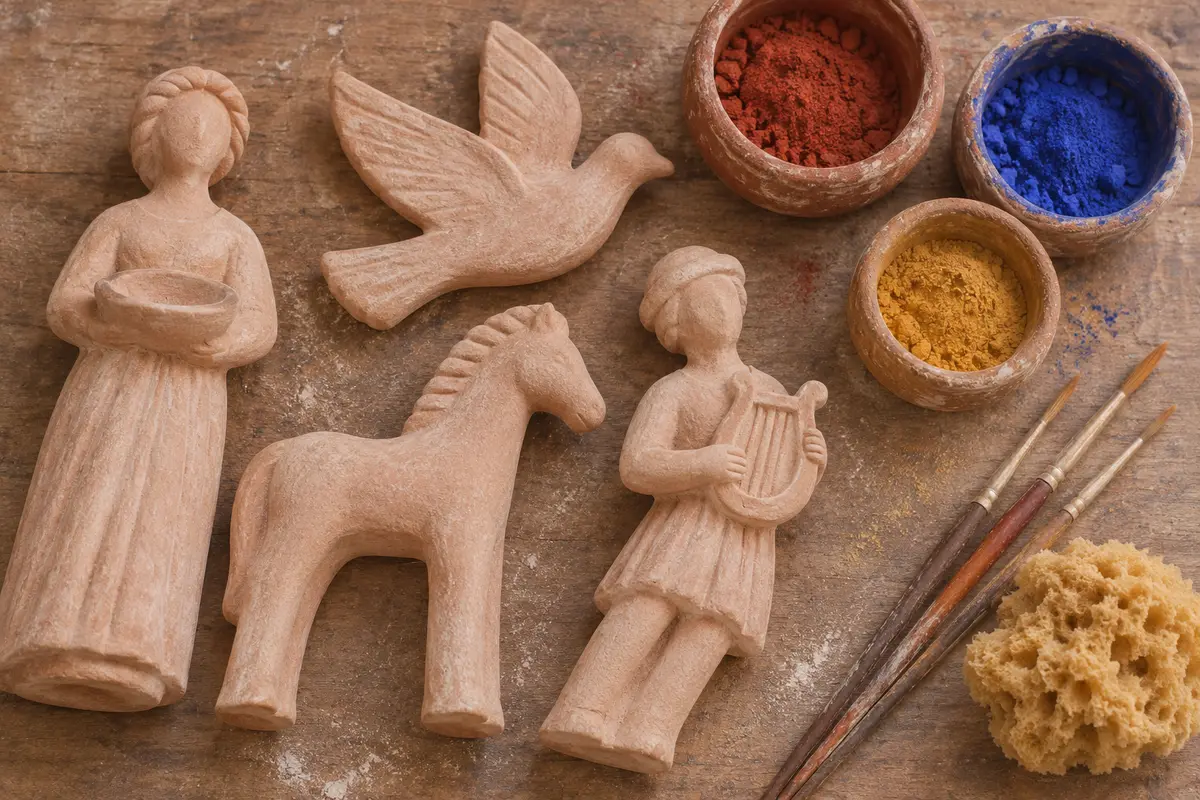
After firing, the figures are painted and then varnished. UNESCO says making a figure lasts several days, from assembling the parts to the finished piece.
Estremoz figures are fired once, as chacota, between 900 and 950 degrees Celsius, and glazing is not part of the process. Makers now use an electric kiln, the mufla, which replaced the wood-fired kiln at about the same time as local clay was replaced by bought clay; it noticeably reduced breakage, cracking and warping. A piece that has warped or cracked is destroyed, and only one that meets the maker's standards goes on to be painted. UNESCO adds that the whole process, from assembling the parts to the finished piece, takes several days.
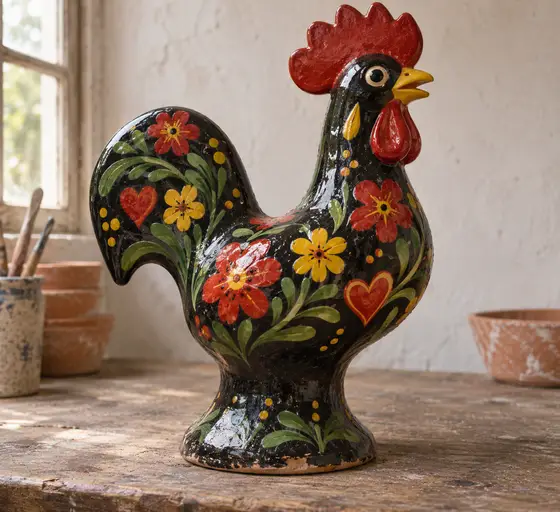
Painting comes after firing. Makers mix tempera paints or oxides with white glue so they grip the fired clay, and some use acrylics; the specification allows freedom in colours so long as creativity and originality are kept. When the paint is dry, a colourless carpenter's varnish is brushed on as the final coat, and it must not change the tones. The painted figures are made to be sold and kept at home as ornament, so a bare chacota figure, with its terracotta colour and no paint, is an unfinished stage rather than the finished product.
Source: cearte.pt, ich.unesco.org
Read about it: The figures that nearly stopped being made →
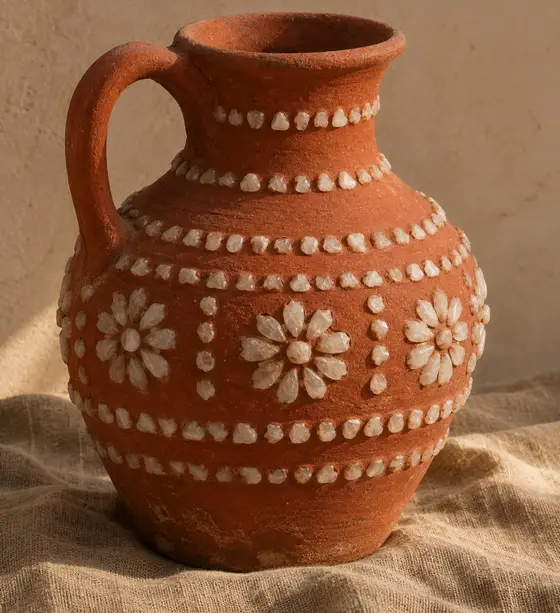
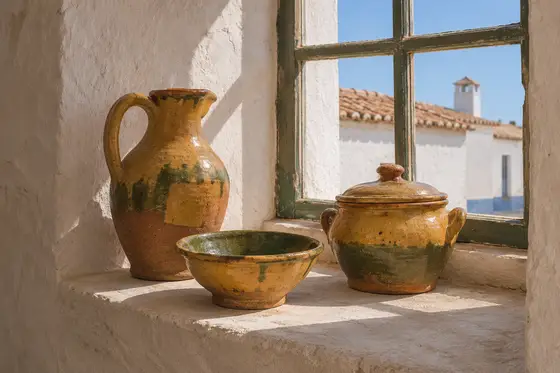
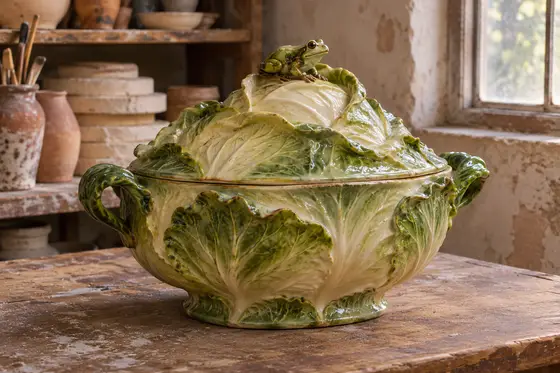
AI-generated illustration in the manner of the tradition, not a photograph of a specific object.