V Ceramics in place · Plate 005
Palace staircase with tiles
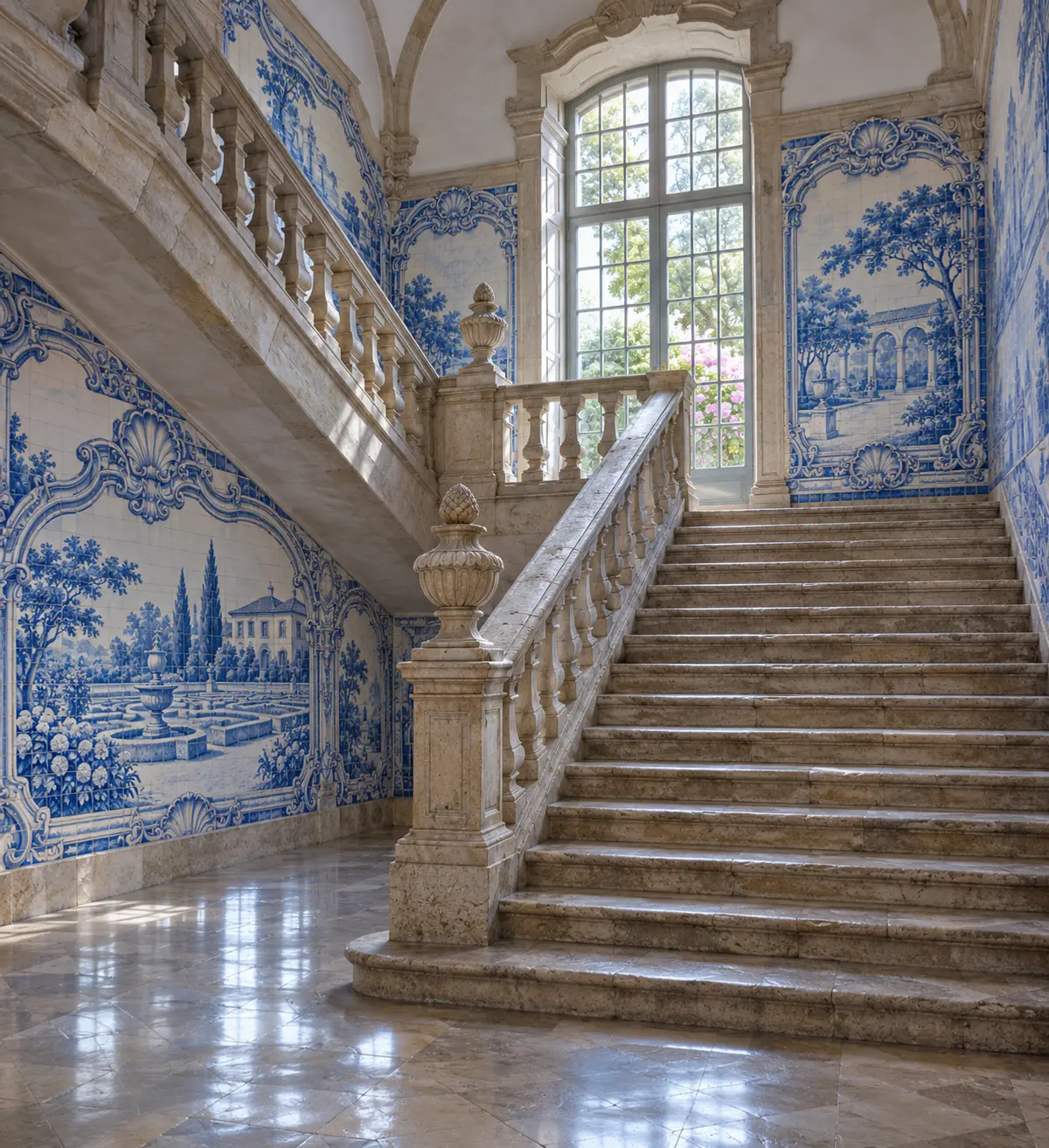
Staircases of palaces and grand houses often received tile panels.
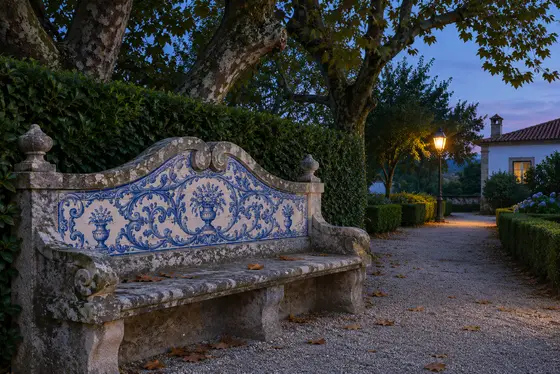
Palaces gave tile its grandest staging. The Portuguese article on azulejo lists the figura de convite, a life-size figure placed to greet visitors at noble entrances, dated to the 18th and 19th centuries. It also says that in the reign of João V, Brazilian gold paid for Baroque panels with elaborate frames, and that around 1640, once the Restoration brought new palace building, polychrome tiles under Dutch influence appeared, with scenes of the five senses and monkey themes (macacaria) popularised through David Teniers. The Rococo Corredor das Mangas at Queluz National Palace is named in the English article.
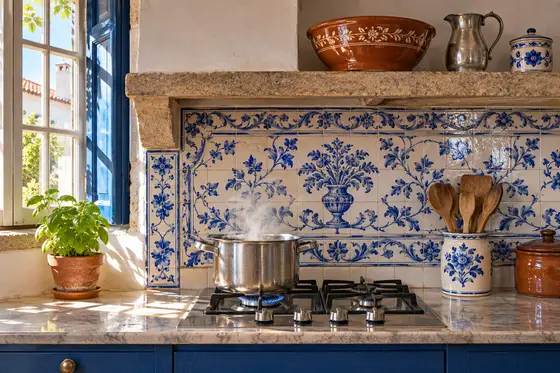
Not every grand house had its tile arranged for show. The same Portuguese article describes the figura avulsa, a single-motif tile, blue on white in the 18th century and used in kitchens and sacristies, which is a humbler type than the large panels. The earthquake of 1755 then changed what grand houses could afford quickly: the article says pattern tiles and the so-called azulejo pombalino, named after the Marquês de Pombal, were used for rapid reconstruction, including neoclassical door and window surrounds. The staircase, the entrance and the salon were therefore different registers of one craft.
This is a general description, not confirmed to a single source.
Source: pt.wikipedia.org, en.wikipedia.org
AI-generated illustration in the manner of the tradition, not a photograph of a specific object.