IV Craft, clay and kiln · Plate 028
Mixing glaze
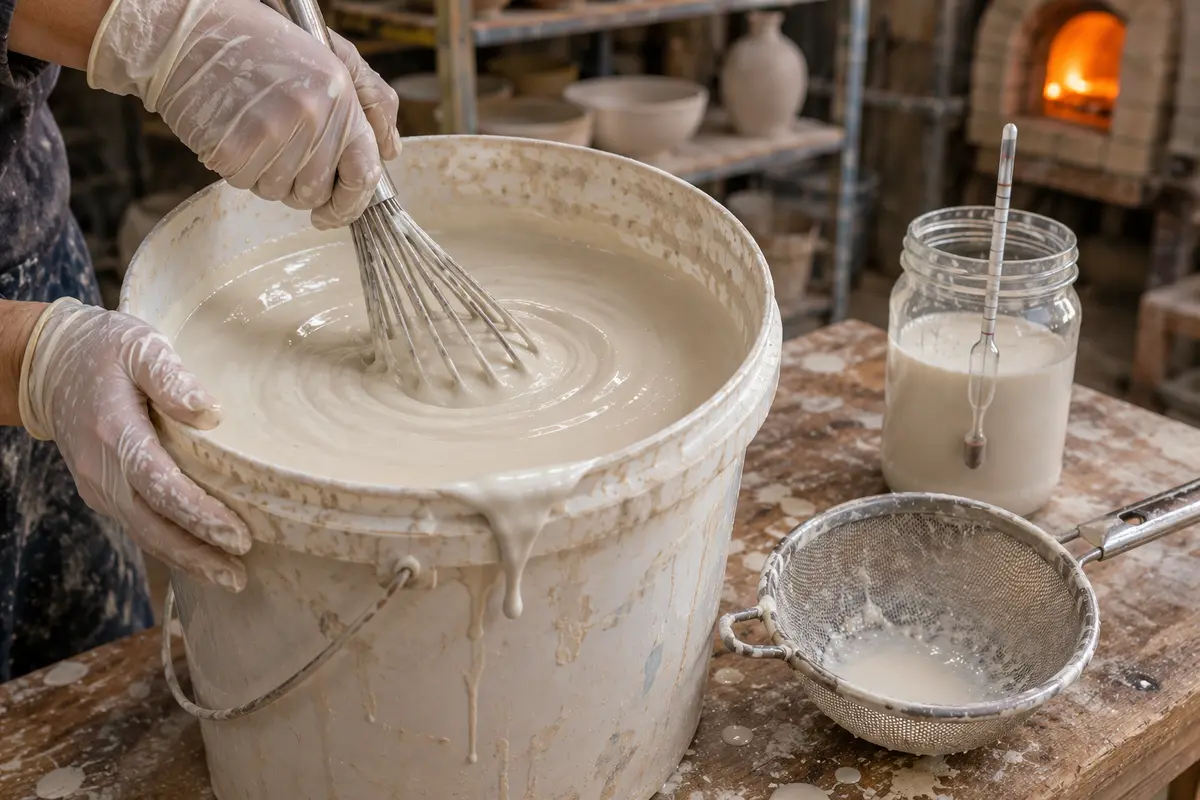
Glaze is a mixture of powdered minerals and water, stirred and sieved until creamy. It needs frequent stirring, because the solids settle.
A glaze is described in two ways. Its chemistry is called the formula, and the mix of powders that produces it is the recipe, which works like a kitchen recipe, in weights of each material. Most glazes are a clear base with additions to opacify, colour, vary or change the surface. As a guide, about 2,500 g of dry mix with 2,500 g of water makes roughly a gallon of slurry at a specific gravity near 1.45. Potters in richer countries increasingly buy ready-made glazes, but potters elsewhere, and many who want control, still mix their own.
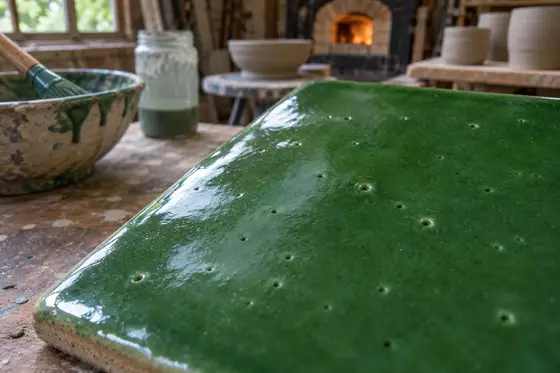
Barcelos pottery shows both eras. Formerly the glaze was prepared from raw materials, transparent or coloured, the colour coming from colouring elements added to a transparent glaze; green, brown, blue or yellow depended on the oxide in it. Today the glaze is bought from specialist suppliers, usually as a powder, and diluted in water to make the suspension in which the pieces are dipped. It must meet the legal limits for lead and cadmium. The commonest glaze in traditional Barcelos pottery is the transparent, glossy one.
This is a general description, not confirmed to a single source.
Source: digitalfire.com, cearte.pt, digitalfire.com
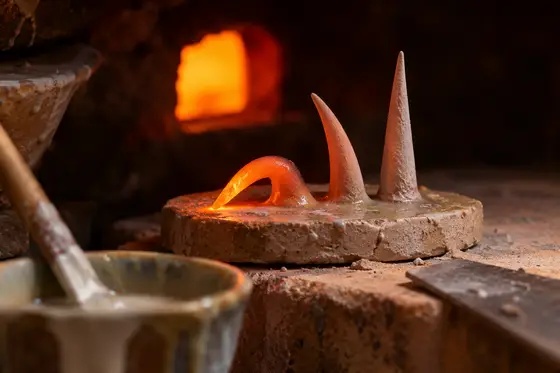
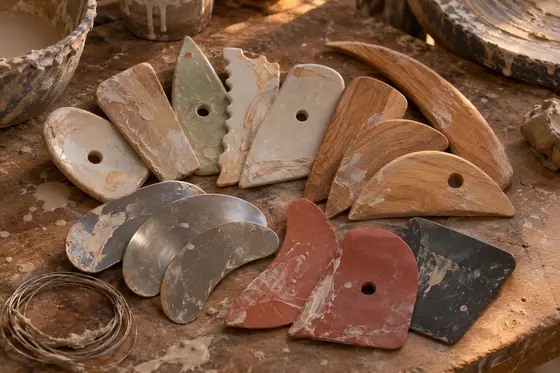
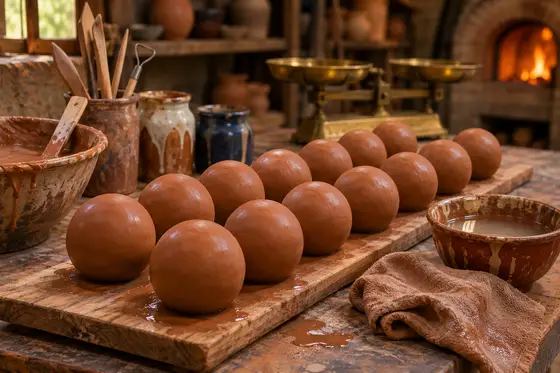
AI-generated illustration in the manner of the tradition, not a photograph of a specific object.