IV Craft, clay and kiln · Plate 049
Glaze pinholes
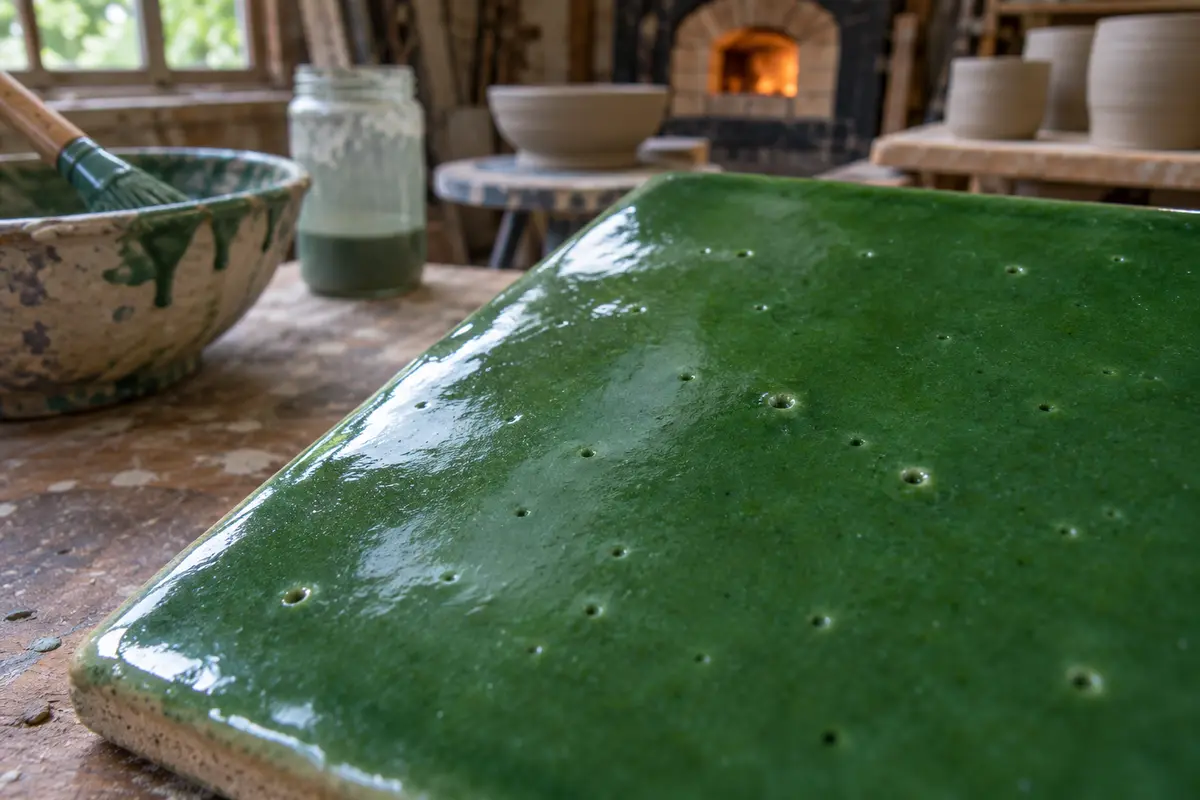
Tiny holes in the glaze surface, like pin pricks (pinholes). They are often blamed on gas escaping from the clay or glaze during firing.
Digitalfire separates the two defects. Pinholes are small holes in the fired glaze that penetrate down to the body, often into a surface pore, while pits are smaller and mar the surface without reaching it. Both are often no larger than the head of a pin. During firing, bodies give off gases from decomposing organic materials and minerals and from crystal water, and if the glaze is already melting, these gases must bubble up through it. A true pinhole is a body problem reaching up into the glaze; a pit is more a problem of glaze or firing.
The fixes attack several fronts at once: a higher bisque or a cleaner body with less lignite, so less burns off in the glaze firing; finer grinding to spread out the gas; slower firing or a soak to give gases time to escape and the glaze time to heal; more kiln draft; and a dense, even glaze lay-down. Coarse particles, soluble salts and gas-heavy materials such as talc, dolomite and whiting in the body all contribute. Glaze applied too thin on a coarse body can pinhole as well.
This is a general description, not confirmed to a single source.
Source: digitalfire.com, en.wikipedia.org, digitalfire.com, digitalfire.com
AI-generated illustration in the manner of the tradition, not a photograph of a specific object.