IV Craft, clay and kiln · Plate 048
Glaze crawling
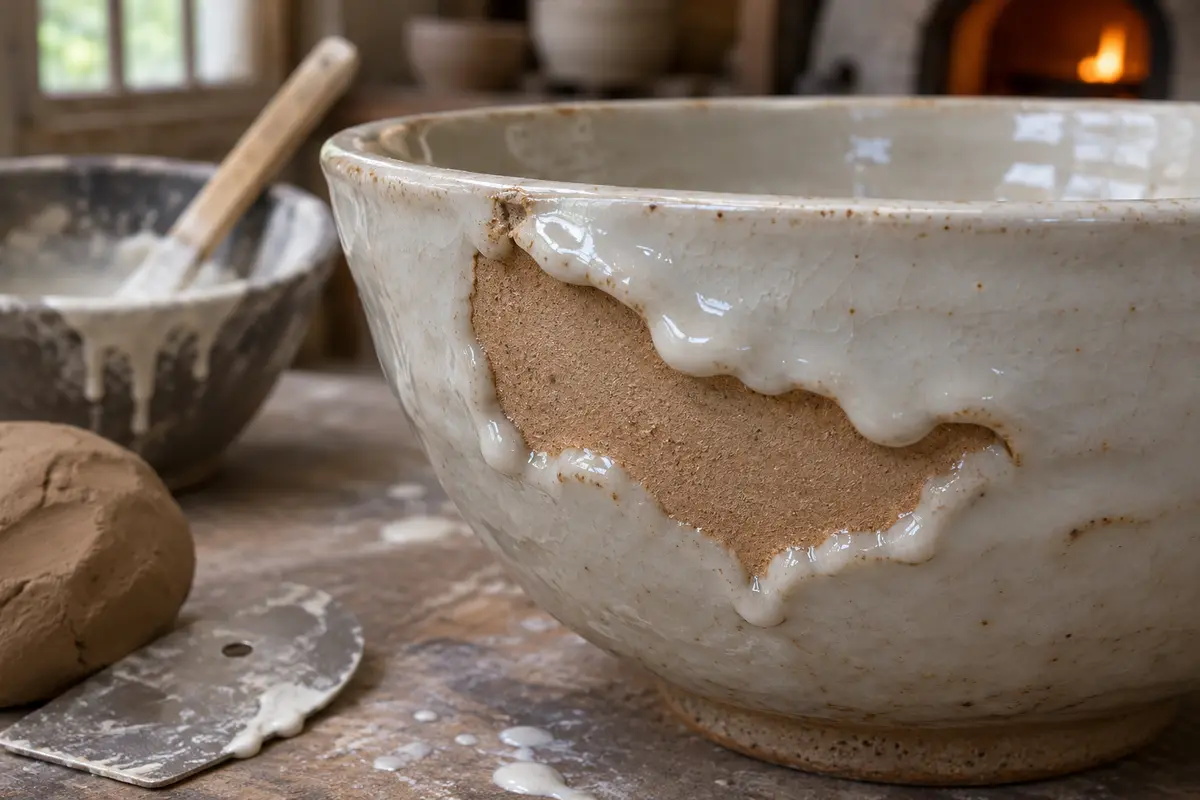
When glaze pulls back and beads up, it leaves parts of the piece bare (crawling). It is a flaw, shown here for study.
Crawling is when the molten glaze withdraws into islands, leaving patches of bare clay between them; the edges of the islands are thickened and smoothly rounded. Digitalfire calls it among the most common and costly problems in ceramic production, because ware requires refiring and is often lost anyway. In severe cases the glaze forms beads and even drips onto the shelf. It is prevalent where dipping glazes are applied to bisque, shrink on drying and form cracks, which gives crawling a place to start.
The usual causes are in the slurry and the layer. A glaze with too much plastic clay or applied too thickly shrinks too much on drying; Digitalfire says about 20% clays, such as ball clay and kaolin, is normal. Remedies include replacing part of the raw clay with calcined clay, or a less plastic kaolin. Glaze ball-milled for too long, or with very fine particles, also shrinks more. The English glossary adds uneven glazing and a greasy substrate as possible causes, and notes the parting can happen during drying or firing.
Source: digitalfire.com, en.wikipedia.org, digitalfire.com
AI-generated illustration in the manner of the tradition, not a photograph of a specific object.