IV Craft, clay and kiln · Plate 033
Electric kiln
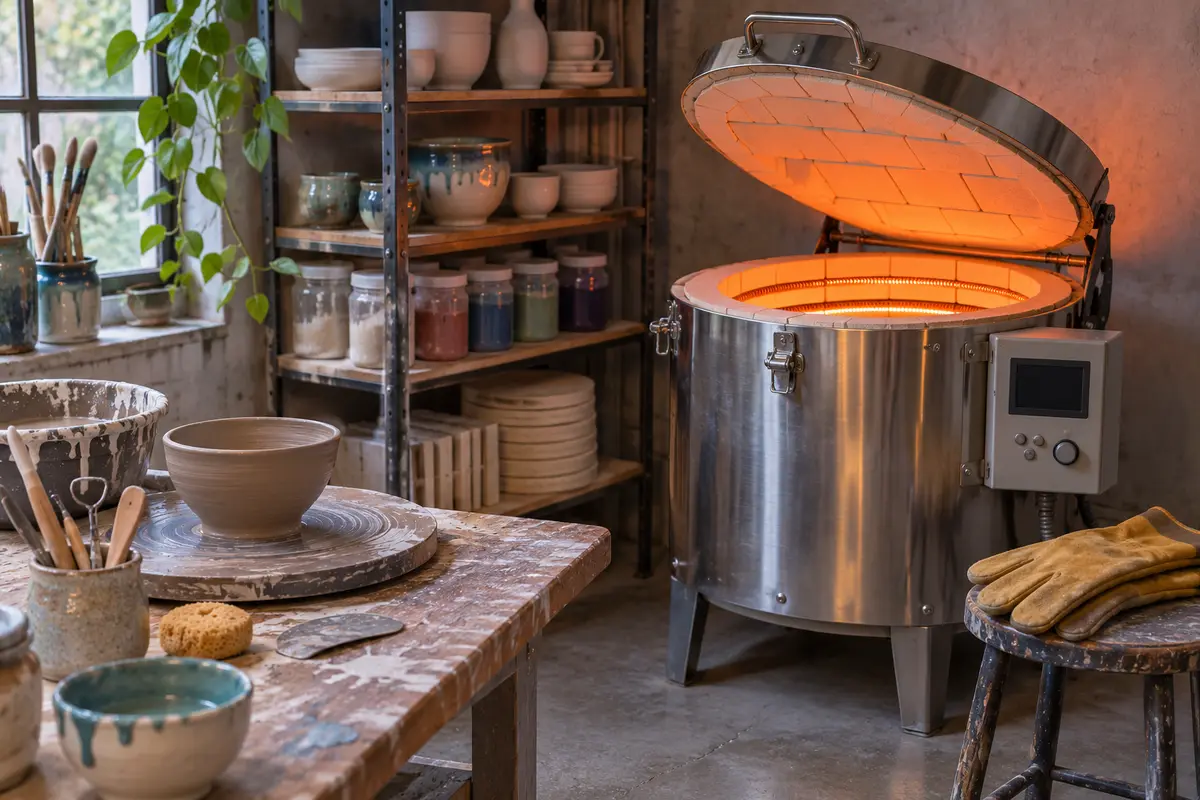
An electric kiln heats with elements in its walls. Firing is clean and easy to control and repeat, which is why many modern studios use one.
Wikipedia dates electric kilns to the 20th century and says they were developed mainly for smaller-scale use in schools, universities and hobby centres. With no open flame consuming oxygen, the atmosphere in most designs is rich in oxygen, though reducing conditions can be created with gas input or by using saggars in a particular way. Computerised controls let the user set the rate of temperature climb, hold the temperature at any point and control the cooling. Gas and electric kilns are both common in small-scale production, in industry and in craft.
Digitalfire explains how the heat is controlled. Common controllers turn the power on and off in a duty cycle, a 50% cycle meaning power for half the time, and read a thermocouple in the kiln to decide the length and frequency of the bursts. A set of elements can last about a thousand firings when most firings are below cone 7. The Barcelos specification says electric kilns are not currently used there for pottery, though it does not rule it out, and describes its gas kilns with a programmer that sets time and temperature in advance.
This is a general description, not confirmed to a single source.
Source: en.wikipedia.org, digitalfire.com, cearte.pt, digitalfire.com
AI-generated illustration in the manner of the tradition, not a photograph of a specific object.