IV Craft, clay and kiln · Plate 004
Wedging clay
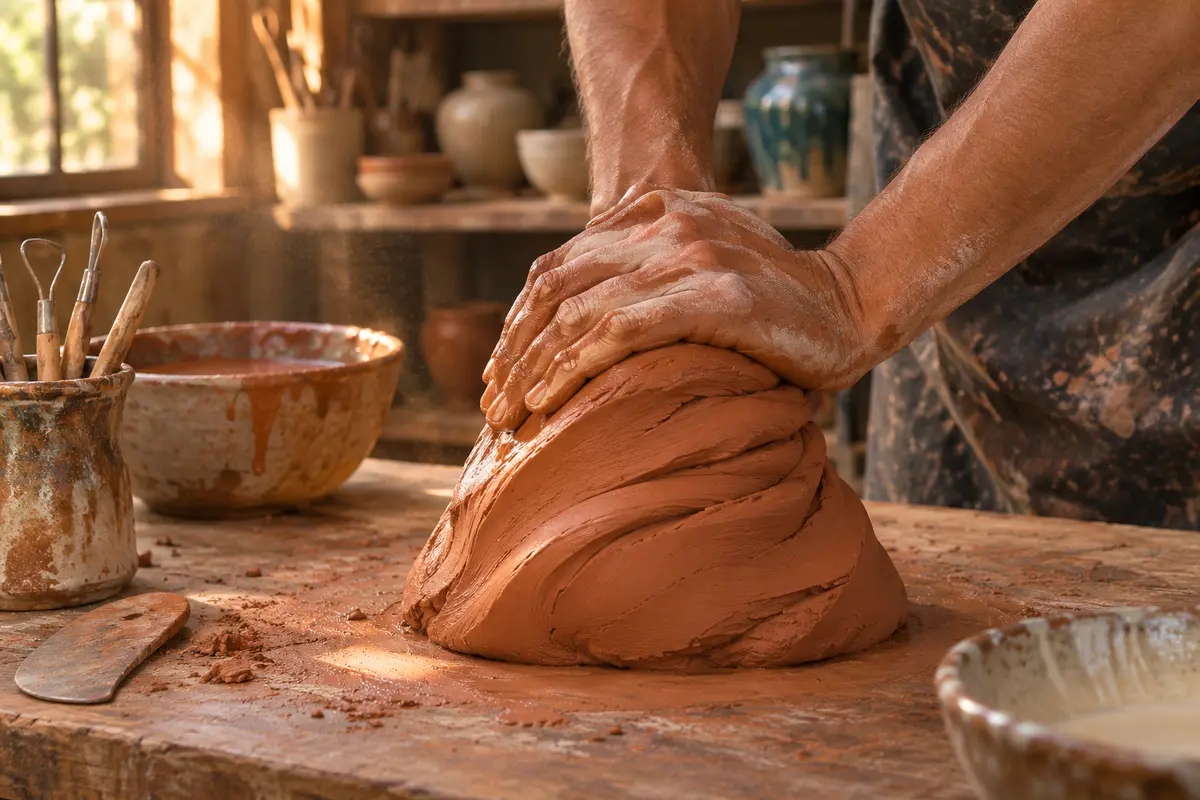
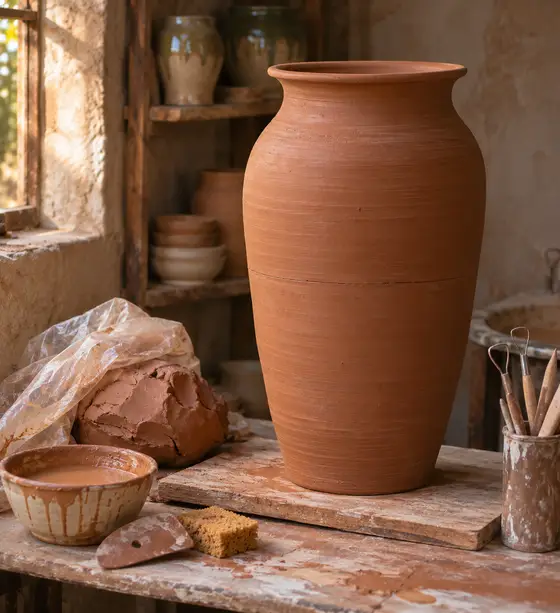
Wedging clay by hand evens out the moisture and drives out air. Air bubbles can damage a piece in the kiln, which is why it is a usual step before throwing.
A pottery glossary defines wedging as a procedure for preparing clay by hand. The lump is thrown repeatedly onto a work bench, turned, and sometimes cut and rejoined. The aim is to spread the water evenly through the clay, to remove lamination (layering) and to remove air. Machines do a similar job: a pug is a machine that consolidates plastic clay into a firm column, and it may have a vacuum system that de-airs the clay on the way. In both cases the clay ends up uniform and ready to be shaped.
The Portuguese workshops in the sources vary. In Nisa, the potter kneads the clay on the atoquina, the work table, and cuts it into pélas, cylindrical portions of clay, one for each piece. In Barcelos, much of the paste is homogenised in a fieira, then covered in cling film to keep its moisture and stored in cool places. Some potters now buy the paste ready to work. Even so, air can remain, and the Barcelos specification lists a tool for it: the espicha, a small wooden handle with a long metal point, used to prick air bubbles in the paste.
Source: en.wikipedia.org, museubordadoebarro.cm-nisa.pt, cearte.pt
AI-generated illustration in the manner of the tradition, not a photograph of a specific object.