IV Craft, clay and kiln · Plate 003
Sieving clay slip
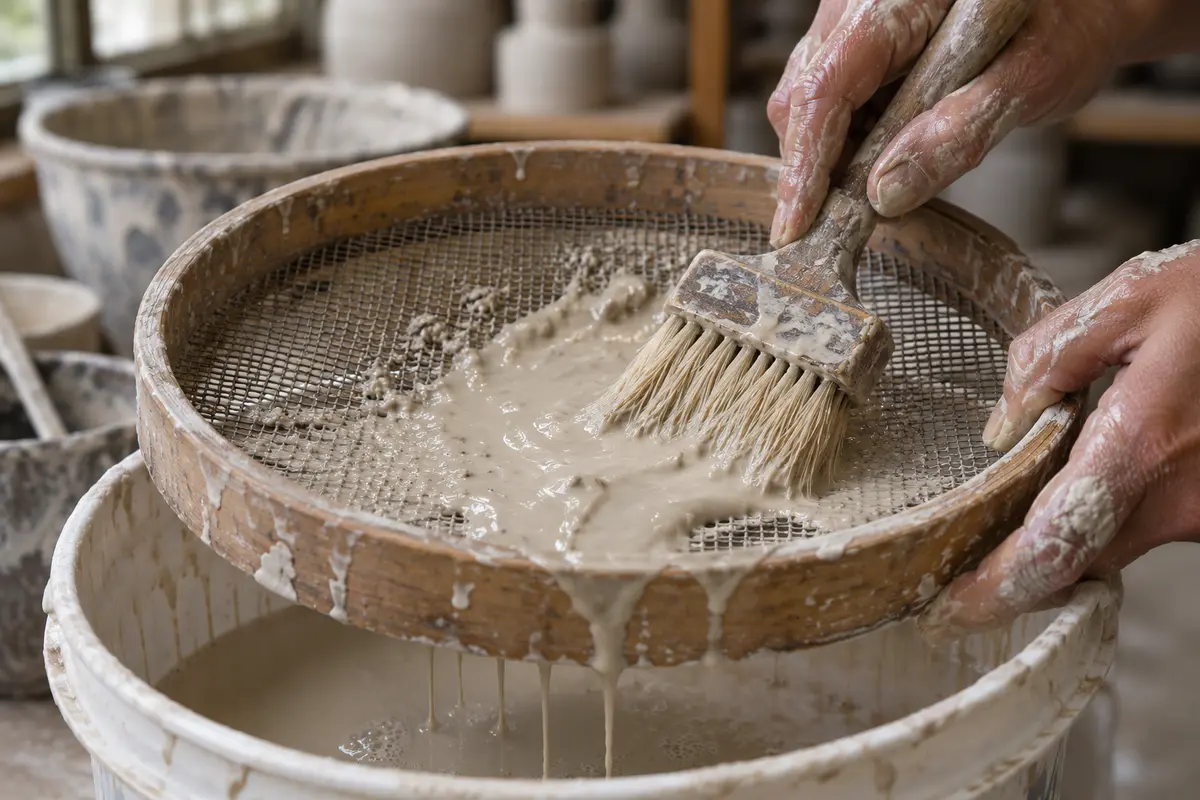
The slip (liquid clay) passes through a fine sieve that holds back sand, roots and lumps. It is then left to stiffen on plaster or in the sun until it can be kneaded.
In the Nisa method the slurry goes through a wire sieve to catch impurities. It is then left for at least three days while the water that rises to the surface is skimmed off. The thickened clay is kneaded and left to dry for at least three more days, depending on the temperature. Sieving at this stage is a way of getting the stones out of a liquid: a dry lump cannot be cleaned, a slurry can. Glossaries note that a sieve can also be called a lawn.
Drying the slurry to a workable state can be hurried. At Nisa, partly dried clay is thrown in lumps called bonecos against a brick wall covered in cement, which soaks up moisture quickly, until the lumps drop onto boards. The clay is then kneaded on the atoquina, the work table. Sieving returns for the red slip used to colour finished pieces: the red clay is dissolved in water for several hours, adjusted by eye to a fine, slightly thick slip, and strained through a silk sieve. The Saber Fazer programme states the general rule for black pottery: clay is cleaned of impurities, generally by sieving.
This is a general description, not confirmed to a single source.
Source: museubordadoebarro.cm-nisa.pt, programasaberfazer.gov.pt, en.wikipedia.org
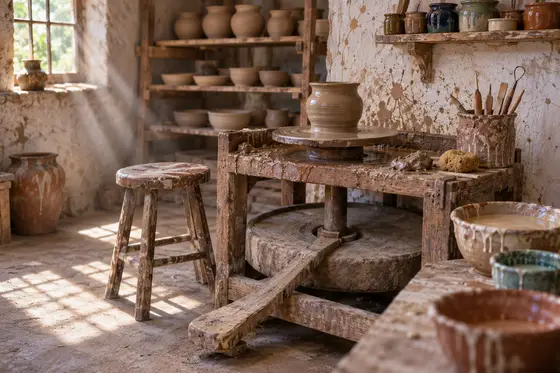
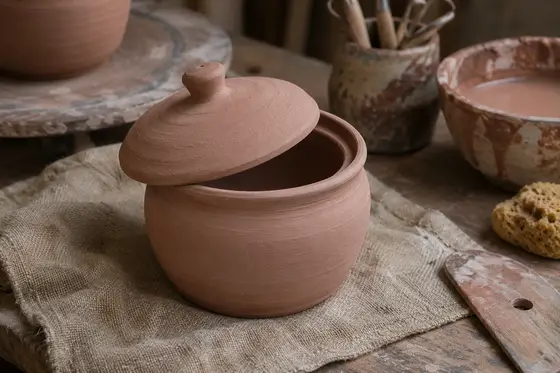
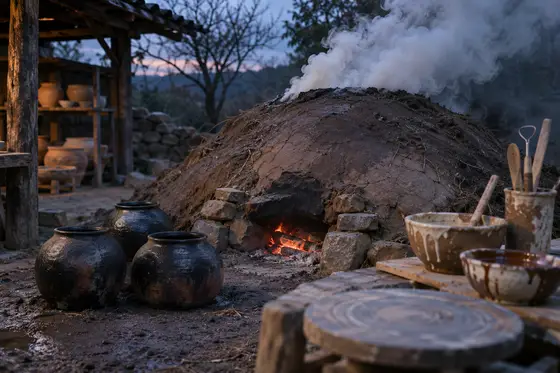
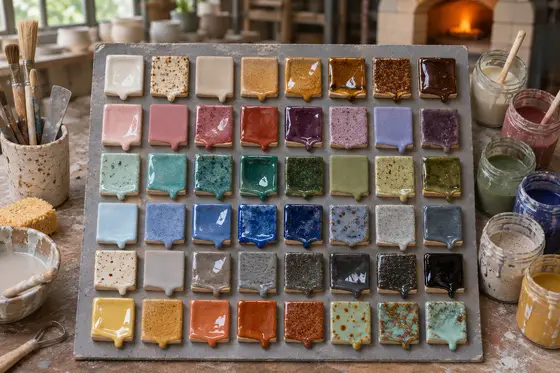
AI-generated illustration in the manner of the tradition, not a photograph of a specific object.