IV Craft, clay and kiln · Plate 031
Lead-free glaze tests
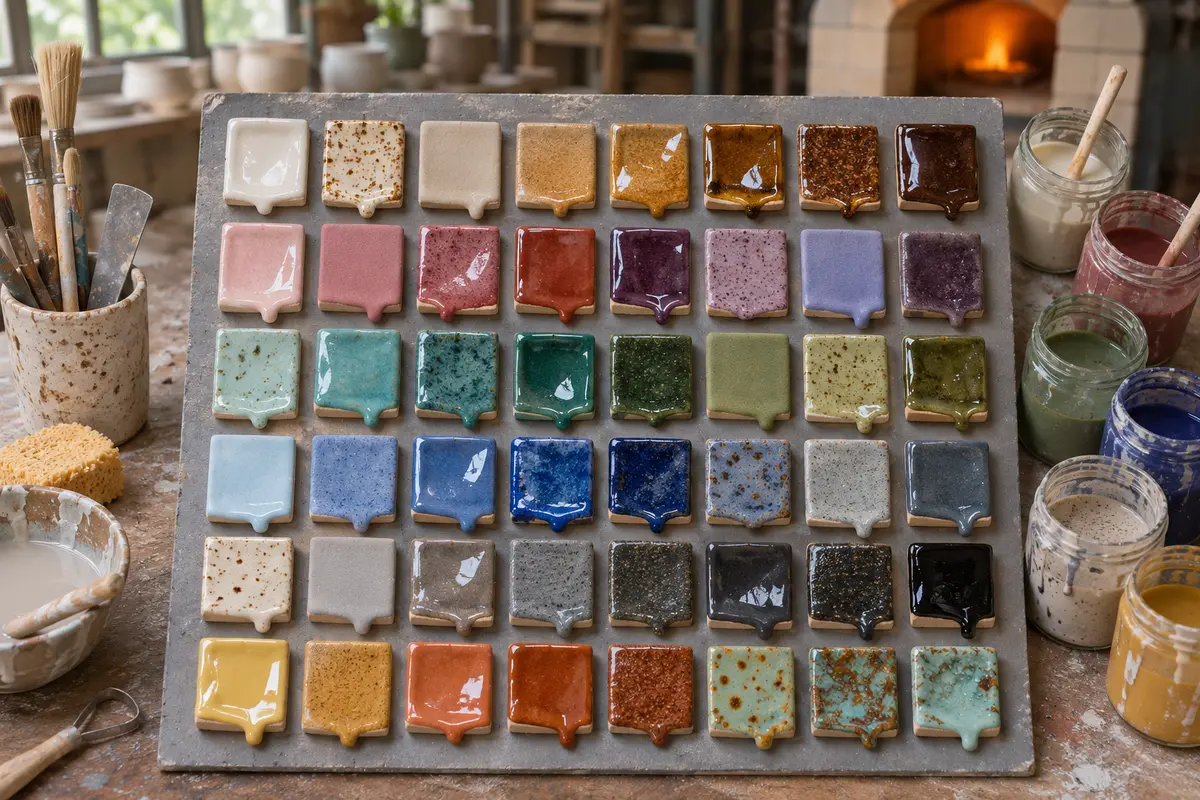
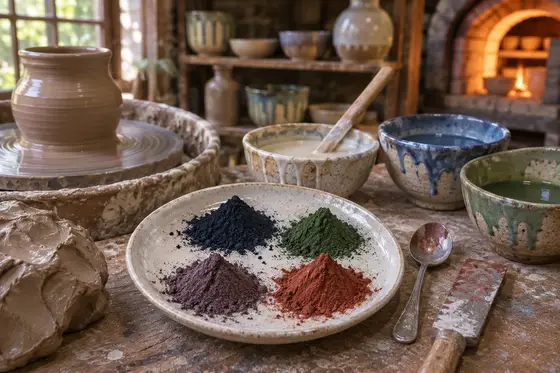
Today's workshops often use lead-free glazes, tested first on small pieces for colour, gloss and fit. Lead is a health risk and its release from food ware is regulated.
Lead was prized as a strong melter: it works exceptionally well at low temperatures and long made very low-fired terracotta glazing possible. The price is health. Digitalfire lists tiredness, cramps, anaemia, nerve damage and brain damage among the effects of exposure, and says the prevailing view today is that the only safe dose is zero. Since the 1970s the North American ceramic industry was forced to move away from leaded glazes. The same page adds that a stable lead silicate glass can be very leach-resistant, so what counts is the stability of the glass, not just whether lead is present.
Release is what is measured. The leaching of heavy metals such as lead and cadmium from a glaze can be a hazard, and reputable manufacturers test their ware against national and international limits. Home kits fill the vessel with 5% acetic acid, white vinegar, for 18 hours and then test the liquid; laboratories do it more precisely. In Barcelos, glaze bought as powder must meet the limits set by law for lead and cadmium. For lead-free glazes, Wikipedia notes that it can be an advantage to fire within a range of two cones.
This is a general description, not confirmed to a single source.
Source: digitalfire.com, en.wikipedia.org, cearte.pt, en.wikipedia.org
AI-generated illustration in the manner of the tradition, not a photograph of a specific object.