IV Craft, clay and kiln · Plate 038
Pressing tiles
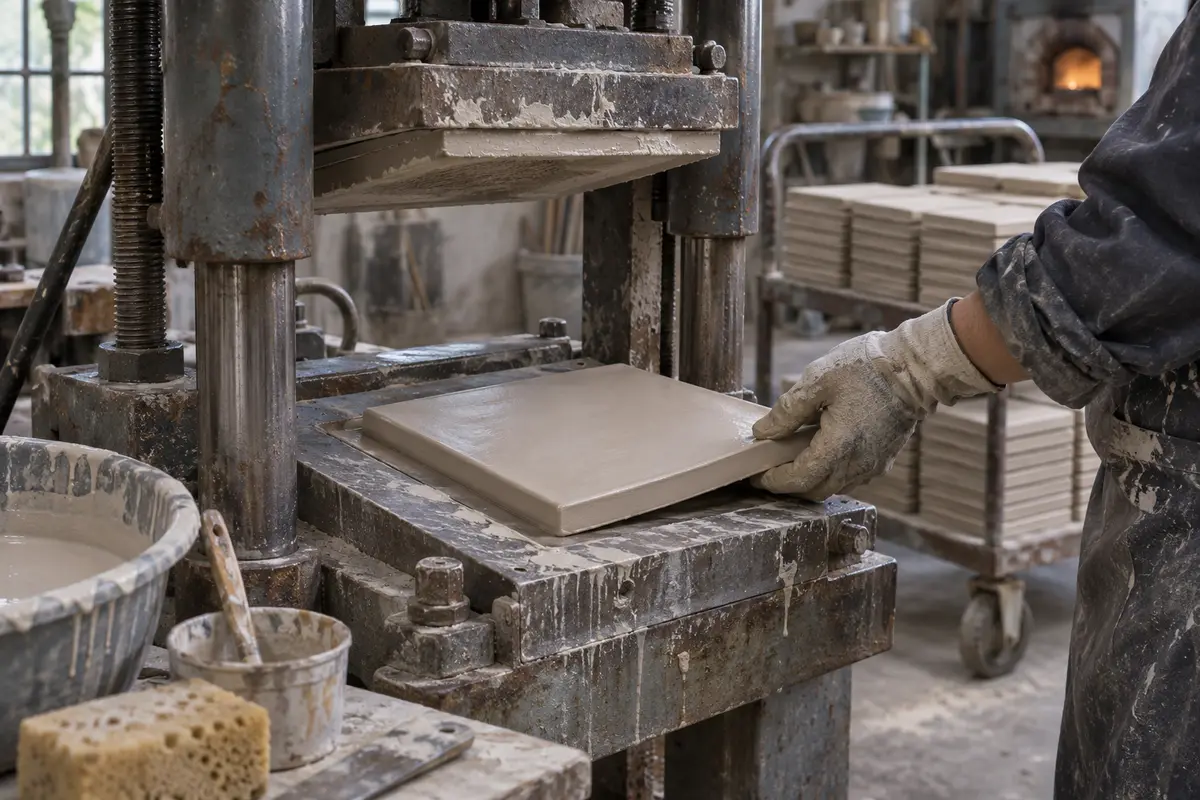
In factories, clay or powder is pressed in a mould, dried and fired. A tile fired once is called a biscuit, or chacota.
In 1840 Richard Prosser discovered that dust clay could be compacted with a press, making tiles from a drier body instead of damp plastic clay. The tiles dried faster and warped less in firing, and the great Victorian tile boom began around 1850, according to a British tile society's guide. Digitalfire describes the modern descendant: clay powder pressed at high pressure, for example 500 kg/cm², into metal moulds, which needs minimal drying facilities. Tile makers have learned to press and fire tiles of more than a square metre.
Pressing also exists on a craft scale. In Barcelos, plastic paste is put into a positive mould and pressed by a negative one, a technique used for roasting dishes, frying pans, plates and caldo verde bowls. For tiles, a potter writing in Pottery Making Illustrated calls a one-piece plaster press mould the most effective way to make handmade tiles, less prone to warping than rolled slabs, advises calculating the clay's shrinkage beforehand and warns that a tile bent when released from the mould will most likely warp in the final firing.
This is a general description, not confirmed to a single source.
Source: digitalfire.com, tilesoc.org.uk, cearte.pt, ceramicartsnetwork.org
Read about it: A surface that drinks the paint: how a hand-painted tile is made →
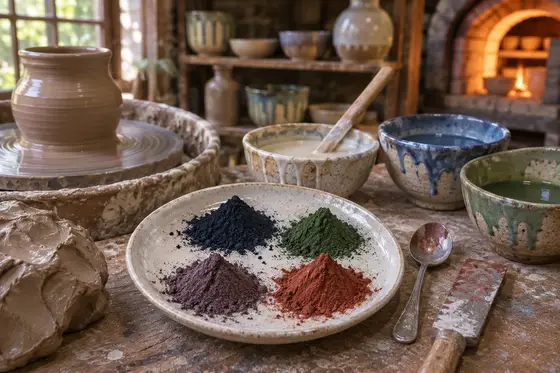
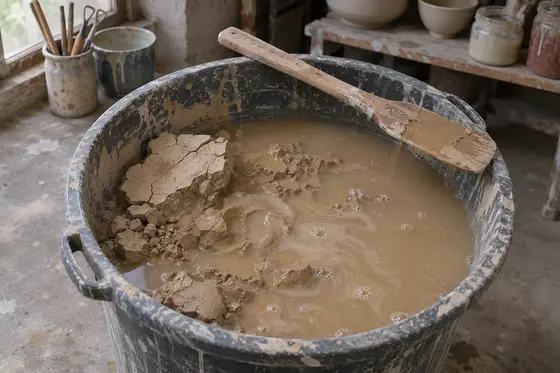
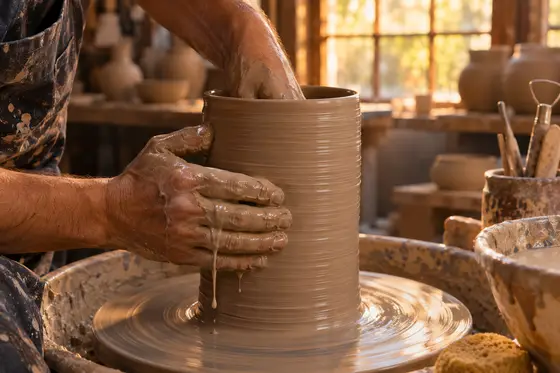
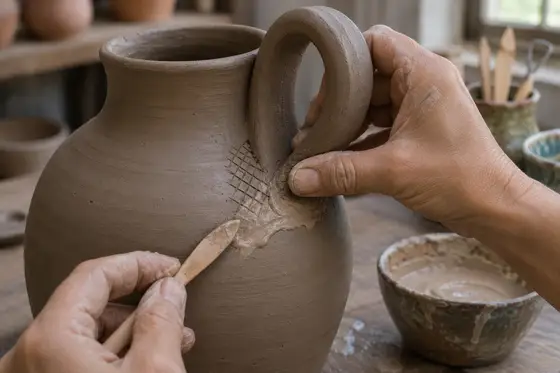
AI-generated illustration in the manner of the tradition, not a photograph of a specific object.