IV Craft, clay and kiln · Plate 030
Wiping the foot
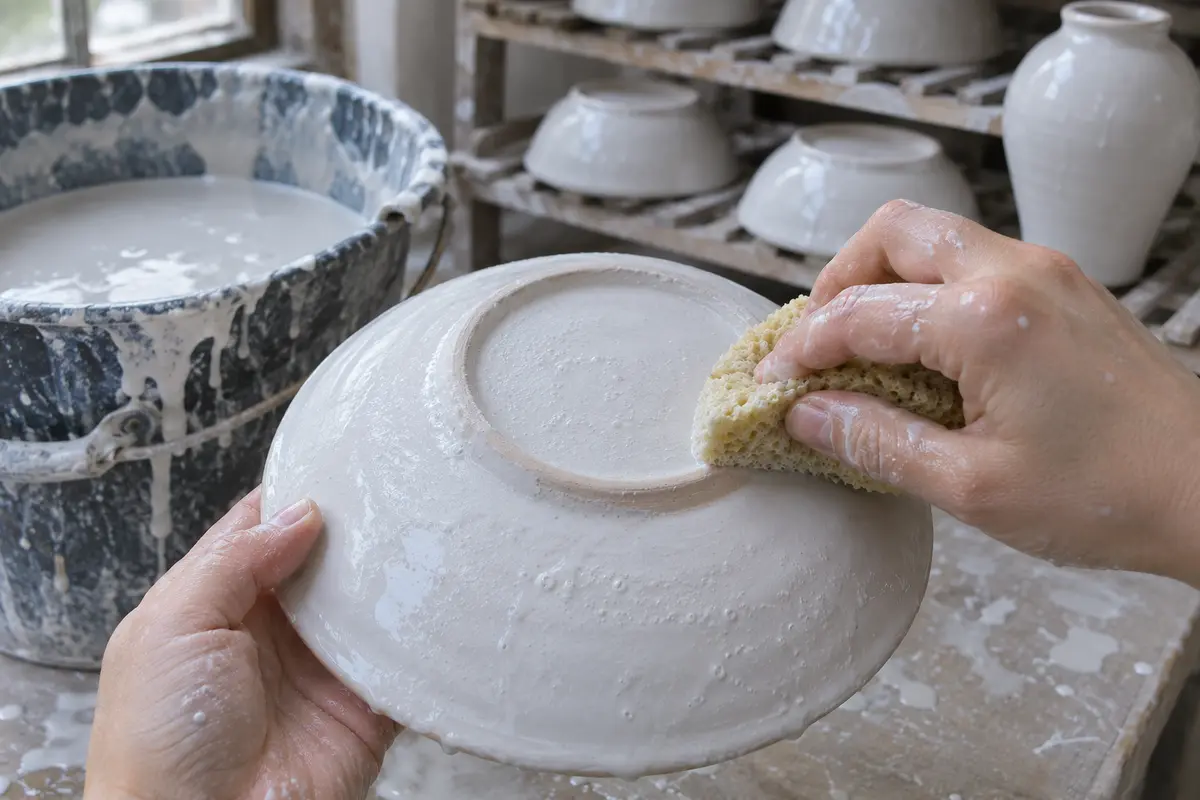
Before firing, glaze is sponged off the foot. Otherwise it melts and glues the piece to the kiln shelf.
The Barcelos specification explains why glazed ware cannot touch in the kiln: fusing glaze would unite the pieces. The shelf needs protection too. Kiln wash is a refractory powder mixed with water and painted on shelves so that ware and accidental glaze drips do not stick. On a well-washed shelf, pure molten glaze that runs down can simply be lifted off at unloading, taking only the top layer of wash. The wash is renewed where it flakes or thins, and a poor wash hardens into flakes that stick to the base of pots.
Supports also reduce contact. In Portuguese tile-making, the plates are set horizontally in the kiln for the second firing on small ceramic tripods called trempes, which leave three small marks on the finished tile, today important when judging authenticity. In English bottle ovens, glazed ware in the glost firing was held by pins, saddles, spurs and thimbles, because any contact point would leave a blemish on the glaze. In the biscuit firing there, cups and bowls sat on a fine layer of calcined flint dust in the saggar, and flatware was sandwiched between layers of the powder.
This is a general description, not confirmed to a single source.
Source: cearte.pt, digitalfire.com, pt.wikipedia.org, en.wikipedia.org
AI-generated illustration in the manner of the tradition, not a photograph of a specific object.