IV Craft, clay and kiln · Plate 037
Drying shelves
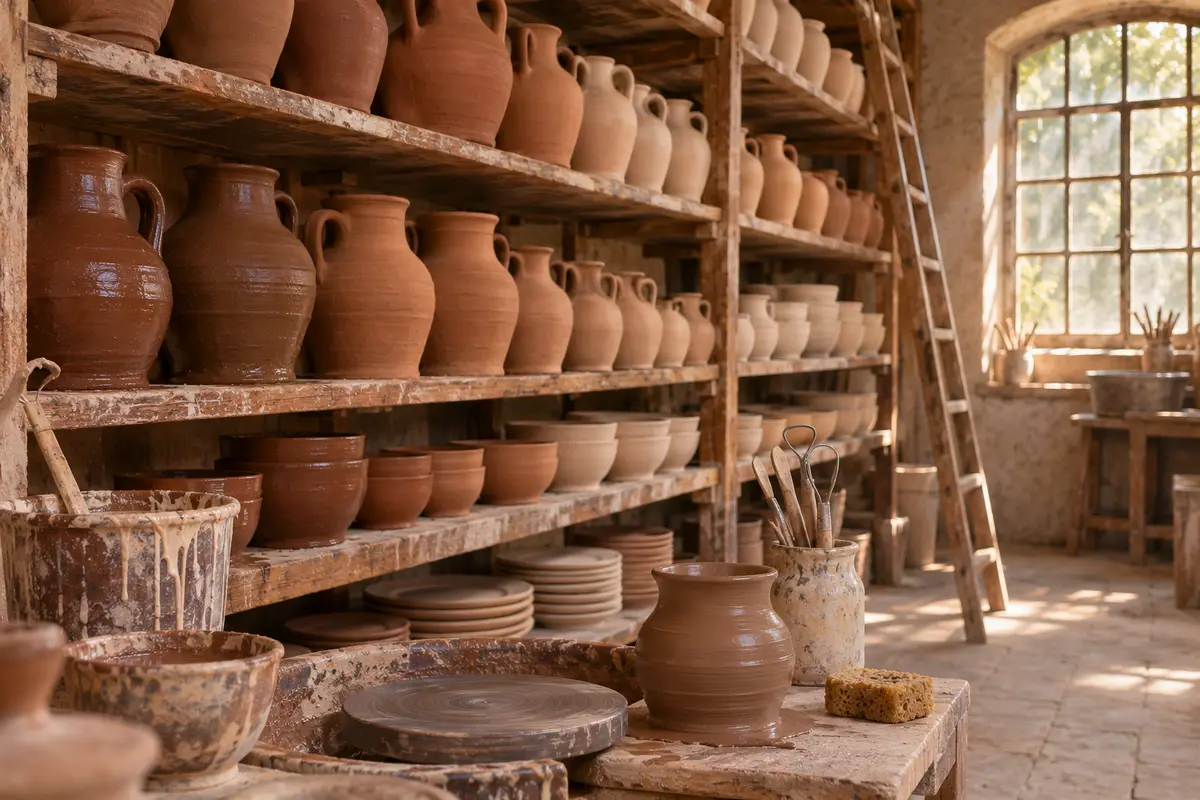
Thrown and trimmed pots are dried slowly on shelves, often turned and covered at first, so they do not warp or crack. Fast drying is a leading cause of loss.
Digitalfire's checklist of what makes clay crack in drying is long: a clay more plastic than needed, clay too soft, large flat pieces, uneven thickness, sharp convex angles, unfinished edges, poor joins, thin or exposed sections drying ahead of the rest, and a dry or drafty room. Its key point is that fast drying is not the problem; uneven drying is. A thrown plate with a base 1 inch thick and a rim a quarter of that was kept under cloth and plastic for days, because otherwise the rim would dry far ahead of the base.
Shrinkage explains the risk. All clays shrink in drying, and more plastic clays shrink more, because finer particles hold more water between them. A typical plastic pottery clay shrinks about 6%, and highly plastic bodies can shrink up to about 7.5% before cracks become hard to avoid. In Barcelos, drying is one of the most decisive phases for success in firing: formerly pieces dried in the sun, and today potters use the sun, dryers or the kiln itself, depending on the potter.
This is a general description, not confirmed to a single source.
Source: digitalfire.com, digitalfire.com, cearte.pt
AI-generated illustration in the manner of the tradition, not a photograph of a specific object.