IV Craft, clay and kiln · Plate 001
Digging clay
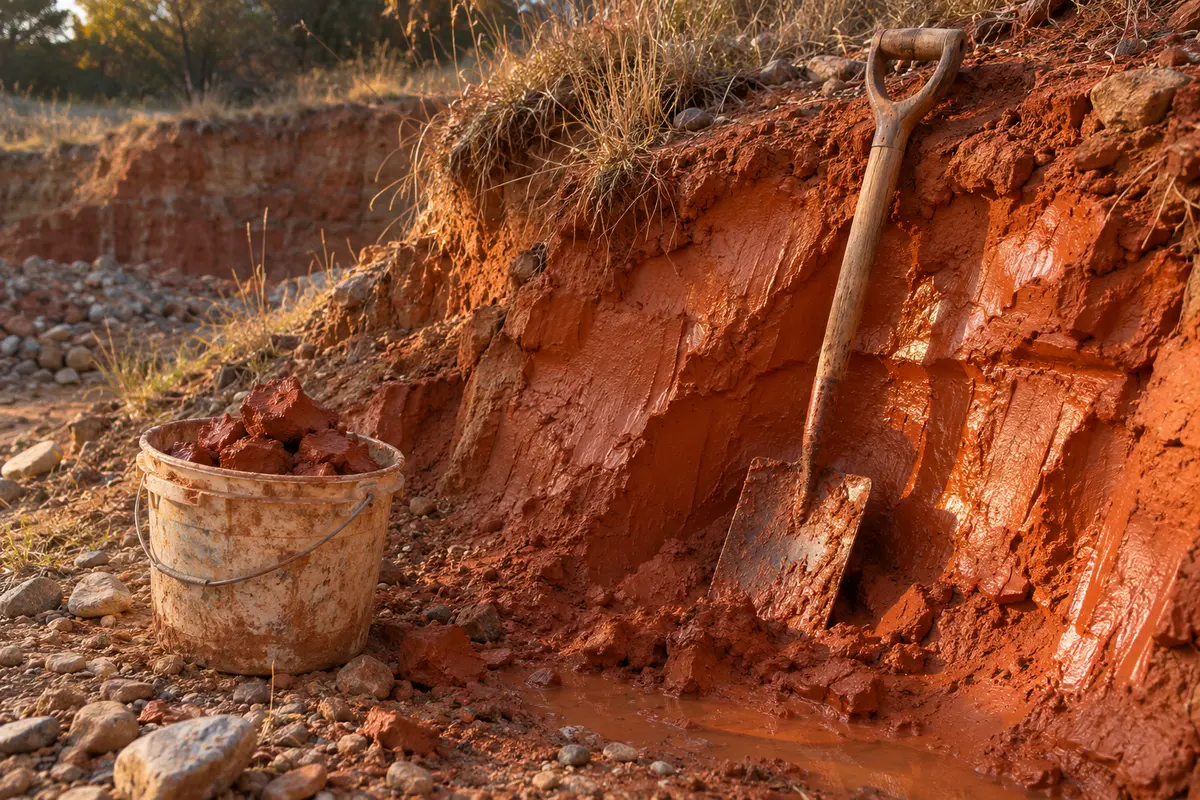
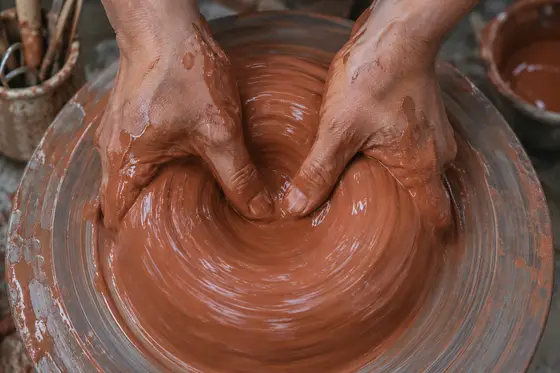
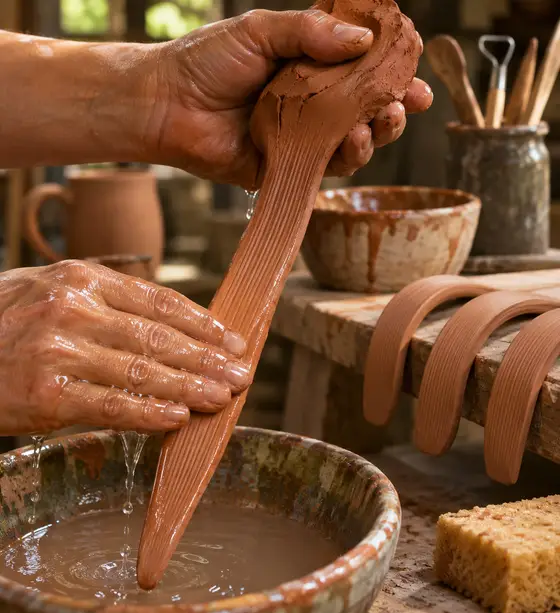
Traditionally clay was dug from pits near the pottery. Its make-up varies from place to place, which is why the ware has a regional character.
Barcelos potters once used only clay from the barreiros (clay pits) of the Cávado region: Prado, Cabanelas, Cervães and Manhente. By the time of the 2010 certification specification only Cabanelas was still worked, and so little came out of it that potters bought clay from elsewhere, such as Alvarães, Aveiro and Águeda. Most of what they use is common clay, plastic and easy to throw, brownish, beige or greyish when raw and brick-coloured once fired. A special clay, very plastic and binding, is sometimes added; raw it may be white, grey or black, and it fires white, grey or pale beige.
Where the pit lies is part of the craft. The Saber Fazer programme notes that clay is taken from barreiros, sometimes by communal work, and then cleaned of impurities, usually by sieving. In Nisa, in the Alto Alentejo, the paste draws on three local clays: a white one from about 12 km away at Estibas, a black one from about 3 km away at Fonte Seca, and a red one, rare in thick layers, used only to colour the surface. At Bisalhães, UNESCO records that the clay now comes from local tile factories instead of being dug from pits.
This is a general description, not confirmed to a single source.
Source: cearte.pt, programasaberfazer.gov.pt, museubordadoebarro.cm-nisa.pt, ich.unesco.org
AI-generated illustration in the manner of the tradition, not a photograph of a specific object.