IV Craft, clay and kiln · Plate 002
Soaking clay to slip
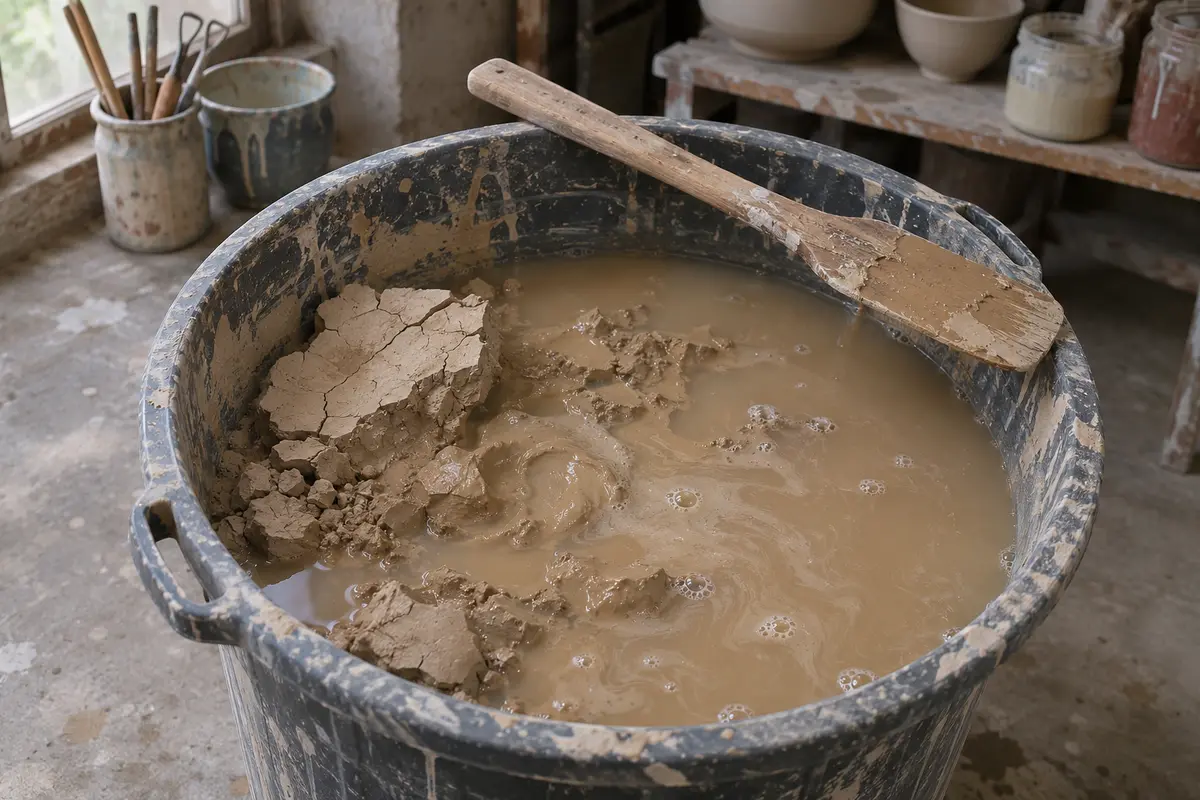
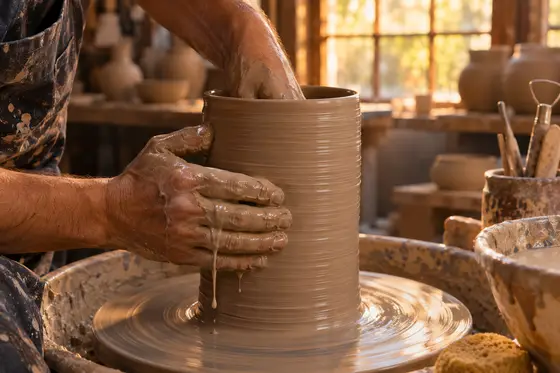
Dry clay is soaked until it breaks down into a liquid paste. This lets stones and roots be separated out before it is dried to a workable state.
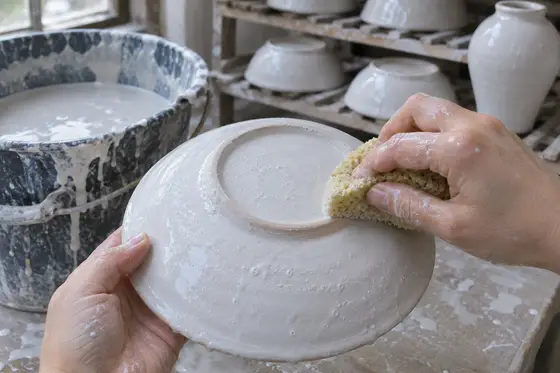
At Nisa, in the Alto Alentejo, dug clay is left to soak in a barreiro, a small tank in the potter's workshop, until it breaks down. It is then mixed with about the same amount of water to make a semi-liquid slurry. That watery clay is what pottery glossaries call slip: a suspension of clay, a clay body or glaze in water. Slurry, the same glossary says, generally has a lower solids content than slip. The point of the soaking is plasticity, the property that lets clay be shaped and keep its shape without cracking once the force is removed.
Not every workshop starts wet. The Saber Fazer programme describes dry clay ground by hand with picos de sovar or a wooden mallet (the fouce) on a stone sovadoiro or pio, then kneaded with water into a paste of the right consistency for the wheel; today a mechanical fieira (pug mill) does much of this. In Barcelos, clay delivered from the pits is kept outdoors beside the workshop, and many potters leave it in the open because exposure ages it and helps its plasticity develop. The paste is about three parts common clay to one part of another, moistened and homogenised in the pug mill.
This is a general description, not confirmed to a single source.
Source: museubordadoebarro.cm-nisa.pt, en.wikipedia.org, programasaberfazer.gov.pt, cearte.pt
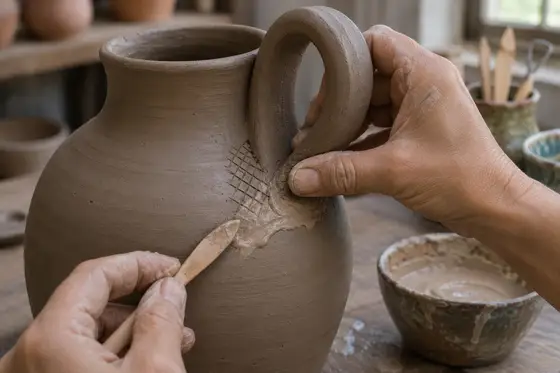
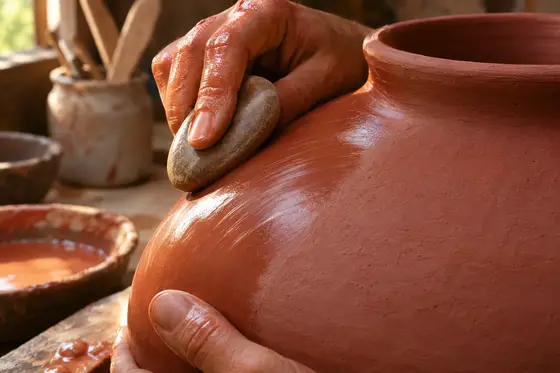
AI-generated illustration in the manner of the tradition, not a photograph of a specific object.