IV Craft, clay and kiln · Plate 036
Unloading the kiln
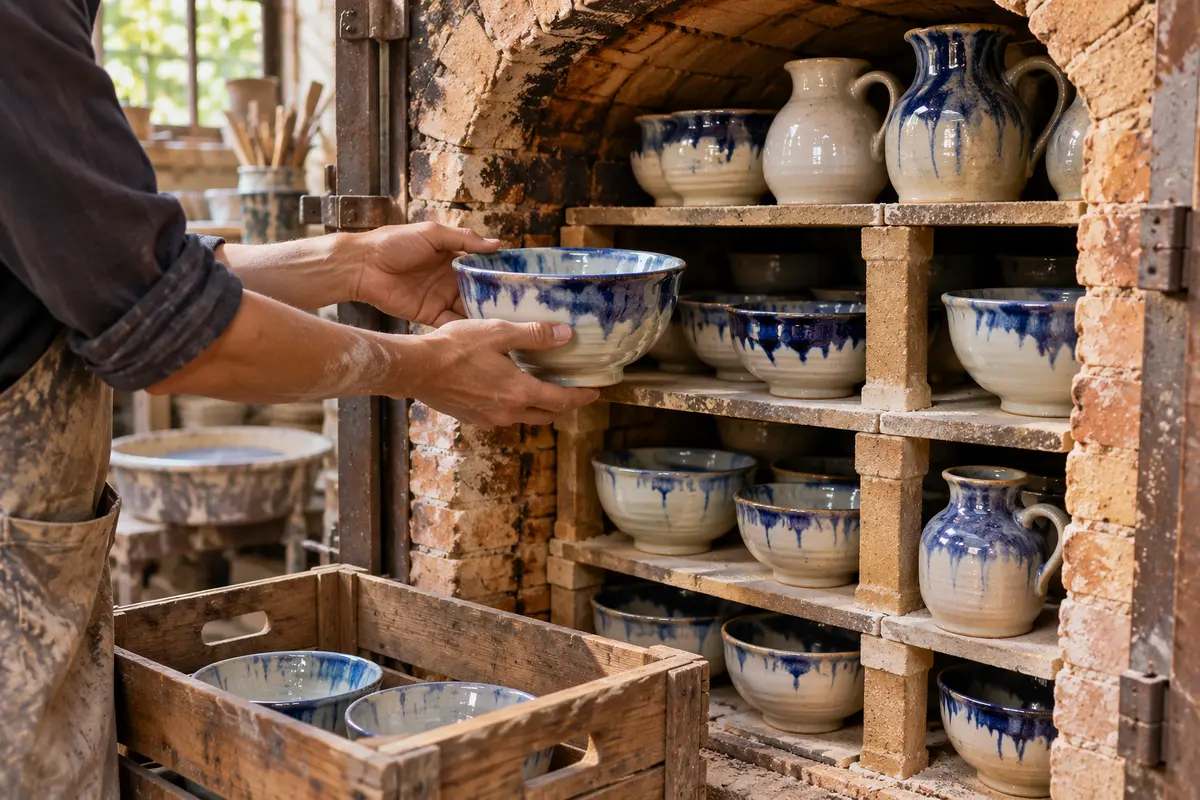
Unloading means taking the pieces out of the kiln once it has cooled. They are checked one by one for defects and glaze problems.
In English bottle ovens, loading and unloading were called placing and drawing, and were the work of specialised workers called placers. Ware travelled in sealed fireclay saggars, each weighing about 25 kilograms and carried into the kiln on the placer's head. Drawing was done 48 hours after the firing ended, though in hard times men went into a kiln still glowing red after 24. The wares were checked as they came out, and the placers' earnings depended on the success of the firing. A weekly firing in such an oven used some 14 tons of coal.
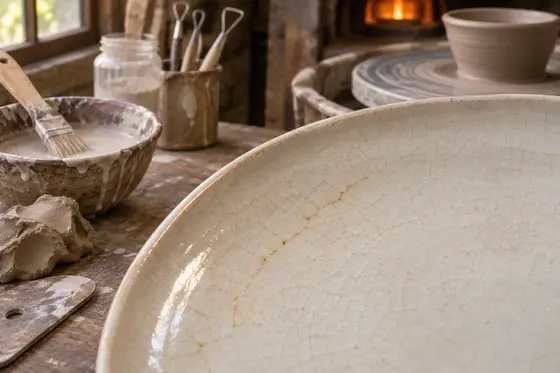
What the checking finds varies in time. Crazing may be visible straight after firing, or appear later, even after thermal shock. Digitalfire adds that if even one mature piece crazes, the others in that kiln will often craze eventually. Crawling, with bare clay between islands of glaze, usually means refiring and often loss. Pinholes, small holes reaching down to the body, are checked for too; they come from gases the body gives off during firing.
Source: en.wikipedia.org, digitalfire.com, digitalfire.com, digitalfire.com
AI-generated illustration in the manner of the tradition, not a photograph of a specific object.