IV Craft, clay and kiln · Plate 021
Stencil decoration
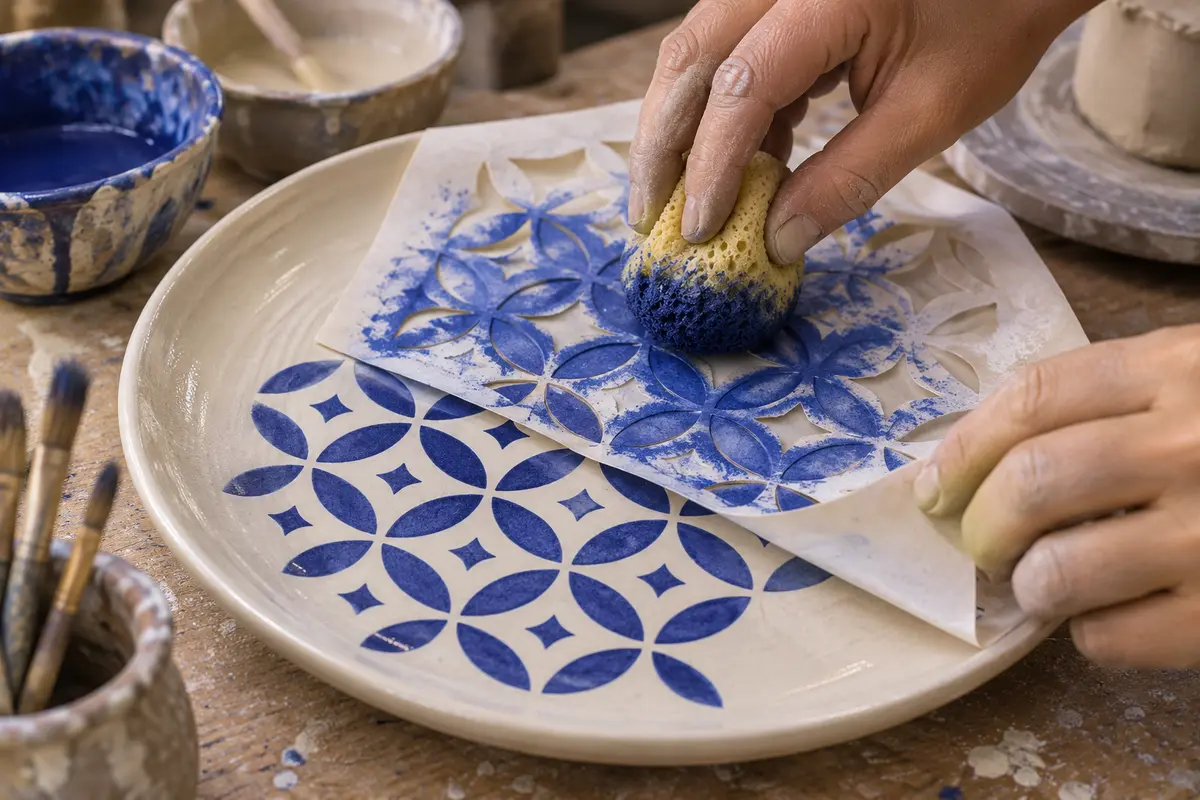
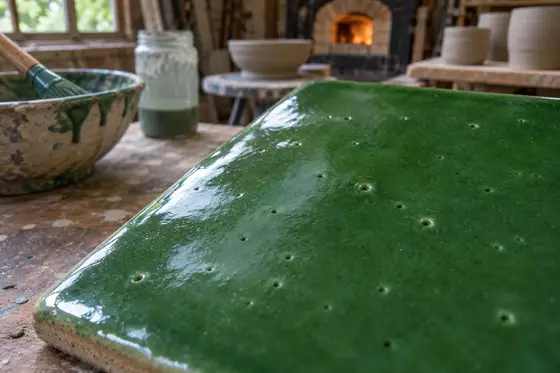
A stencil is a plate cut out with the motif, which in tile work may be metal. Colour brushed over it passes only through the openings, so patterns repeat quickly.
Portuguese tile terminology defines stencil decoration as brush work on the glazed surface through an estampilha, a metal piece with the motif to be painted cut out of it. A related industrial method, aerographed tile, used zinc stencils to mark the areas to be painted; the Sacavém factory is reported to have used this widely in the Art Deco period. Transfer printing, a third method, decorates the glazed surface with a decal, and the same source dates these semi-industrial techniques to the 19th century onwards.
The same source ties stencilling, estampilhagem, to the new semi-industrial and industrial production methods of the 19th century, which met mixed reactions, especially on façades. In the second half of that century the main Portuguese factories included the Fábrica Roseira, the Fábrica da Calçada do Monte and the Fábrica Viúva Lamego in Lisbon, and Massarelos and others in Porto and Vila Nova de Gaia. That is the world in which a plate with a cut-out motif, rather than a painter freehand, repeated a pattern across many tiles.
Source: pt.wikipedia.org
AI-generated illustration in the manner of the tradition, not a photograph of a specific object.