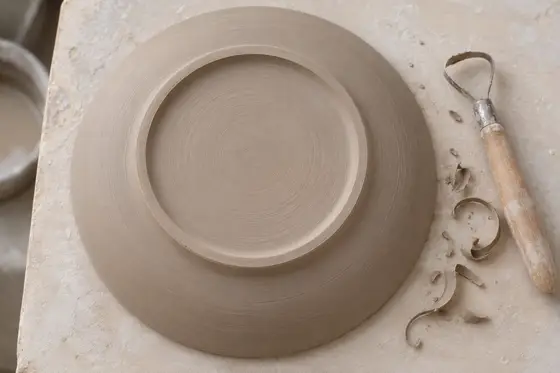
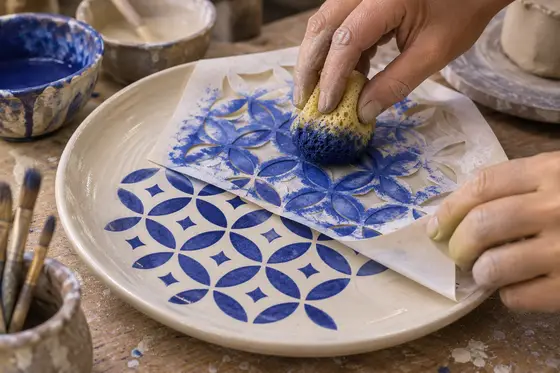
IV Craft, clay and kiln · Plate 029
Dipping in tin glaze
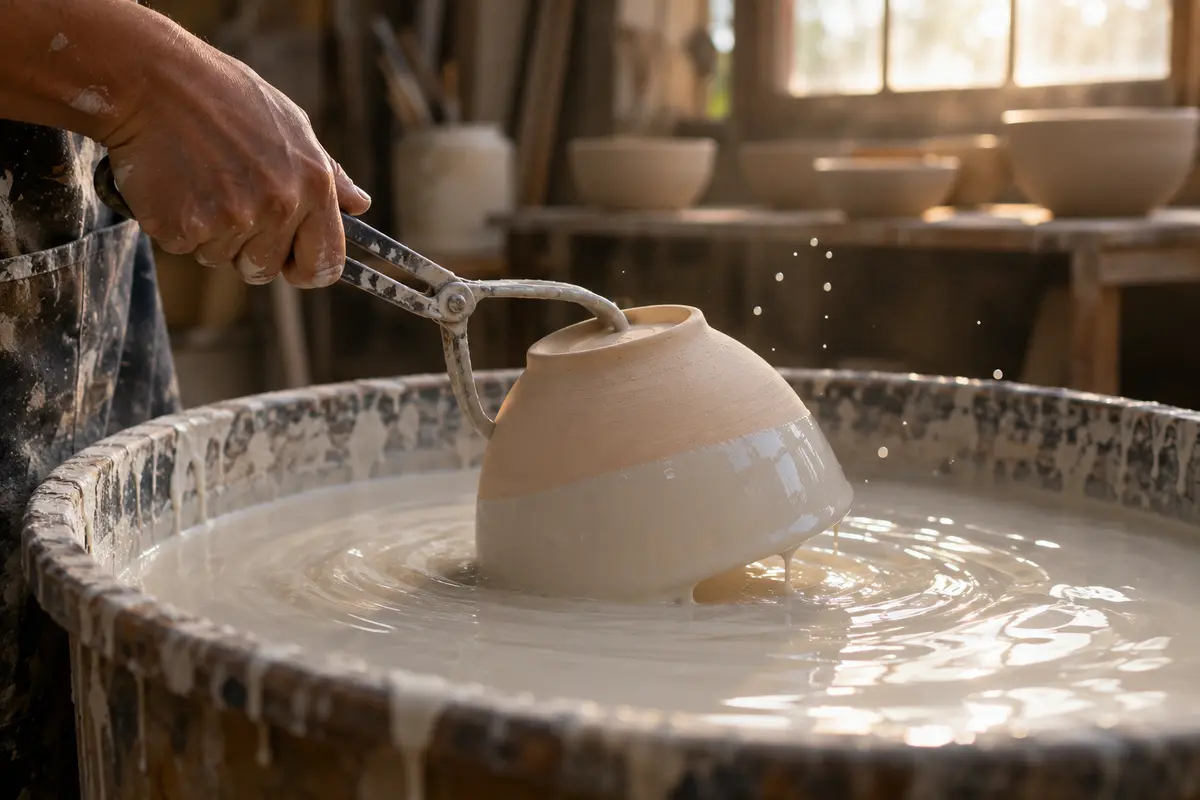
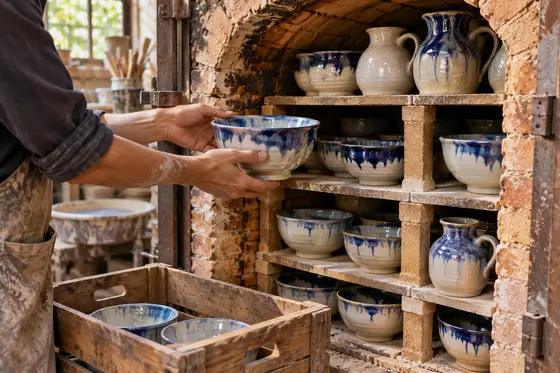
Tin glaze is white, glossy and opaque, thanks to tin oxide. It is usually applied to earthenware by dipping the bisque-fired piece briefly.
Tin glaze is white and opaque thanks to tin oxide. Portuguese Wikipedia describes the thick white liquid as made of tin, lead oxide, quartz-rich sand, salt and soda, which vitrifies in the second firing into an opaque glass. The Museu Nacional do Azulejo defines faiança as coating the chacota with tin glaze, painting directly on it and firing a second time. Dipping works because porous bisque absorbs water from the glaze suspension and builds up a layer in a few seconds. Bone-dry ware can be dipped too, but doing it well takes more than hobbyist expertise.
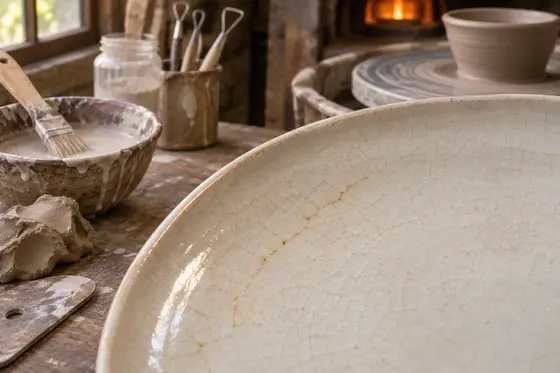
The white needs thickness. A majolica glaze must go on extremely thick to give an opaque, even white, whereas the glaze of fine transparent porcelain is thin and very evenly applied. There is no rule for thickness, only experience: Digitalfire aims for about the thickness of a credit card for most common glaze types. Dipping glazes are easier to put on evenly but trickier to get to the right thickness. The word faiança, in use in Portuguese since the 17th century, comes from Faenza, the Italian centre where this ceramic was made.
Source: pt.wikipedia.org, raiz.museusemonumentos.pt, digitalfire.com, digitalfire.com
AI-generated illustration in the manner of the tradition, not a photograph of a specific object.