IV Craft, clay and kiln · Plate 032
Wood-fired kiln
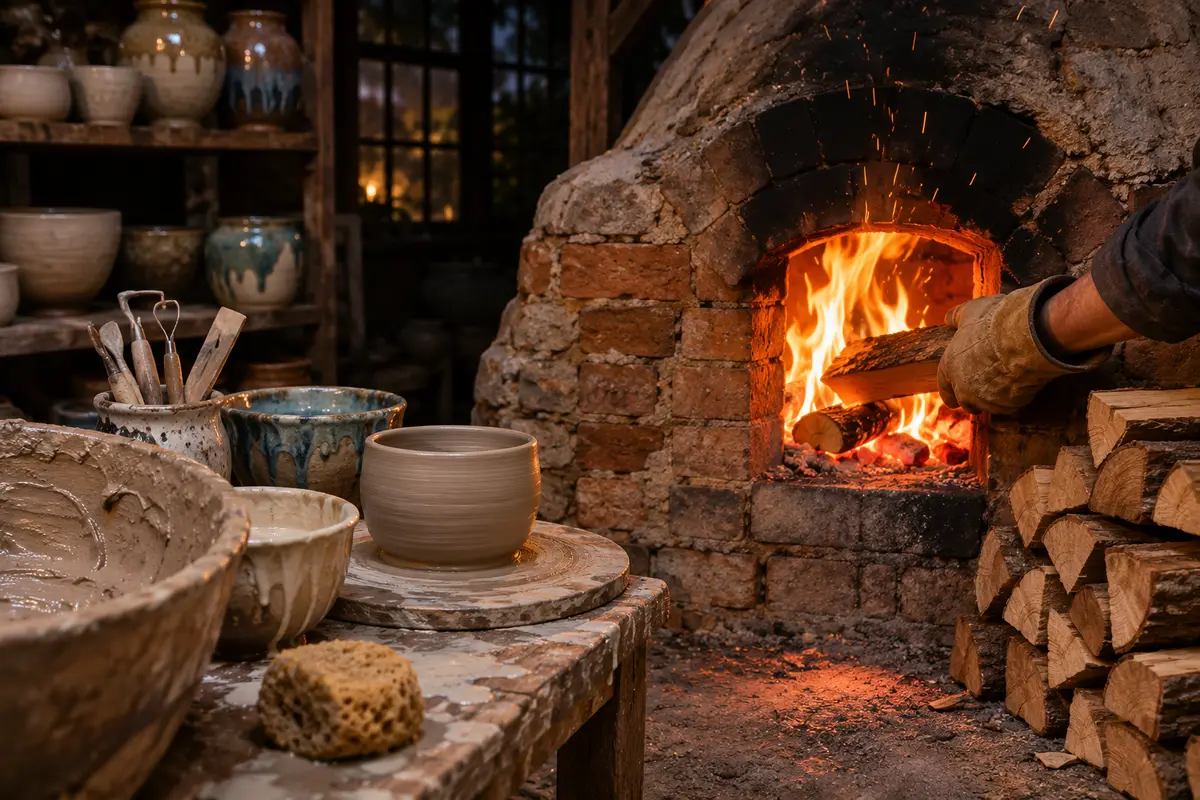
A wood kiln burns wood in a firebox, and flame and hot gases pass through the chamber. The temperature rises slowly over many hours.
In the Barcelos specification, every pottery once had a wood kiln. From the 1980s some potters replaced wood with gas, above all to raise output, but some still keep their wood kilns working. Loading is slow and difficult, because raw pieces are fragile, and a peephole is left among them. Wood kilns have no instruments: the potter controls the time and the wood needed to reach firing temperature by constantly watching the colour of the pieces and of the kiln interior. Most glazed pieces there are fired once, clay and glaze together, at about 970 °C.
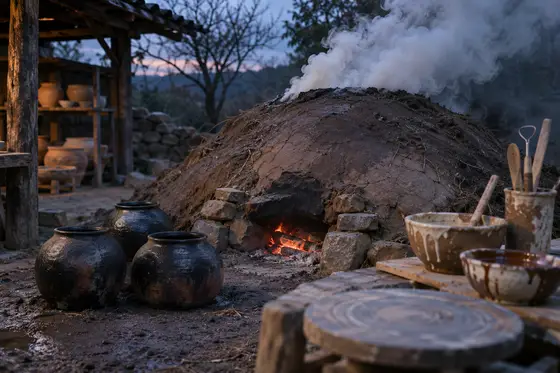
Wood also makes black pottery. The same document says the firing is much like red ware, except that the kiln is closed up completely when it reaches top temperature, just after being fed with wood. No more oxygen enters the firebox, carbon forms and impregnates the pieces, turning them black. More generally, a firing chamber built around the pots, with baffles and a stoking hole, conserved heat, and a chimney improved the draw so that fuel burned more completely. Digitalfire adds that a typical open wood fire easily reaches temperatures far above those that make clay sinter.
This is a general description, not confirmed to a single source.
Source: cearte.pt, en.wikipedia.org, digitalfire.com
AI-generated illustration in the manner of the tradition, not a photograph of a specific object.