IV Craft, clay and kiln · Plate 010
Treadle potter's wheel
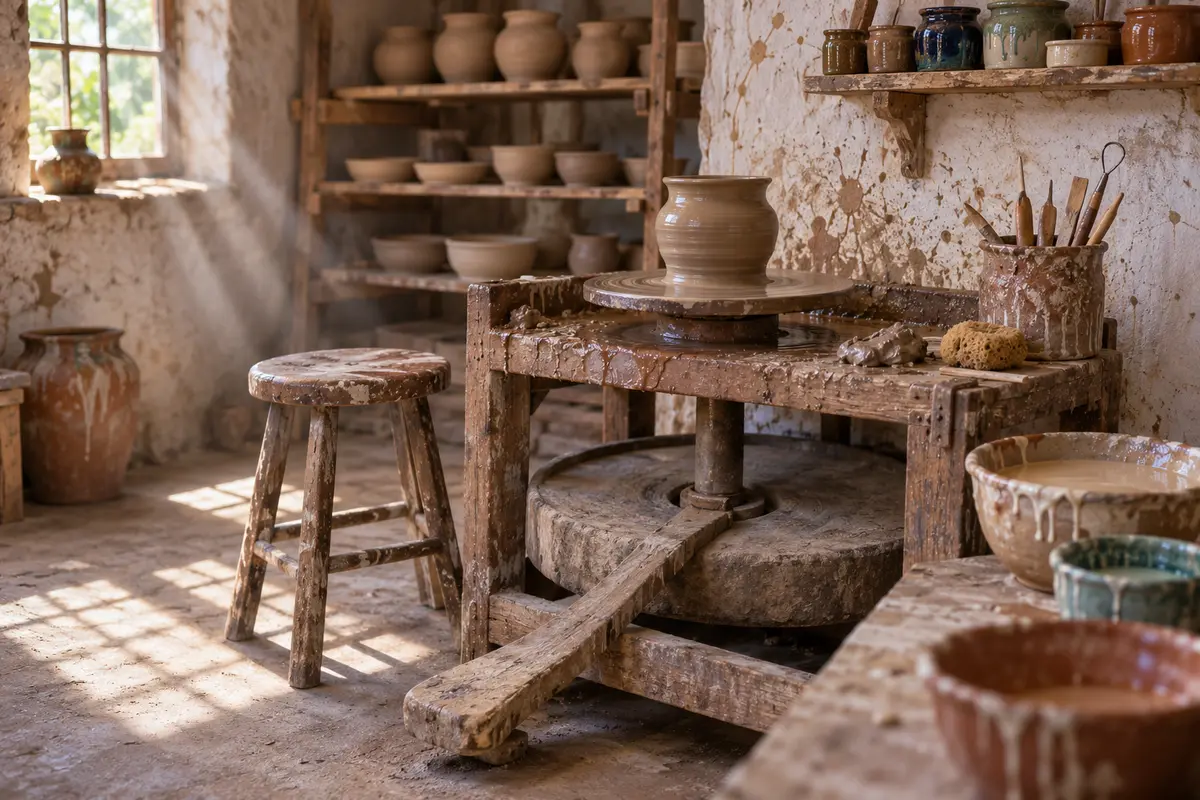
Before electric motors, wheels were turned by hand or by foot. In Malhada Sorda, for instance, the low wheel turns slowly with the foot on a wooden crosspiece.
The Barcelos specification describes the foot-driven wheel as generally wooden, with a wheel about a metre across near the ground, joined by an axle to the rodalho, the upper wheel on which the potter places the clay. A seat sits beside it, and another part holds the basin for wetting the hands, the clay to be shaped and the finished pieces. The potter sets the lower wheel moving with the foot until the rodalho reaches a suitable speed; the rodalho turns anticlockwise. Barcelos pieces were formerly made exclusively on this wheel.
Demand changed the wheel. The same specification says a foot wheel could not always meet the quantity needed, so more potters adopted electric wheels, often a foot wheel with a motor fitted. For black pottery, the Saber Fazer programme describes a traditional low hand wheel made by local carpenters, with two discs joined by a vertical shaft of about 80 cm, the potter seated; elsewhere wheels were tall and foot-driven, and many were replaced by electric ones, as in Olho Marinho and Molelos.
This is a general description, not confirmed to a single source.
Source: cearte.pt, programasaberfazer.gov.pt
Read about it: From a lump of clay to a fired pot: the wheel, the drying shelf and the kiln →
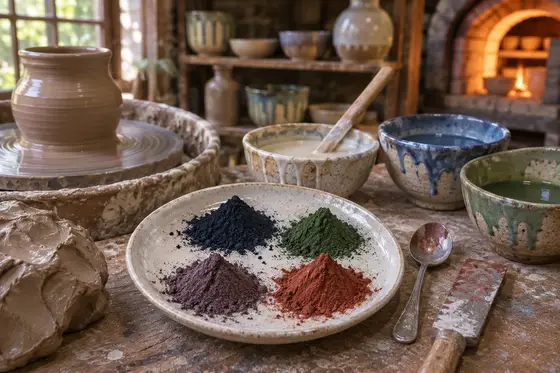
AI-generated illustration in the manner of the tradition, not a photograph of a specific object.