IV Craft, clay and kiln · Plate 025
Black pots
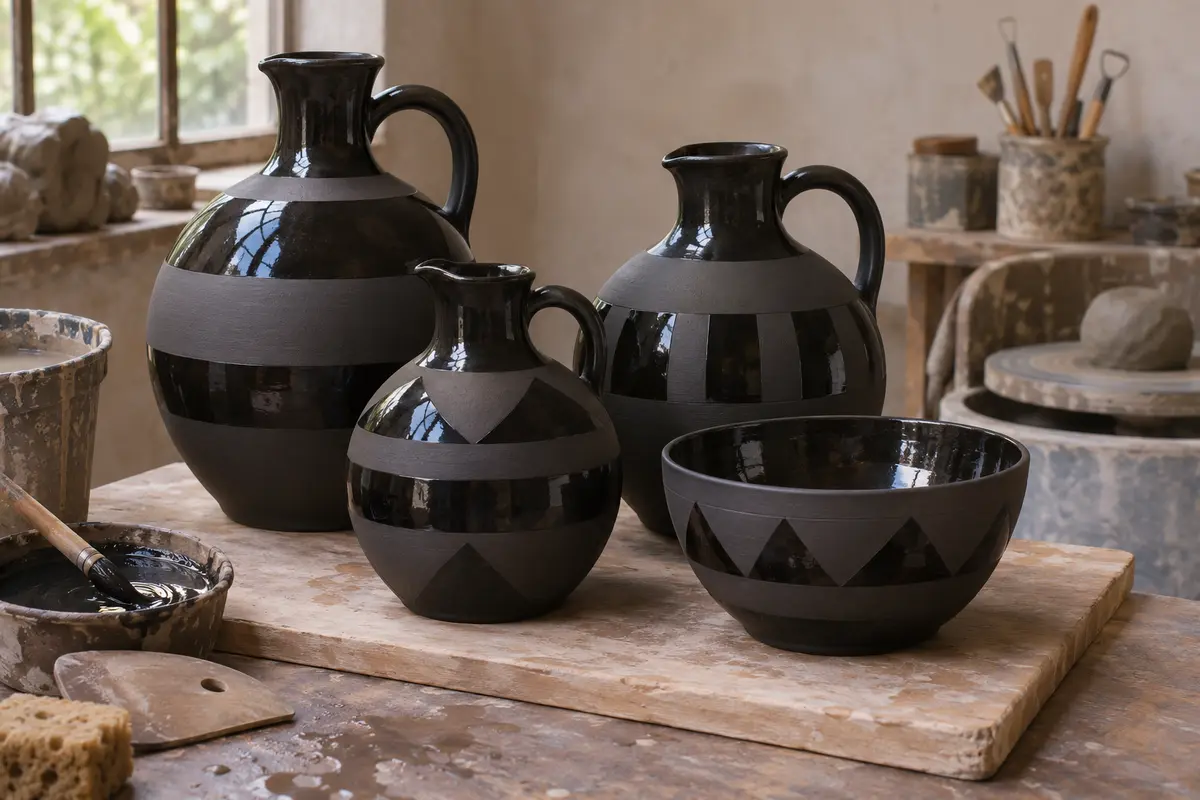
Black ware ranges from metallic grey to black, the result of reduction firing. It is associated with Bisalhães (Vila Real), inscribed by UNESCO in 2016, and with Molelos (Tondela).
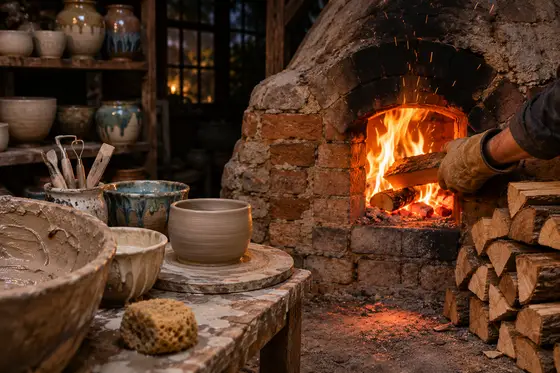
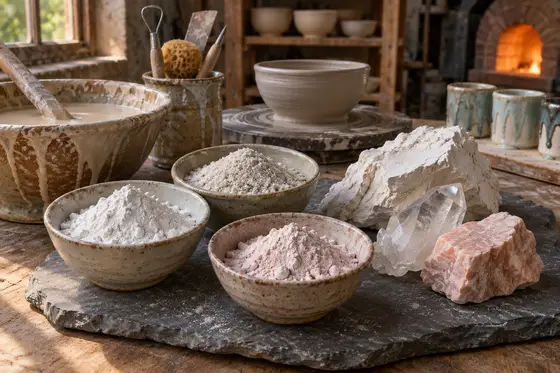
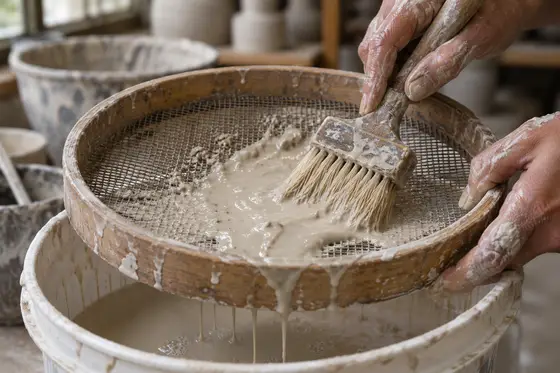
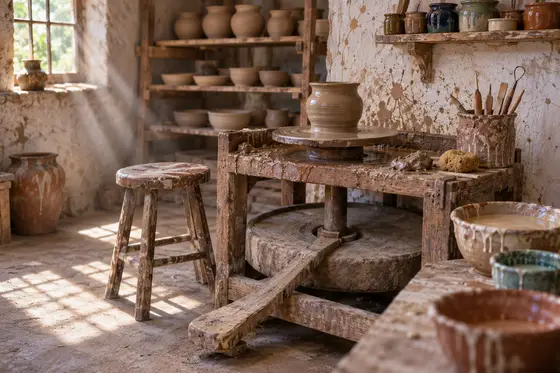
UNESCO calls Bisalhães the land of pot and pan producers, and the craft appears on the village's coat of arms. The pieces are made for decorative and cooking use. Making starts with clay crushed in a stone tank with a wooden hammer and sifted; pots are shaped and refined with laths, smoothed with pebbles, decorated with a stick and fired in a kiln. Men do the heavy clay preparation, women mainly decorate, and transmission is almost entirely within families. Inscribed in 2016 on the Urgent Safeguarding list, it faces fewer practitioners and cheaper industrial alternatives.
It is not one village. Saber Fazer identifies 53 production places between the 17th and 20th centuries, and says that in 2003 only eight centres north of the Tagus still worked, with nine nuclei active today. Colours range from light metallic grey to black. Diário de Notícias reported in 2016 that only five potters in Bisalhães did it as their main activity, most over 75, with processes going back at least to the 16th century. In Molelos, Tondela, seven potters keep the tradition, and the ware was formerly exclusively utilitarian. Barcelos black ware, being porous, takes direct flame and oven.
Source: ich.unesco.org, programasaberfazer.gov.pt, dn.pt, rtp.pt, cearte.pt
AI-generated illustration in the manner of the tradition, not a photograph of a specific object.