IV Craft, clay and kiln · Plate 026
Loading the bisque kiln
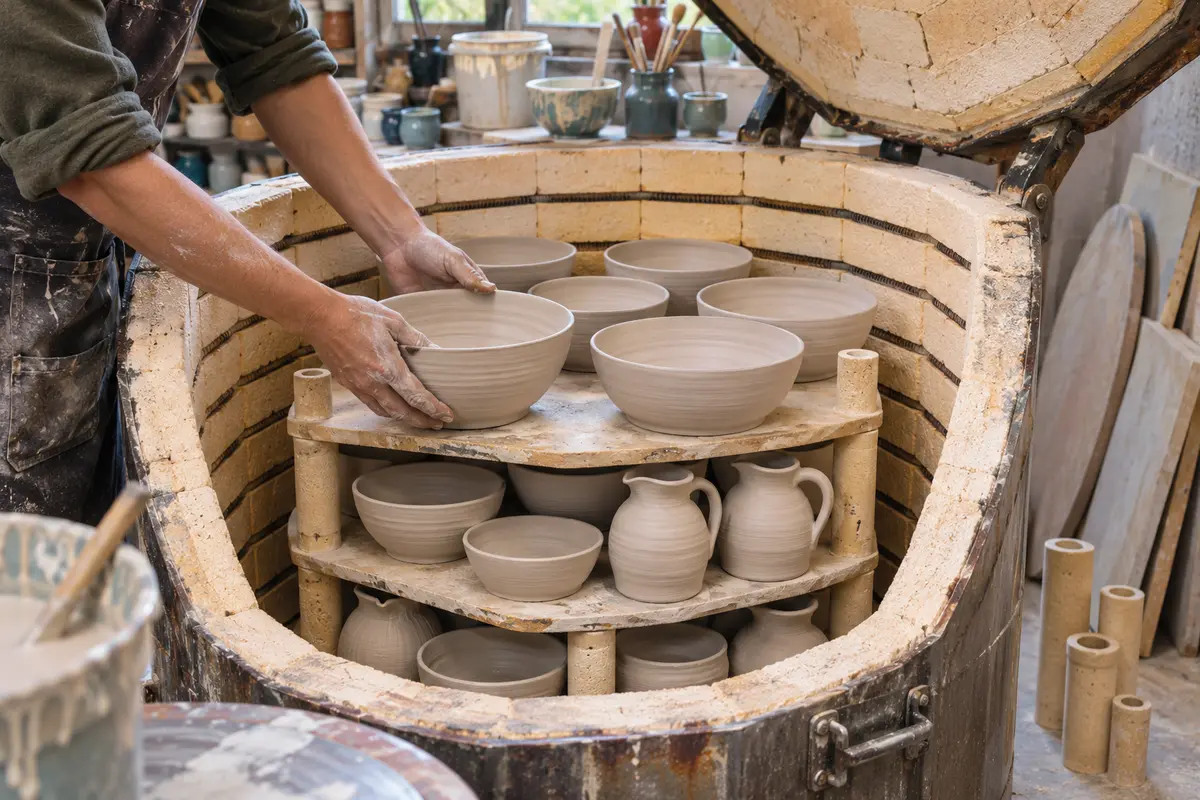
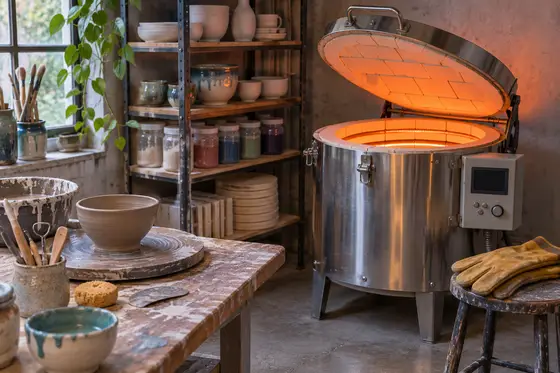
Dry pieces are loaded for the first firing, which produces the chacota (bisque). At this stage they can touch, because there is no glaze yet to stick them together.
In the Barcelos pottery specification, unglazed matt ware is placed in the gas kiln with the pieces touching one another, while glazed ware is loaded without contact, because the melting glaze would join the pieces together. The gas kilns it describes have wagons: pieces sit on plates separated by supports, and the loaded wagon rolls on rails into the kiln. In a wood kiln, loading is slow and difficult, since unfired pieces are very fragile, and a small opening is left among them as a peephole to see the inside during firing.
Dryness matters as much as stacking. Ware is seldom dry all the way through, so the first hours of a firing act as the last drying stage. Potters candle the kiln, heating it very slowly: overnight for ordinary functional ware, days or even a week for thick sculptural pieces, so steam does not crack or burst the work. The bisque temperature is a compromise. A porosity above 15% lets the piece drink up glaze, yet firing as high as practical burns off more decomposition products, and a soak at the end gives heavy ware the hours it needs to release its gases.
Source: cearte.pt, digitalfire.com, digitalfire.com
AI-generated illustration in the manner of the tradition, not a photograph of a specific object.