IV Craft, clay and kiln · Plate 027
Bisque ware
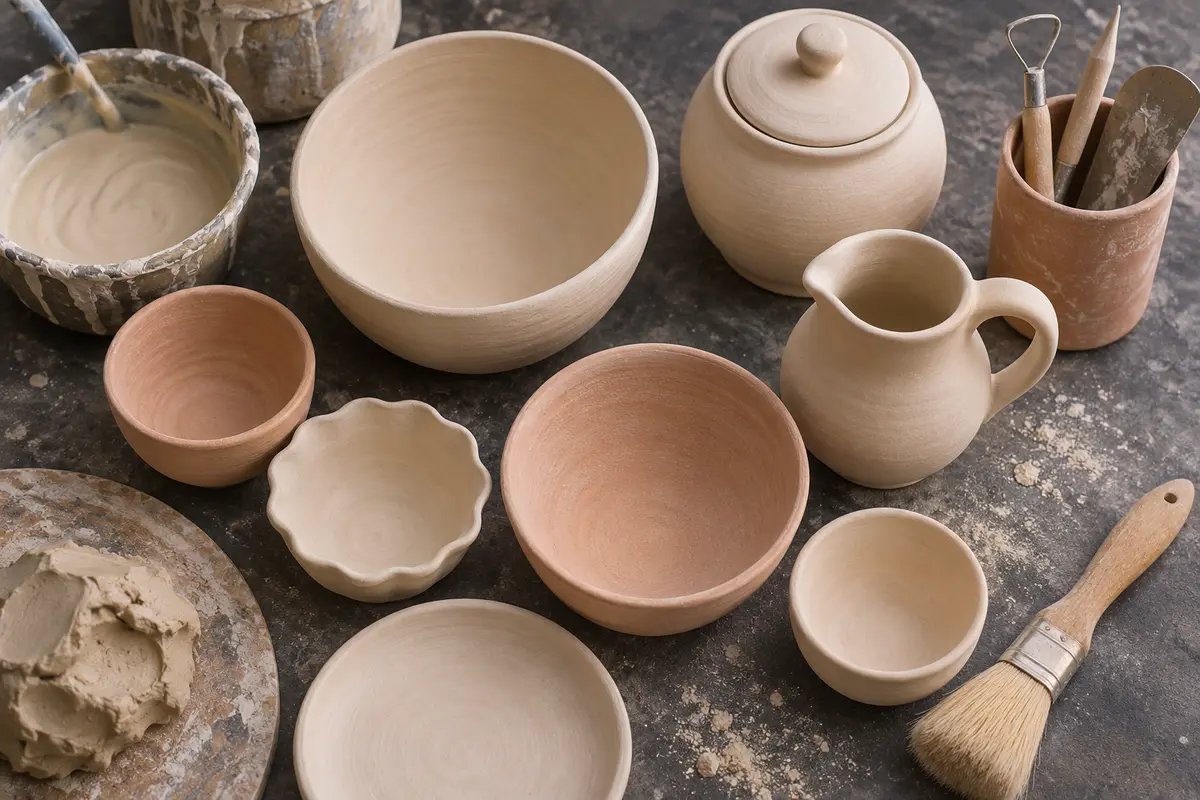
Chacota is the first firing of ceramics that will be glazed. The piece comes out hard but still porous, ready to take glaze.
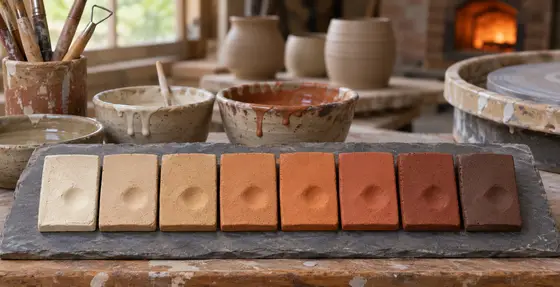
The Priberam dictionary records chacota, in ceramics, as the first firing of pottery that is going to be glazed; the word also means mockery, so context matters. English calls this stage biscuit or bisque, and the second firing the glost or glaze firing. A piece that has merely dried is not yet biscuit, although the English word is sometimes used loosely for it. Today biscuit firing is usually at least 1000 °C, and it makes permanent chemical and physical changes that leave a much harder, more resilient object.
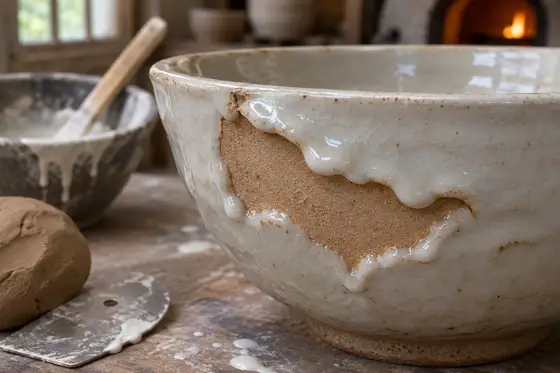
What defines bisque is that it stays porous. A porosity generally above 15% lets it absorb water from a glaze suspension, so a dipped piece can be dry enough to handle within seconds. The firing temperature tunes this: a low bisque is typical of pottery, while a vitrifying bisque is used for bone china and some stoneware. In Portuguese tile-making the same object is called biscoito or chacota, the name for a tile that has been fired once and not yet glazed.
Source: dicionario.priberam.org, en.wikipedia.org, digitalfire.com, pt.wikipedia.org
AI-generated illustration in the manner of the tradition, not a photograph of a specific object.