IV Craft, clay and kiln · Plate 034
Bottle kiln
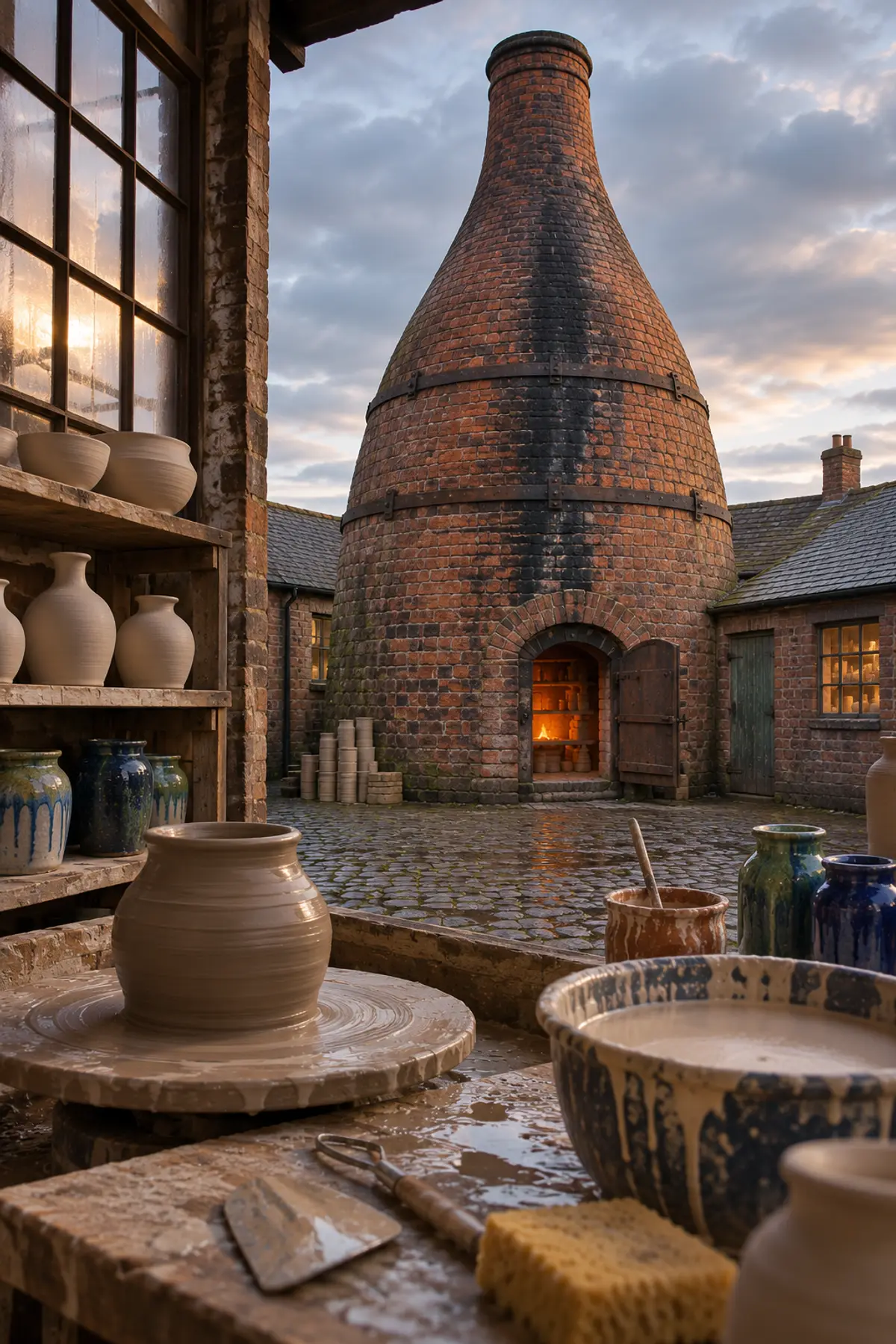
A brick kiln named for its shape, a type common in England until the 1960s. The one at the Museu de Cerâmica de Sacavém, in Loures, is about 12 m tall and can be visited.
The kiln at the Museu de Cerâmica de Sacavém, Kiln 18, was built in the 1940s and is a bottle kiln, a type common in the Staffordshire Potteries until the 1960s. It is made of brick, reinforced on the outside with iron bands, with a diameter of 6 metres and a height of 12 metres. It has ten furnaces fuelled by wood or coal, and a firing could last up to a week. Pieces were placed in saggars, ceramic containers, so the gases would not damage them. Visitors can go inside the kiln.
The name describes the shape, not the products. Bottle ovens are typical of Stoke-on-Trent, where 47 still stand as listed buildings, mostly built in the later 18th and the 19th centuries. The brick chamber sits inside an outer shell called the hovel, which helps create an updraught, and its walls are about 30 centimetres thick. Efficiency was low, with roughly 70% of the fuel's energy lost as waste heat. Britain's Clean Air Act 1956 ended coal-fired pottery ovens, and firings stopped by the end of 1963.
This is a general description, not confirmed to a single source.
Source: en.wikipedia.org, en.wikipedia.org
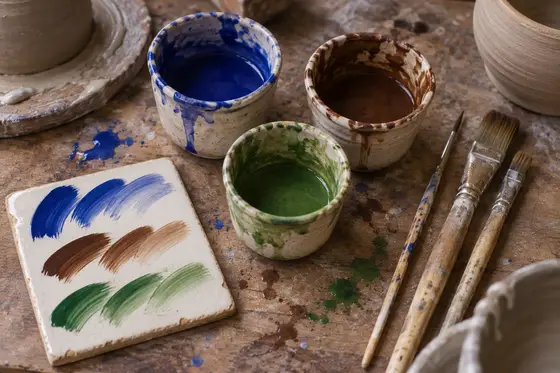
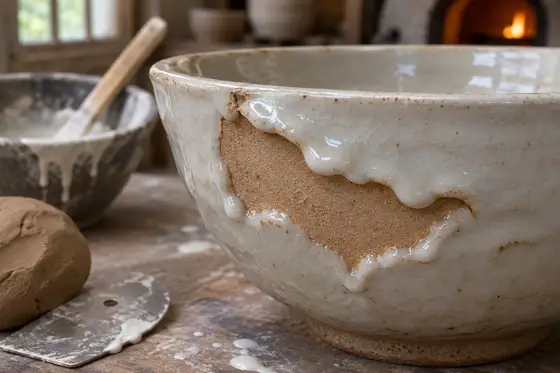
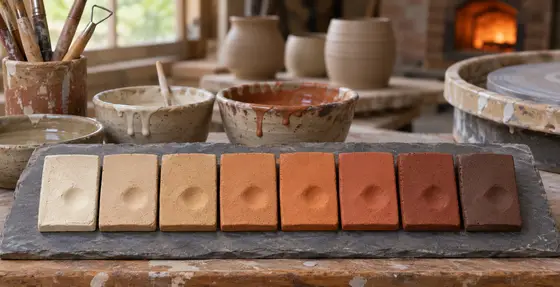
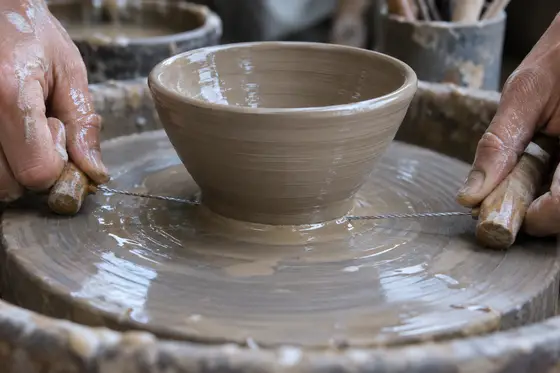
AI-generated illustration in the manner of the tradition, not a photograph of a specific object.