IV Craft, clay and kiln · Plate 047
Glaze buckets
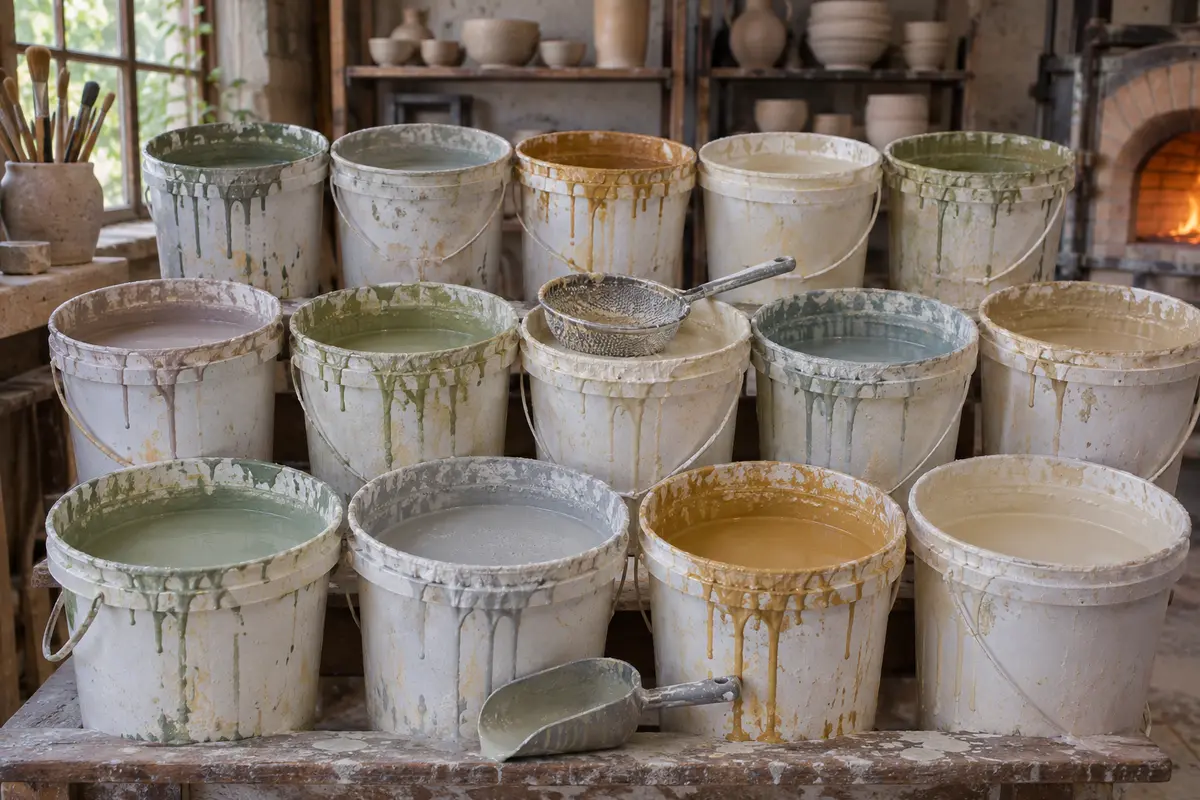
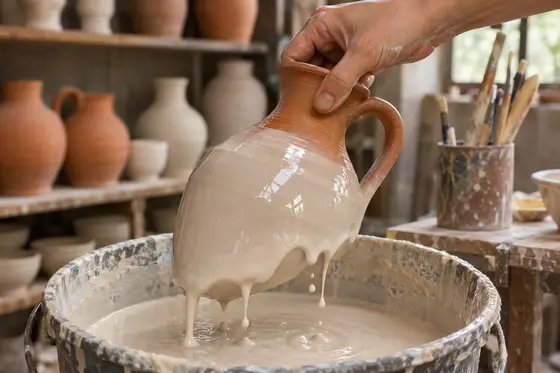
Each glaze is kept in its own bucket, tightly lidded and kept stirred. The colour of the wet glaze rarely resembles the colour it will fire to.
A glaze waiting in its bucket is a suspension, and solids want to sink. A good dipping slurry should gel and hang on: a finger pulled out comes out evenly coated, without dripping, and the glaze does not settle into a hard cake. Kaolin helps by keeping silica, feldspar and frit from settling, and Digitalfire gives 15 to 20% kaolin as an adequate amount. Bentonite gels water well in small amounts, but over about 5% it makes a glaze dry too slowly. Specific gravity is the anchor for keeping a batch consistent from one dipping to the next.
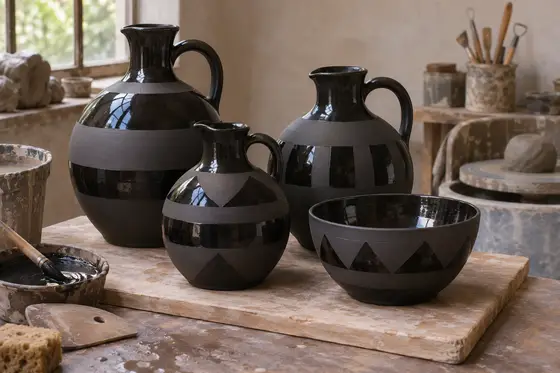
The wet look in the bucket misleads. The raw colour of a metal oxide seldom resembles the colour it fires to, unlike ceramic stains, because the result depends on chemistry, concentration, particle size, atmosphere and firing schedule. Thickness matters as well: a transparent coloured glaze changes shade with the layer, and dipping glazes go on evenly but are harder to get to the right thickness, which depends on specific gravity, thixotropy, the type of clay and the bisque temperature. Experienced workers judge it by eye and by how long they dip.
This is a general description, not confirmed to a single source.
Source: digitalfire.com, digitalfire.com, digitalfire.com, digitalfire.com
AI-generated illustration in the manner of the tradition, not a photograph of a specific object.