V Ceramics in place · Plate 010
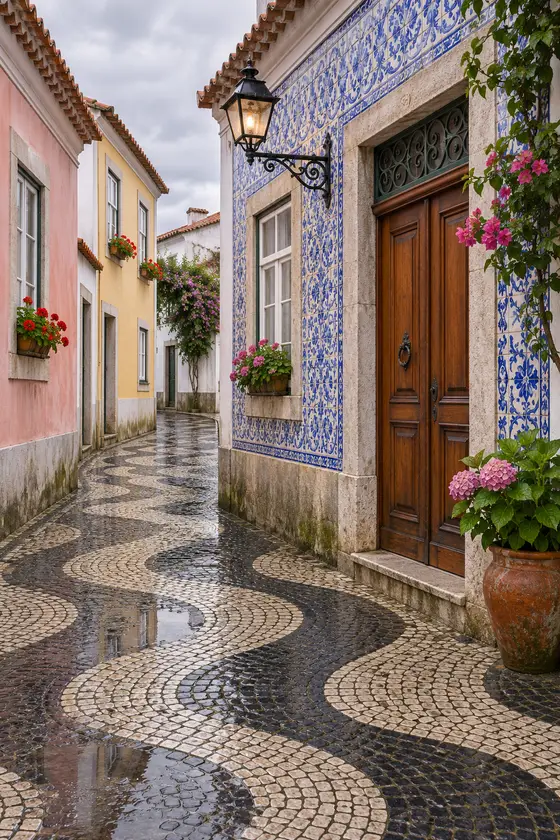
Façade tiles and iron balcony
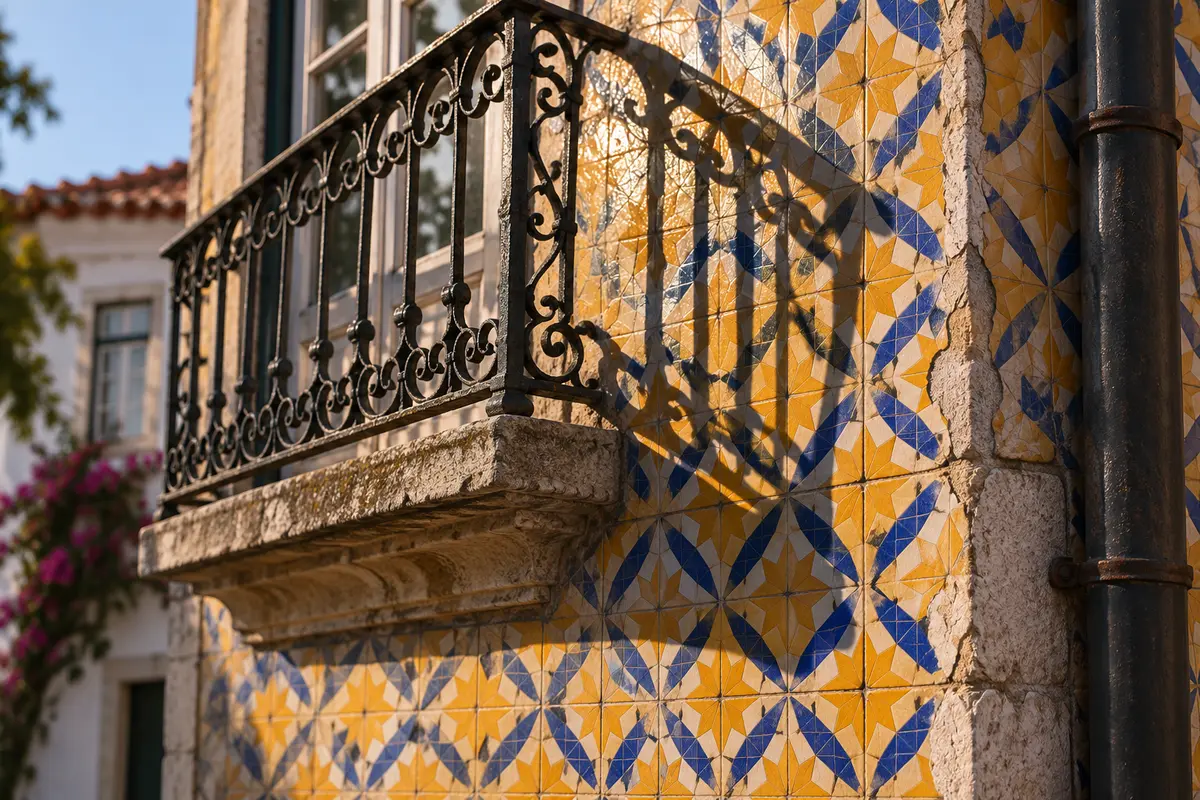
Facade tiles are often repeated patterns that protect the wall and brighten the street; here they sit beside an iron balcony.
Facade tile can carry real design. In 1902 Rafael Bordalo Pinheiro designed an Art Nouveau pattern, a grasshopper lying across two ears of wheat among winding leaves, in relief, for the Panificação Mecânica, a bakery in Campo de Ourique, Lisbon, where it decorated the counter. The Museu Bordalo Pinheiro says only two of his commercial decorations survive in Lisbon, the bakery and the Tabacaria Mónaco. English Wikipedia adds the Casa do Ferreira das Tabuletas, in Rua da Trindade, Lisbon, built between 1849 and 1865 with trompe-l'oeil tiles, among examples of tiled facades.
Because facade tiles face weather and street, their survival is a legal question. Law 79/2017 of 18 August, read here from a transcription on a legal-information site, says operations removing facade tiles need a licence, whether or not the facade faces the street, and that demolishing tiled facades or removing their tiles is grounds to refuse a licence unless the council authorises it in a justified case. English Wikipedia says Lisbon's Banco do Azulejo stores about 30,000 tiles from demolished or condemned buildings, and gives an estimate that 25 percent of Lisbon's artistic tiles were lost between 1980 and 2000, a figure we cannot verify at the source.
This is a general description, not confirmed to a single source.
Source: en.wikipedia.org, artsandculture.google.com, informador.pt, artsandculture.google.com
AI-generated illustration in the manner of the tradition, not a photograph of a specific object.