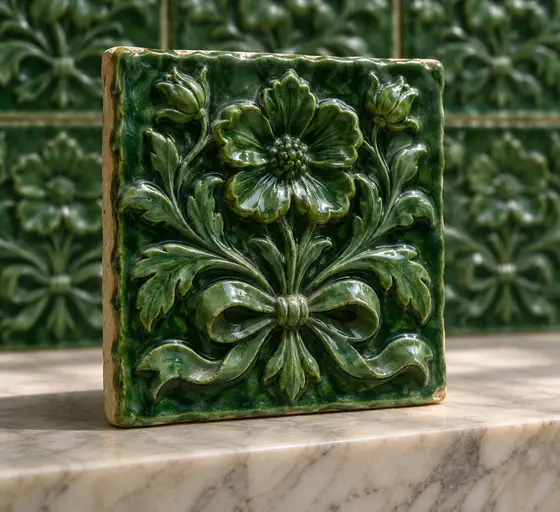
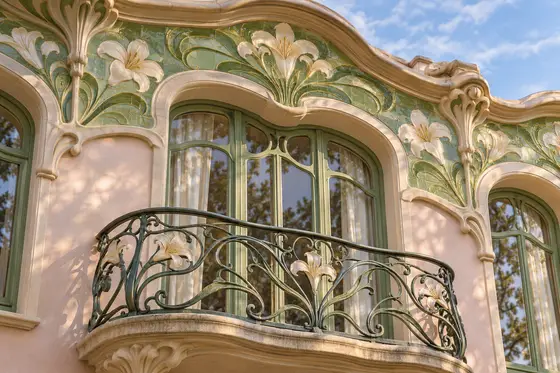
I Tile types and patterns · Plate 058
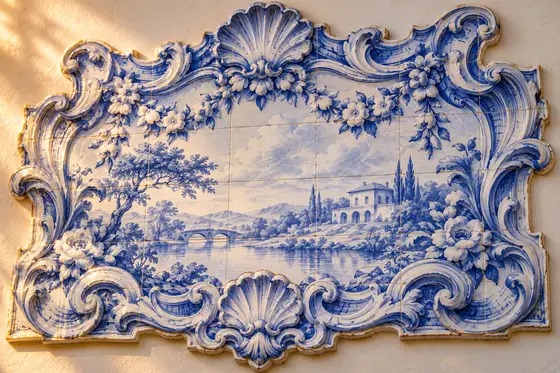
Large azulejo wall, church interior
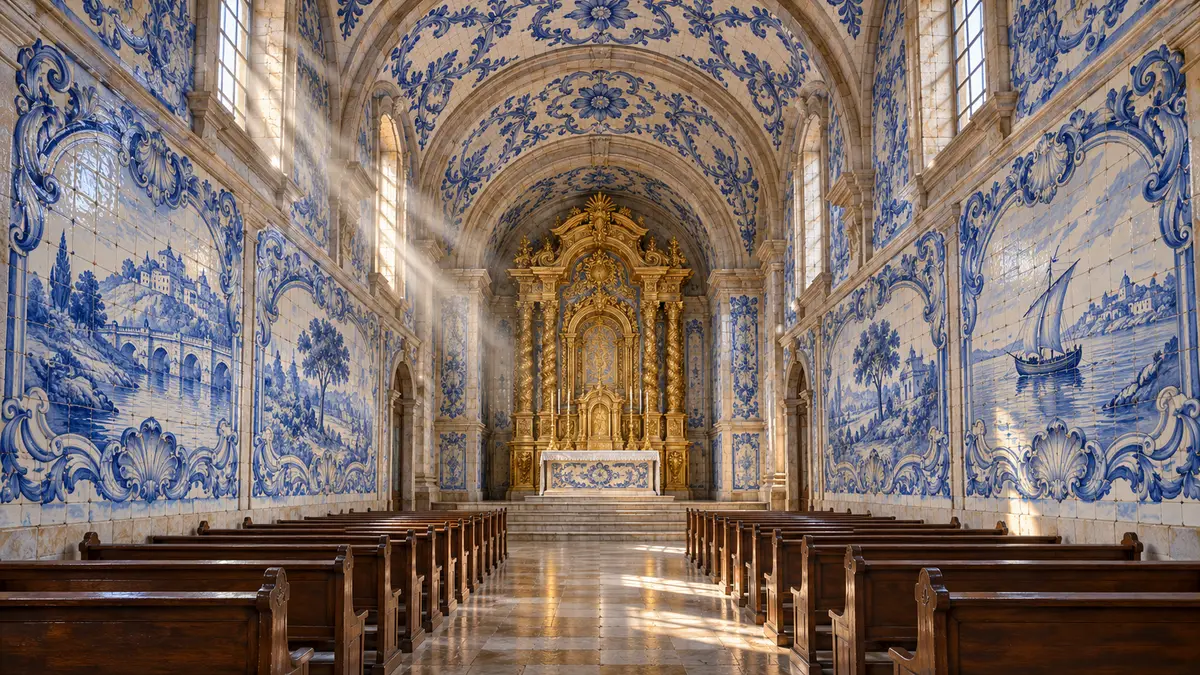
Portuguese churches keep many extensive tile panels, covering the walls of nave and chancel.
Baroque churches covered every surface, including ceilings and vaults, and the tiling complemented the gilded woodcarving (talha dourada). Portuguese Wikipedia sorts church tilework into types: enxaquetado, a checkerboard, at Santa Maria de Marvila in Santarém, São Quintino in Sobral de Monte Agraço and Jesus in Setúbal; azulejo de tapete, the carpet pattern, at Carcavelos, Alcáçovas and Cuba; and altar frontals, as at the Hospital de Santa Marta in Lisbon and the Convento de Santa Cruz do Buçaco.
Grotesques decorate the Ermida de Santo Amaro in Santarém and the Convento da Graça in Lisbon. Francisco de Matos made the Chapel of São Roque in Lisbon in 1584; its side walls were damaged in the 1755 earthquake and only the lower part survived intact. The Museu Nacional do Azulejo is itself a convent, built in 1509 as Madre de Deus, with Moorish tiles on the walls to the church and a baroque interior of gilded carving. Tile was also put on church exteriors in the north: the Capela das Almas in Porto, covered in 1929, and Santo Ildefonso, whose façade has about 11,000 tiles by Jorge Colaço.
This is a general description, not confirmed to a single source.
Source: pt.wikipedia.org, en.wikipedia.org, portoalities.com, aramcoworld.com
AI-generated illustration in the manner of the tradition, not a photograph of a specific object.