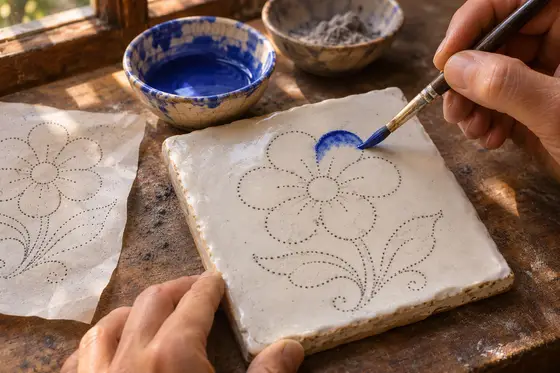
I Tile types and patterns · Plate 005
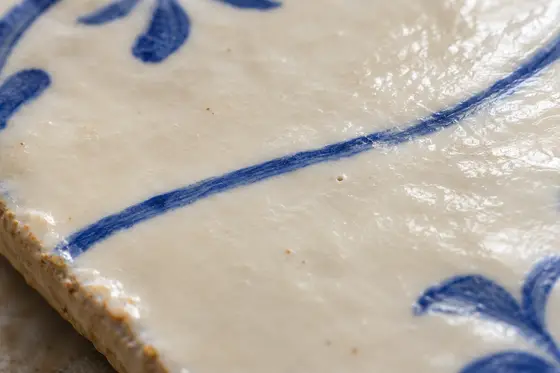
Corda seca line close-up
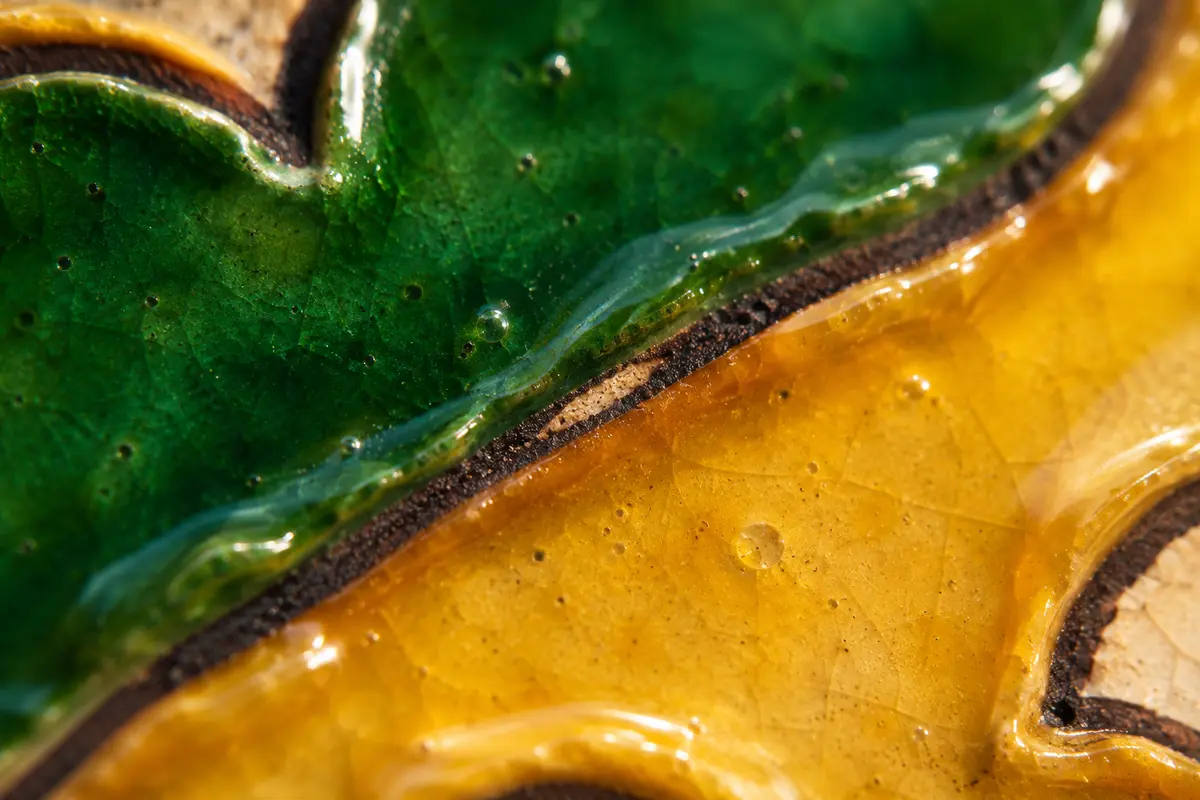
Close up, the dark line of corda seca separates fields of differently coloured glaze and keeps each one distinct.
The dark line in a corda seca tile owes its colour to manganese. Portuguese sources list manganese among the metal oxides of the tile palette, where it gives brown and black, and the corda seca cord was soaked in a mix of linseed oil and manganese oxide. That is why the outline reads as a deep, slightly matt brown-black rather than as a painted stroke. The tile is flat: the line separates fields of glaze, but it does not stand proud of the surface.
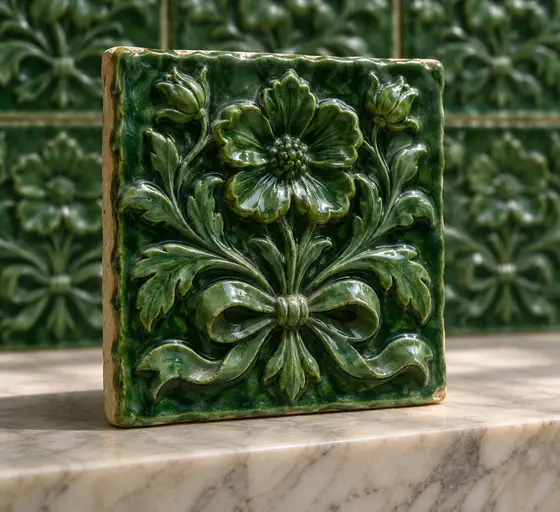
The flat line was also the technique's weakness. The V&A says the wax line could melt away in the firing, letting neighbouring colours run into each other. English Wikipedia explains that the moulded cuenca or arista tile, with ridges pressed into the clay, did the same job more efficiently for mass production. Corda seca did not vanish at once, though: at Sintra it is used as reinforcement together with aresta.
This is a general description, not confirmed to a single source.
Source: pt.wikipedia.org, collections.vam.ac.uk, en.wikipedia.org
AI-generated illustration in the manner of the tradition, not a photograph of a specific object.