I Tile types and patterns · Plate 006
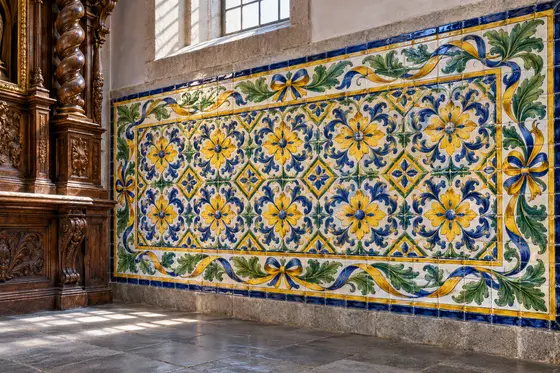
Corda seca border panel
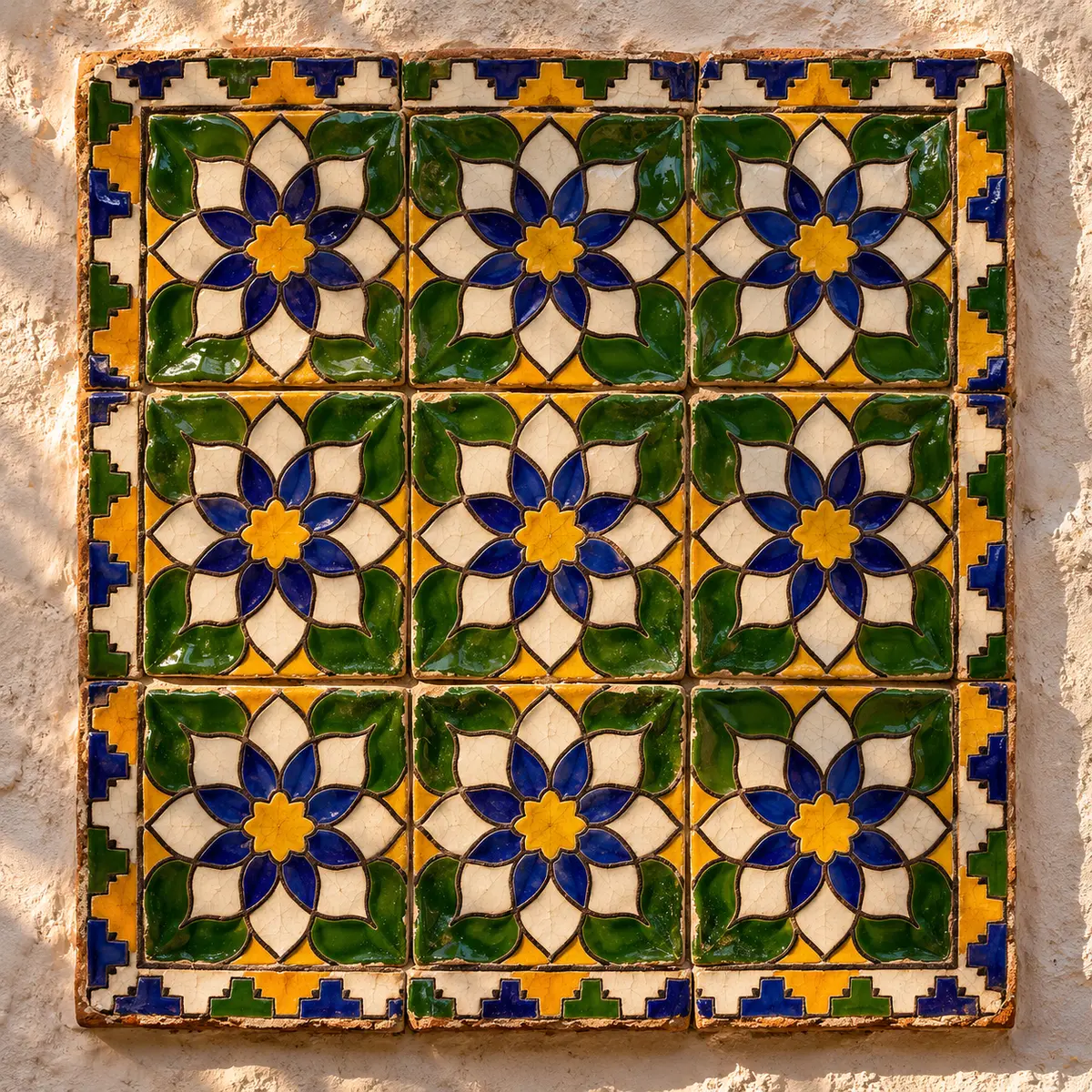
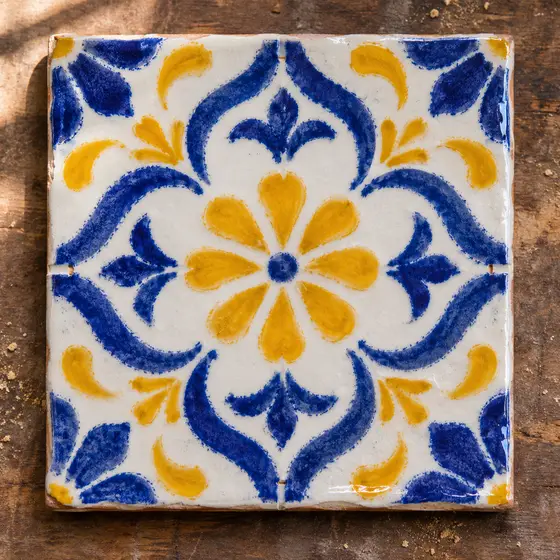
A small panel of corda seca tiles shows how the technique suits repeating motifs: bold outlines, flat colour fields and a border that frames the field like a woven edge.
At the Sintra National Palace, corda seca appears in settings that can be named. Portuguese sources record a 'reinforcement' corda seca, with aresta, in the Sala das Pegas, where it also shapes the wavy edges of doors, windows and fireplace. In the central inner courtyard and by the Tanque dos Cisnes the walls carry a pé-de-galo motif in the same technique. Portuguese azulejo of this phase kept the Islamic taste for dense geometry but bent toward the Gothic liking for plant motifs.
English Wikipedia stresses a feature that suits repeated borders: the Portuguese took over the Moorish idea of horror vacui, the dread of empty space, and covered walls completely with azulejos. A border panel is therefore less a frame than a part of a continuous skin. Sources also give different dates for the royal visit to Spain that inspired the palace, 1498 or 1503, so the exact chronology is best left open.
This is a general description, not confirmed to a single source.
Source: pt.wikipedia.org, en.wikipedia.org
AI-generated illustration in the manner of the tradition, not a photograph of a specific object.