I Tile types and patterns · Plate 034
Stencilled tile (estampilhado)
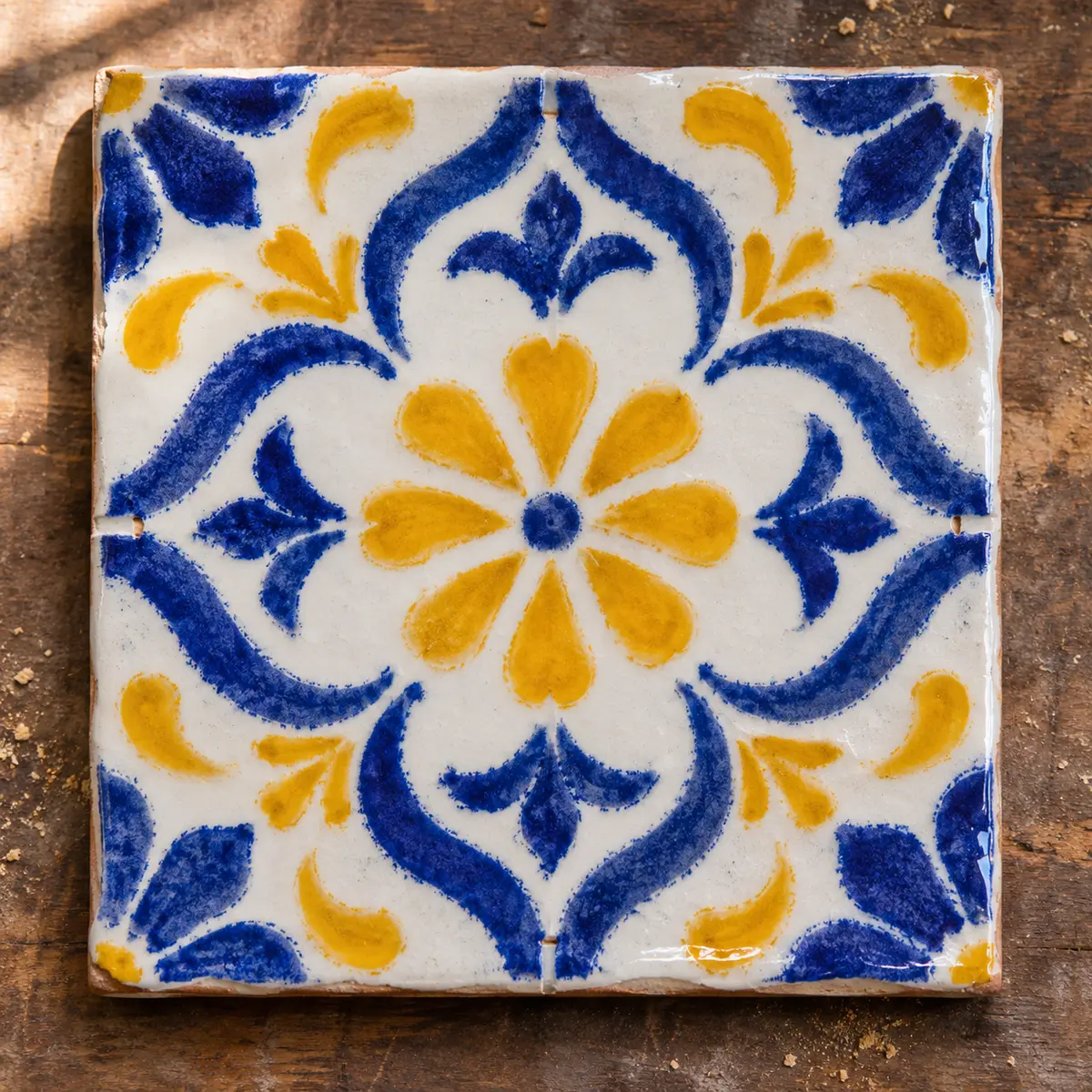
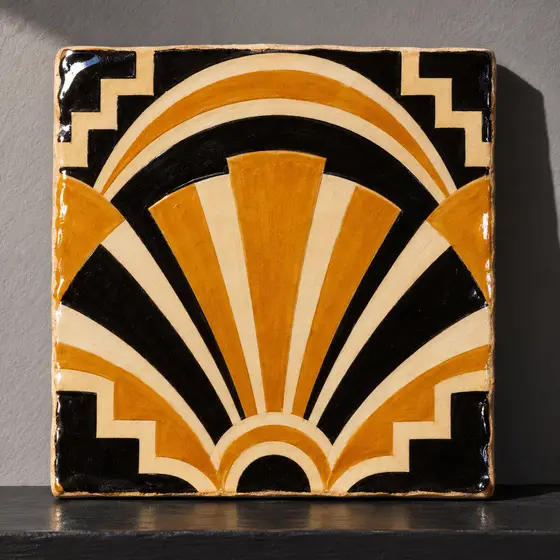
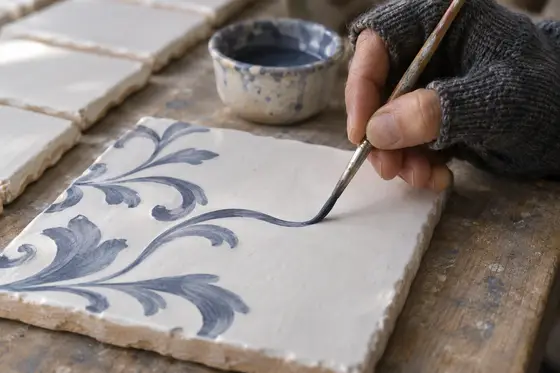
In estampilhado, colour is brushed through a cut metal stencil, which repeats a design quickly. It is a semi-industrial technique used from the 19th century.
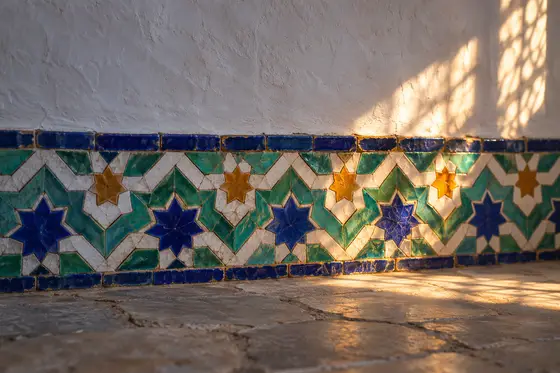
Azulejo estampilhado is decorated by brushing colour with a trincha, a brush, through an estampilha, a metal plate with the motif cut out. Portuguese Wikipedia lists stencilling (estampilhagem) among the semi-industrial techniques used from the 19th century, next to the decal printing called estampado. Because the plate fixes the motif, every tile painted through it carries the same design. Stencilled tiling of the 19th century covers the walls of the church of São Martinho in Argoncilhe, a reminder that the technique was not confined to house fronts.
Stencils also served a later, mechanised variant. Azulejo aerografado, also called decoração ao terceiro fogo, is sprayed with an airbrush, with zinc stencils (estampilhas de zinco) marking the areas to be painted; the Sacavém factory used it heavily during the Art Déco period. The same article records that façade tiling made by stencilling and other semi-industrial methods drew mixed reactions: some saw it as a distortion of the intimate character of interior tiling, others valued it for enhancing exteriors. Lisbon's tourist board names Viúva Lamego, Sacavém, Constância and Roseira as the main centres using stamping and decal techniques.
Source: pt.wikipedia.org, visitlisboa.com
Read about it: After the earthquake: a royal factory and the pattern tile →
AI-generated illustration in the manner of the tradition, not a photograph of a specific object.