I Tile types and patterns · Plate 048
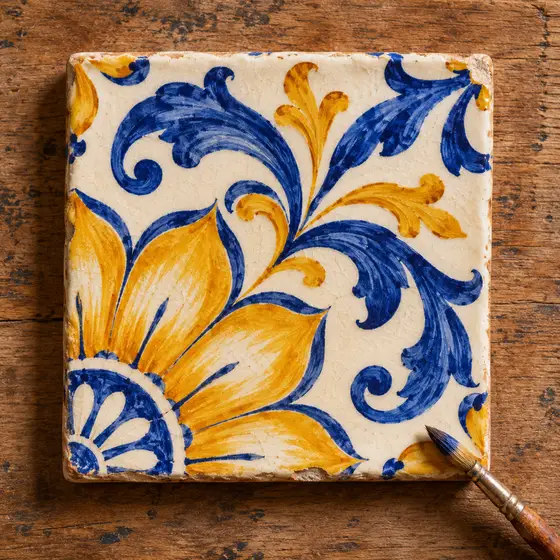
Brush line in cobalt
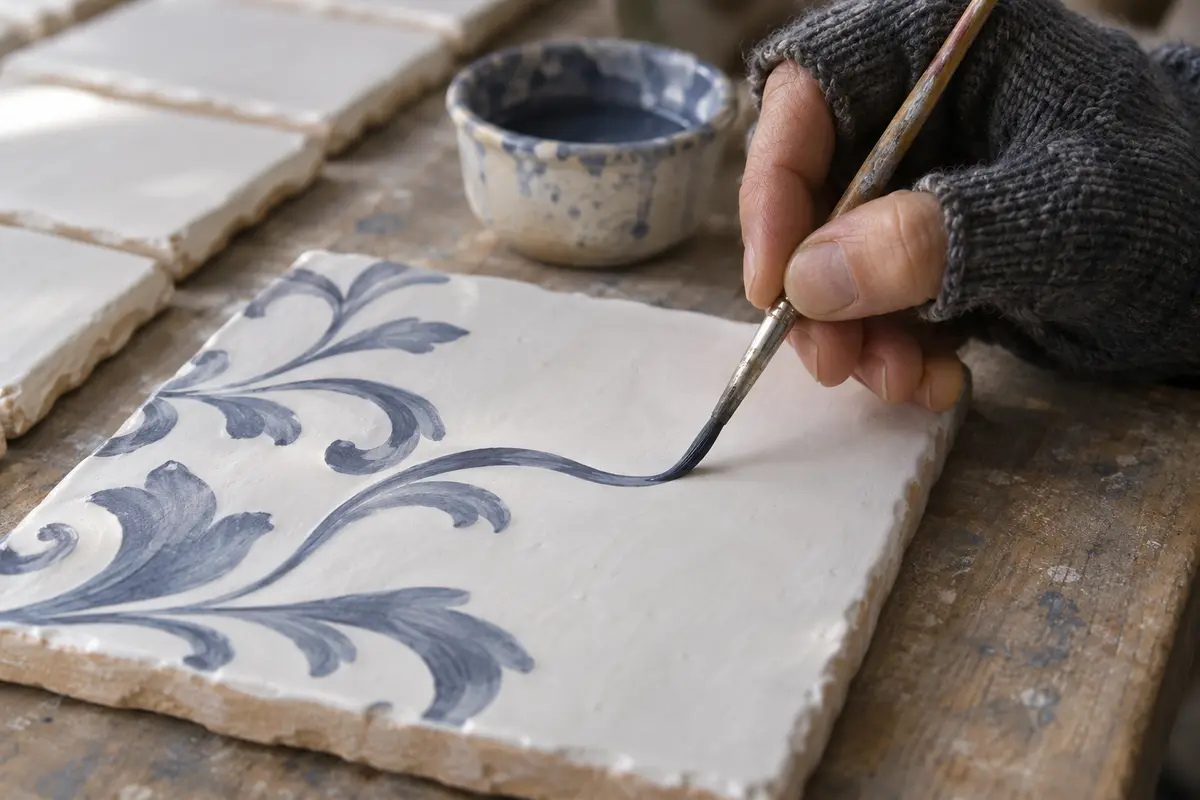
Cobalt on unfired tin glaze is absorbed at once, so a line cannot be corrected. The painter works with a loaded brush in a single movement.
A study of azulejo blues found that the blue in Portuguese tiles derived exclusively from cobalt until well into the 19th century, and that from at least 1520 the cobalt came from the Erzgebirge. The cobalt slags were largely unrefined and carried iron, nickel, arsenic and bismuth, so the blue hue may come from the pigment, the glaze or the firing conditions. The authors identify a Nickel Blue group that turns blue-black in concentration. In other words, the cobalt blue of an azulejo line is not one standard colour but depends on the ore and the firing.
The line itself is laid on an unfired glaze that the V&A, describing tin-glazed ware, calls fragile and very absorbent, so a painted mistake cannot be erased. That is why Flemish artists who, according to Aramco World, later produced white-and-cobalt-blue tiles inspired by Chinese porcelain needed practised hands. Today's workshops still mix their paints from the same family of minerals: the Lisbon tilemaker interviewed by Aramco World makes his from copper and manganese oxides, cobalt and other metals such as pewter and iron.
Source: eprints.whiterose.ac.uk, aramcoworld.com, collections.vam.ac.uk
Read about it: Why Portuguese tiles turned blue and white →
AI-generated illustration in the manner of the tradition, not a photograph of a specific object.