I Tile types and patterns · Plate 023
Pair of albarrada vases
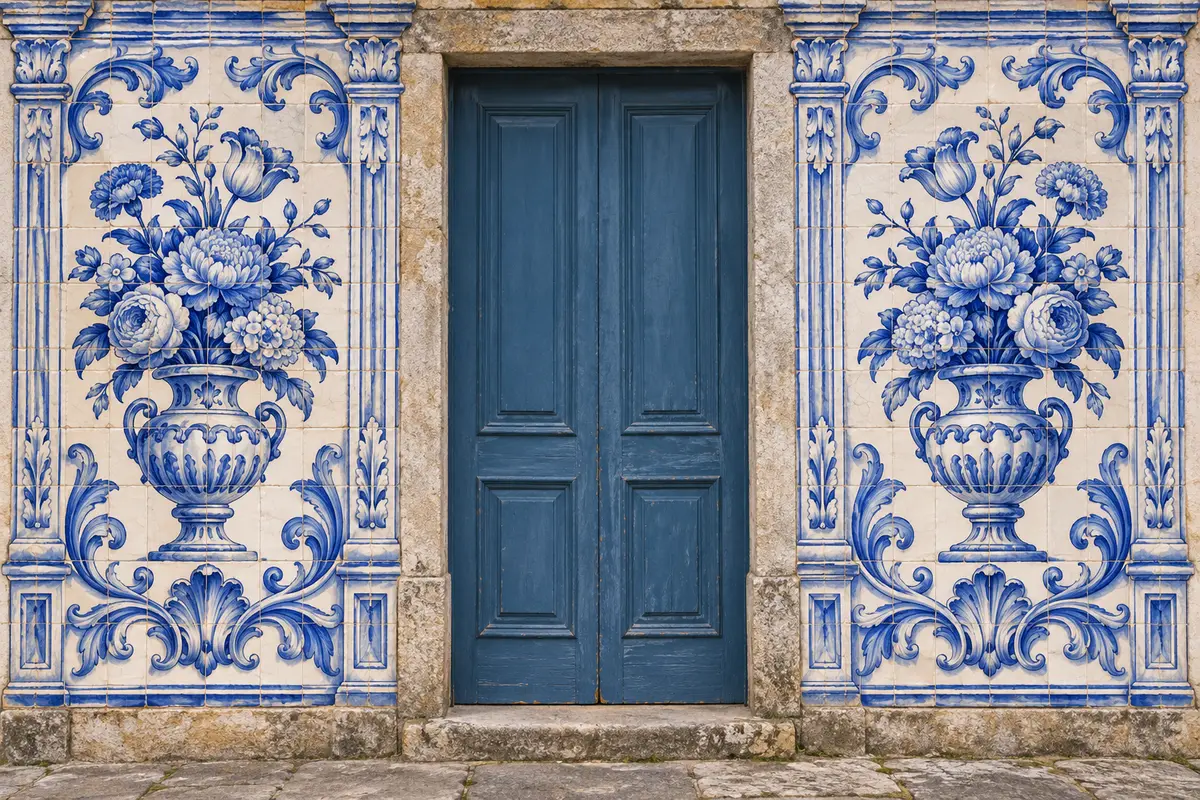
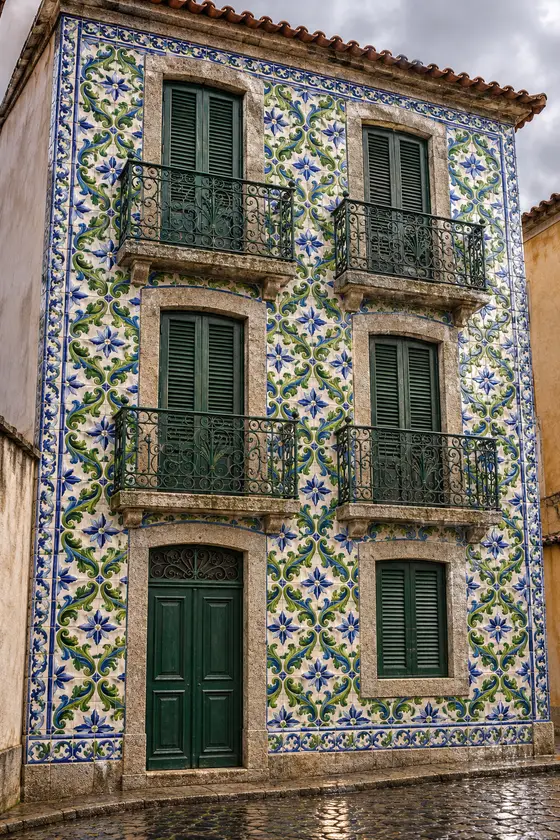
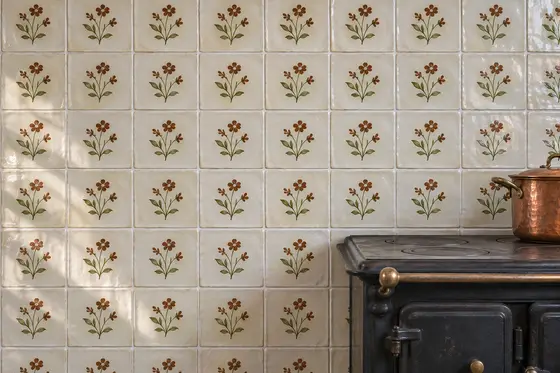
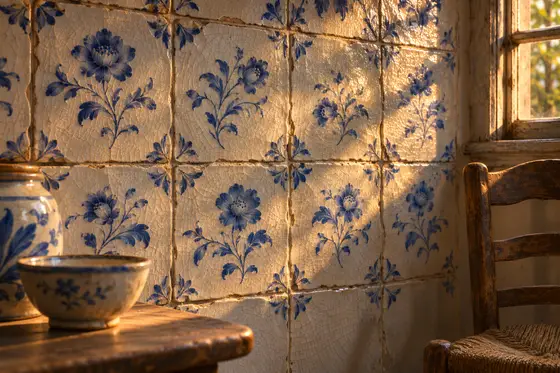
In the 18th century, vase motifs began to repeat as modules in tile panels. This illustration shows two vases in symmetry.
The step from single motif to module is the interesting change. Portuguese sources date the independent albarrada to the 17th century and its repetition to the 18th, with dividers between the copies, either architectural or plant-like. English Wikipedia says the same: free-standing in the 17th century, repetitive modules in the 18th. A module can then run along a wall as a silhar, a covering ten to twelve tiles tall, which takes a few designs a long way.
In the Cycle of the Masters the vase painters are named. English Wikipedia places Valentim de Almeida among the collaborators of the monogrammist P.M.P., alongside Teotónio dos Santos, and dates his Porto Cathedral albarrada to 1729-31. That puts the repeated albarrada in the reign of João V, when large orders came from Brazil as well as Portugal and production rose without precedent. Portuguese sources add that the motif could be flanked by birds, children or dolphins.
This is a general description, not confirmed to a single source.
Source: pt.wikipedia.org, en.wikipedia.org
AI-generated illustration in the manner of the tradition, not a photograph of a specific object.