I Tile types and patterns · Plate 051
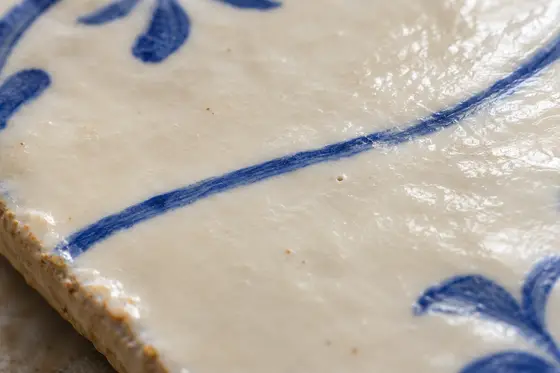
Crazed glaze on a wall
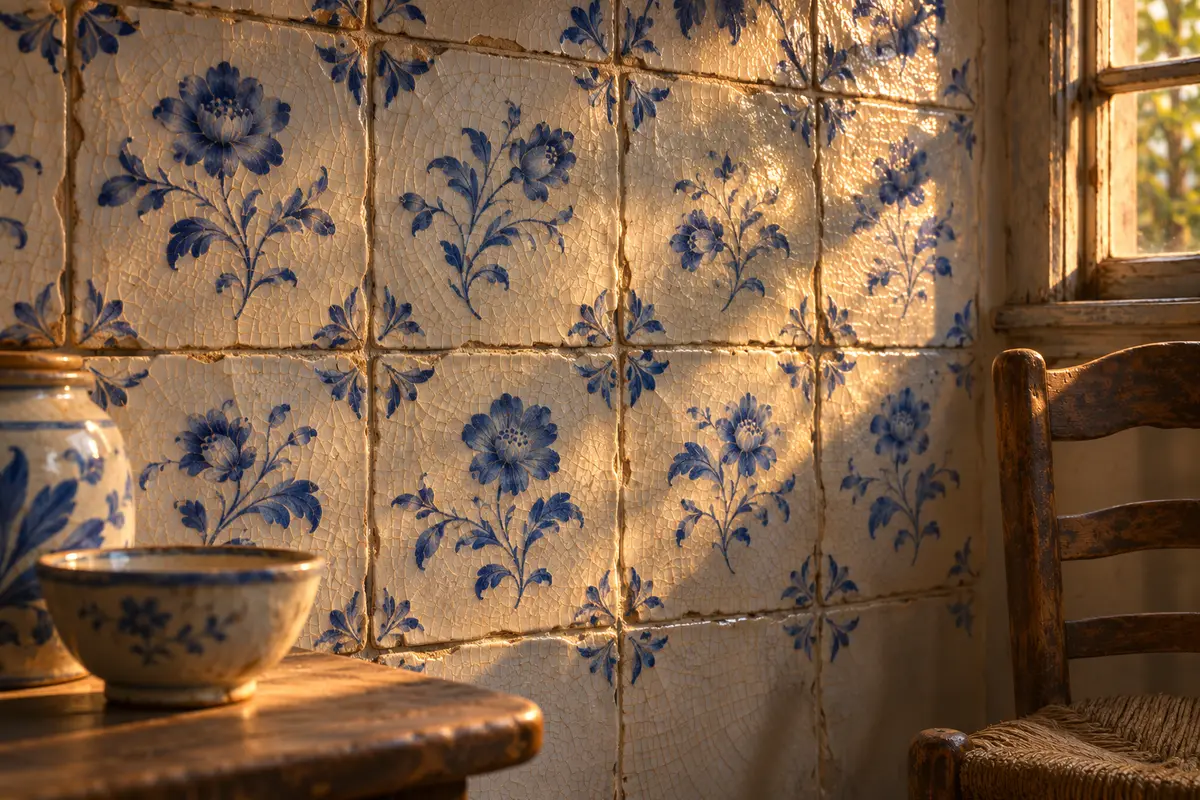
On a whole wall, crazing shows as a fine web of lines in old glaze, which catches the light unevenly.
Crazing does not always show up straight from the kiln. In delayed crazing the cracks appear some time after the ware is made, because a porous body absorbs moisture and swells slightly; if the glaze was only lightly in compression to begin with, that swelling can push it into tension. Digitalfire adds that on low-fire ware a body that takes up water and expands can craze the glaze, and that repeated sudden cooling in use can bring it on too. To provoke the fault before ware leaves the workshop, potters stress-test it, for example with steam in an autoclave at 50 psi or more.
Crazing can be hard to see on coloured or variegated glazes; rubbing a dark marker over the surface and wiping it off makes the lines show. Curing it is a matter of glaze chemistry: Digitalfire advises trading high-expansion oxides, mainly potassium and sodium, for fluxes of lower expansion, and warns that changing the firing schedule, the glaze thickness or refiring usually only hides or delays the problem. A tin glaze has its own weakness: the V&A notes that the thin glaze layer on delftware tiles was vulnerable, which is why such tiles were used more on walls than on floors.
This is a general description, not confirmed to a single source.
Source: en.wikipedia.org, digitalfire.com, vam.ac.uk
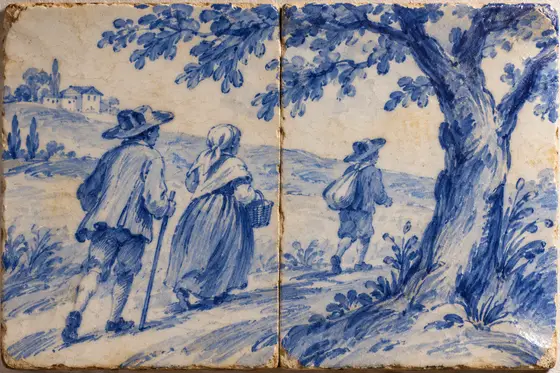
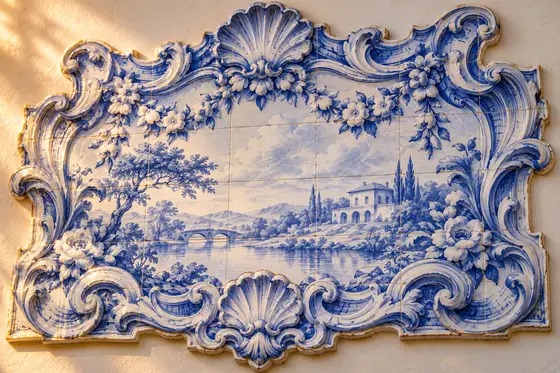
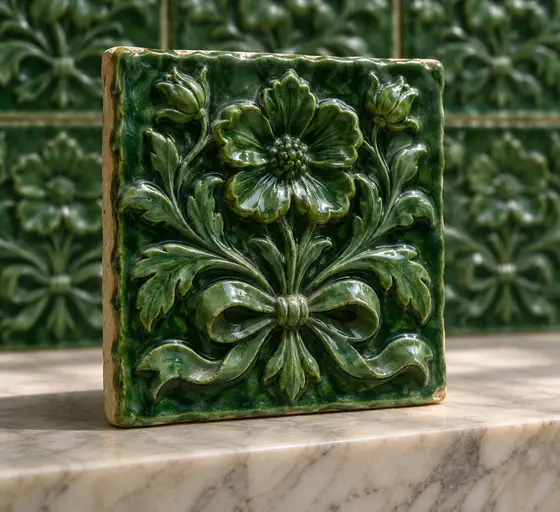
AI-generated illustration in the manner of the tradition, not a photograph of a specific object.