I Tile types and patterns · Plate 012
Tin glaze surface
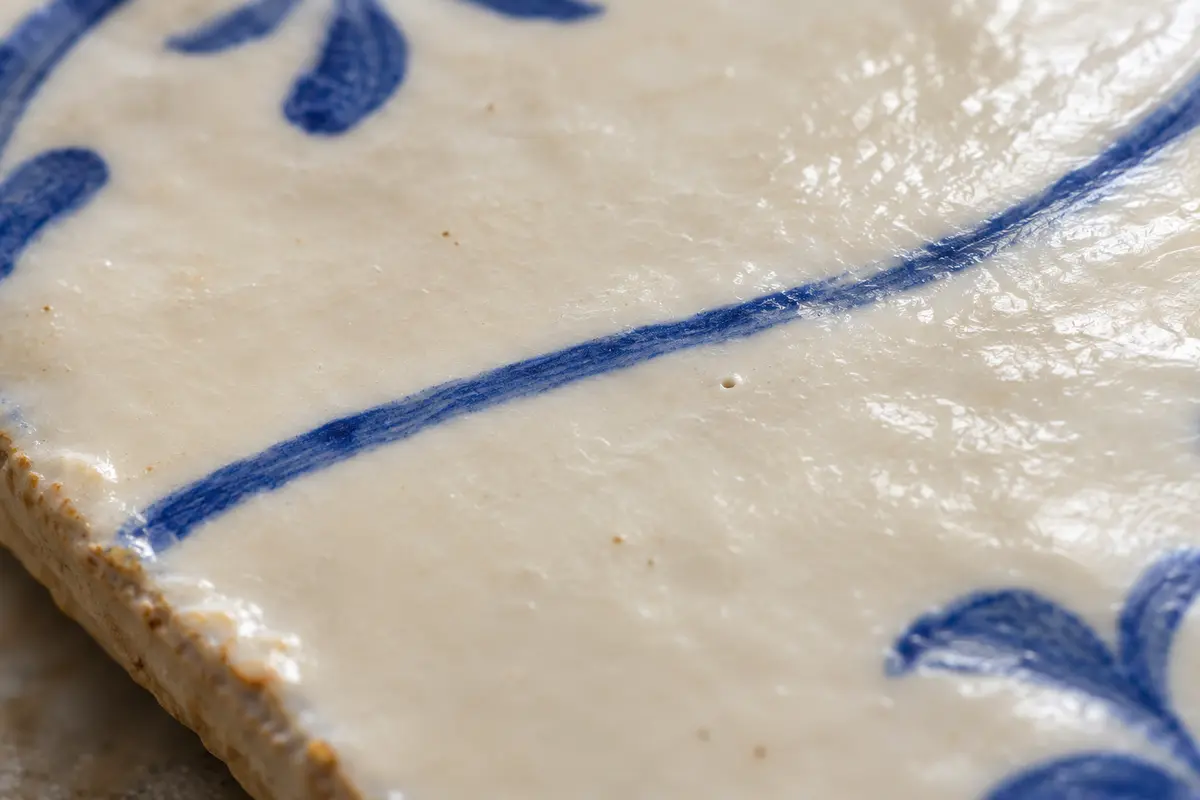
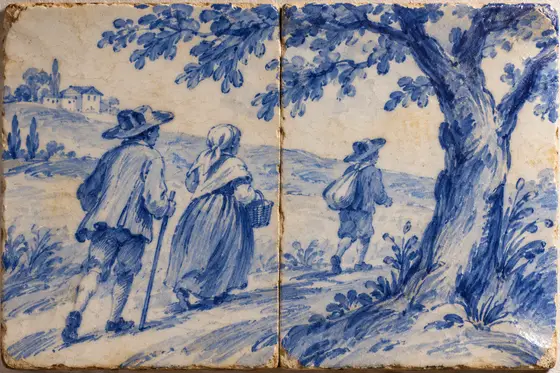
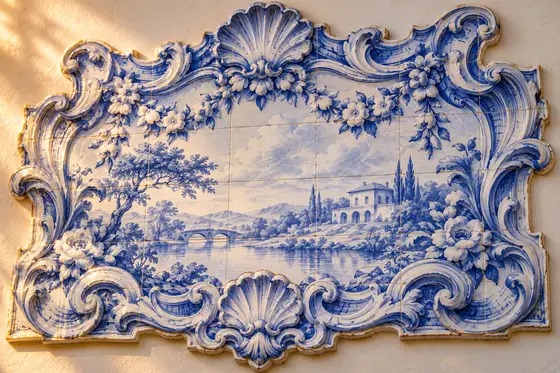
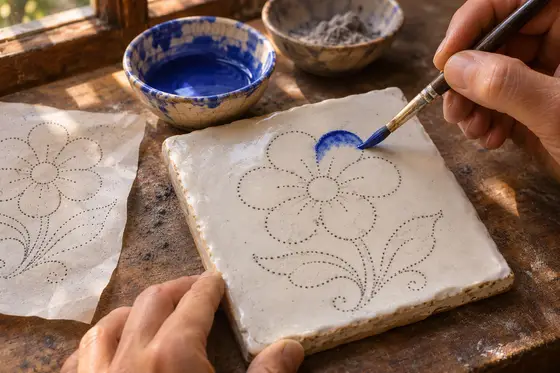
Tin glaze gives faience and azulejos a soft, opaque white. The painter works on the unfired glaze, which absorbs pigment at once, so a brushstroke is hard to correct.
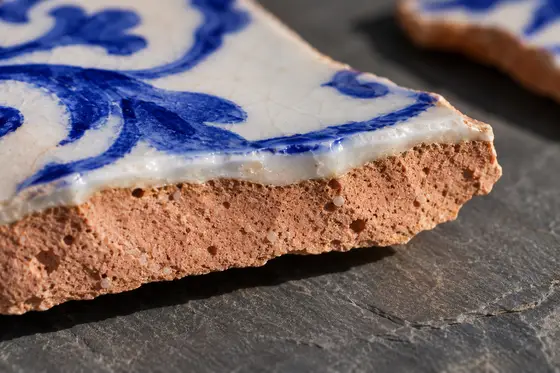
Tin glaze is a thick, opaque white coating. Portuguese sources give its recipe as tin, lead oxide, quartz-rich sand, salt and soda, applied as a thick liquid after the first firing and vitrified in the second. The tin oxide makes the glaze white and opaque, as the Victoria and Albert Museum explains. This is why majolica painters could work directly on a bright white ground. Faiança, tin-glazed earthenware, is still made this way: a body of clay is fired, glazed, painted and fired again.
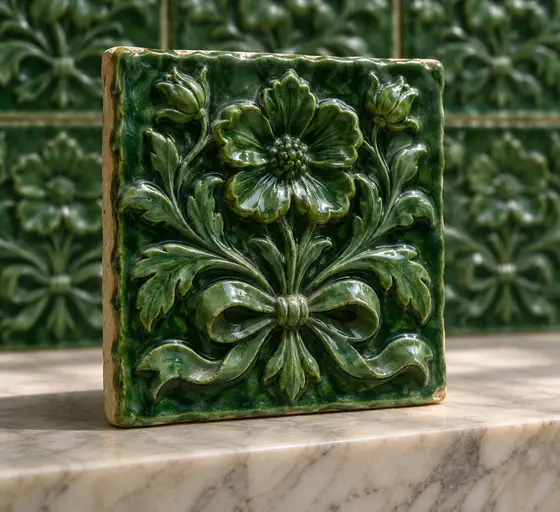
The V&A describes the sequence for tin-glazed ware in detail. The first firing, before any glaze or decoration, leaves a hard but slightly porous 'biscuit'. The pieces are then dipped in glaze and set on boards to dry, and the dry raw glaze is delicate, powdery and highly absorbent. Fine painting is possible on it, but because it soaks up pigment at once, mistakes cannot be erased. The colours show their true tones only after the second firing, from cobalt blue, copper green, manganese brown, antimony yellow and, rarely, iron red.
Source: pt.wikipedia.org, collections.vam.ac.uk, vam.ac.uk
Read about it: Why Portuguese tiles turned blue and white →
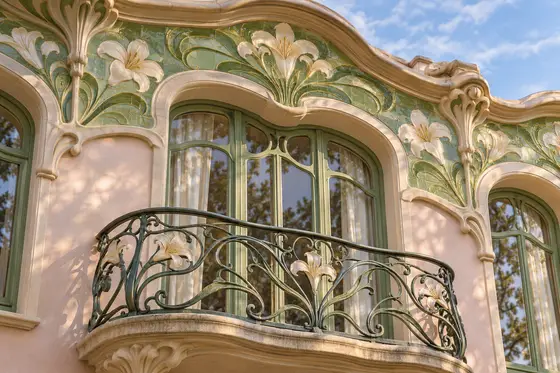
AI-generated illustration in the manner of the tradition, not a photograph of a specific object.