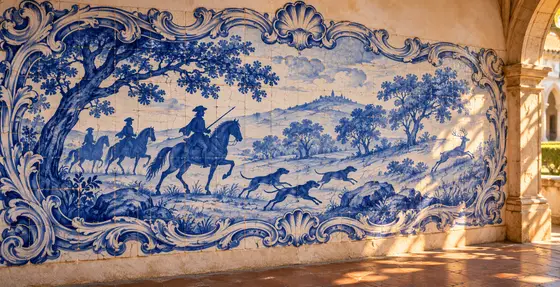
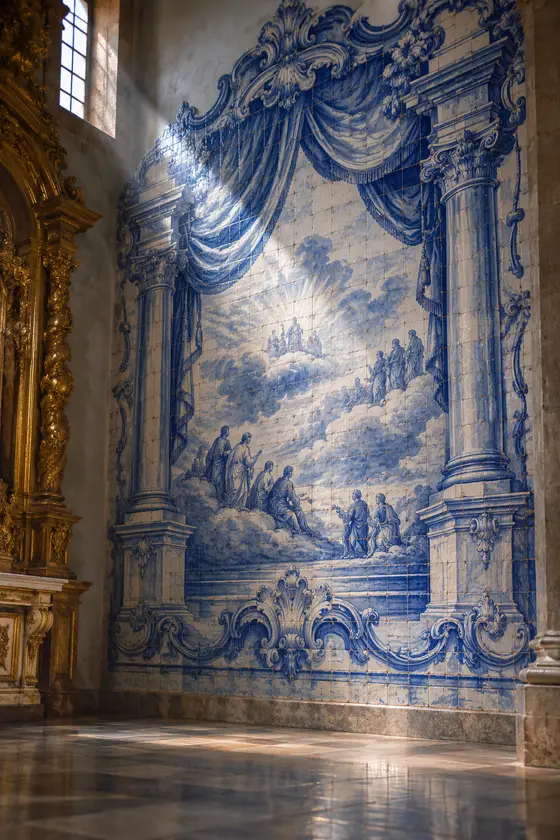
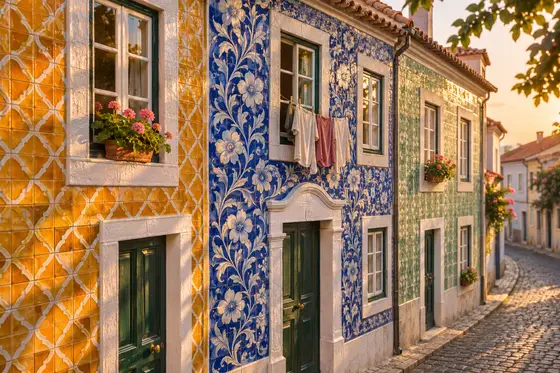
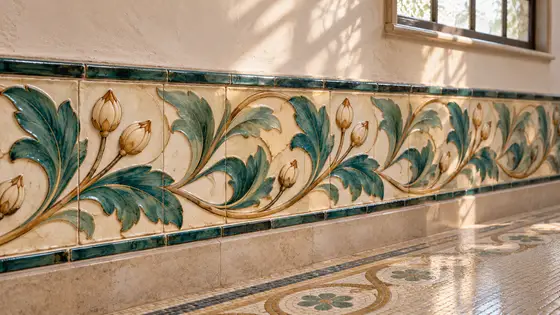
I Tile types and patterns · Plate 011
Polychrome majolica panel
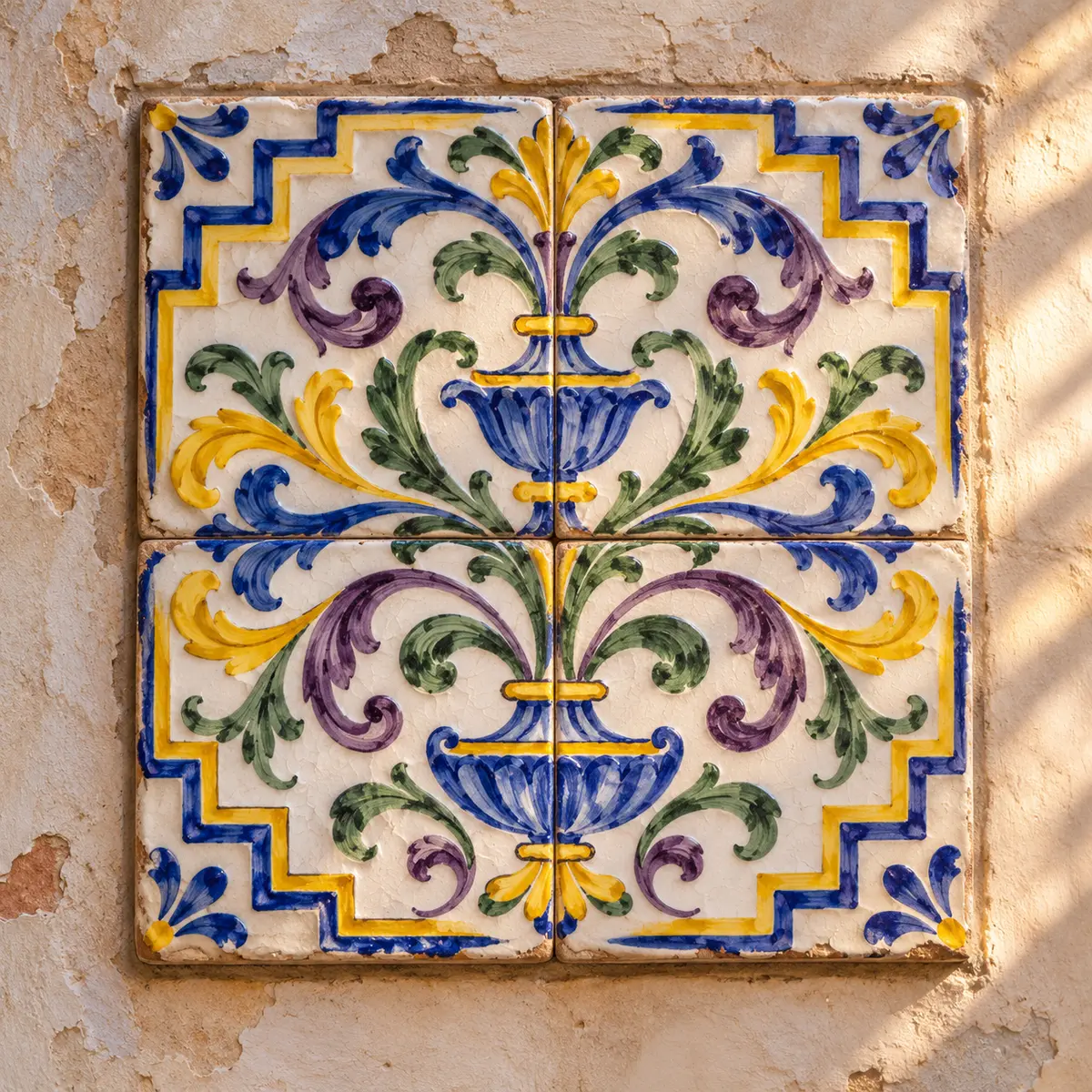
Sixteenth-century majolica panels are polychrome, using cobalt blue and manganese purple, among other colours, on the white glaze.
Portuguese sources name several surviving majolica ensembles. At the Quinta da Bacalhoa, the Casa do Tanque has panels from 1565 with religious themes and Greek mythology in soft tones of white, yellow and green. The Loggia carries allegories of five rivers, the Douro, Mondego, Nile, Euphrates and Danube, a reference to the Portuguese discoveries. They are cited as examples of Italian Renaissance quality in Portugal, in majolica made in a Lisbon workshop.
The Chapel of São Roque in Lisbon was tiled by Francisco de Matos in 1584, in yellow, blue and white, with a rich ornamental repertoire of acanthus leaves, flowers, fruit, obelisks, medallions, amphorae and putti; the central scene stands out in greens and browns. After the 1755 earthquake only the lower part of the side walls remains intact. Portuguese writers link the move to figurative compositions to the end of Moorish influence after the Council of Trent, and to prints from Italy and Flanders that supplied scenes and motifs.
This is a general description, not confirmed to a single source.
Source: pt.wikipedia.org, en.wikipedia.org
AI-generated illustration in the manner of the tradition, not a photograph of a specific object.