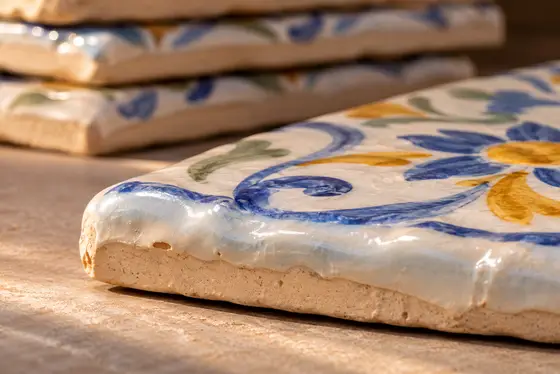
I Tile types and patterns · Plate 010
Majolica tile, 16th century
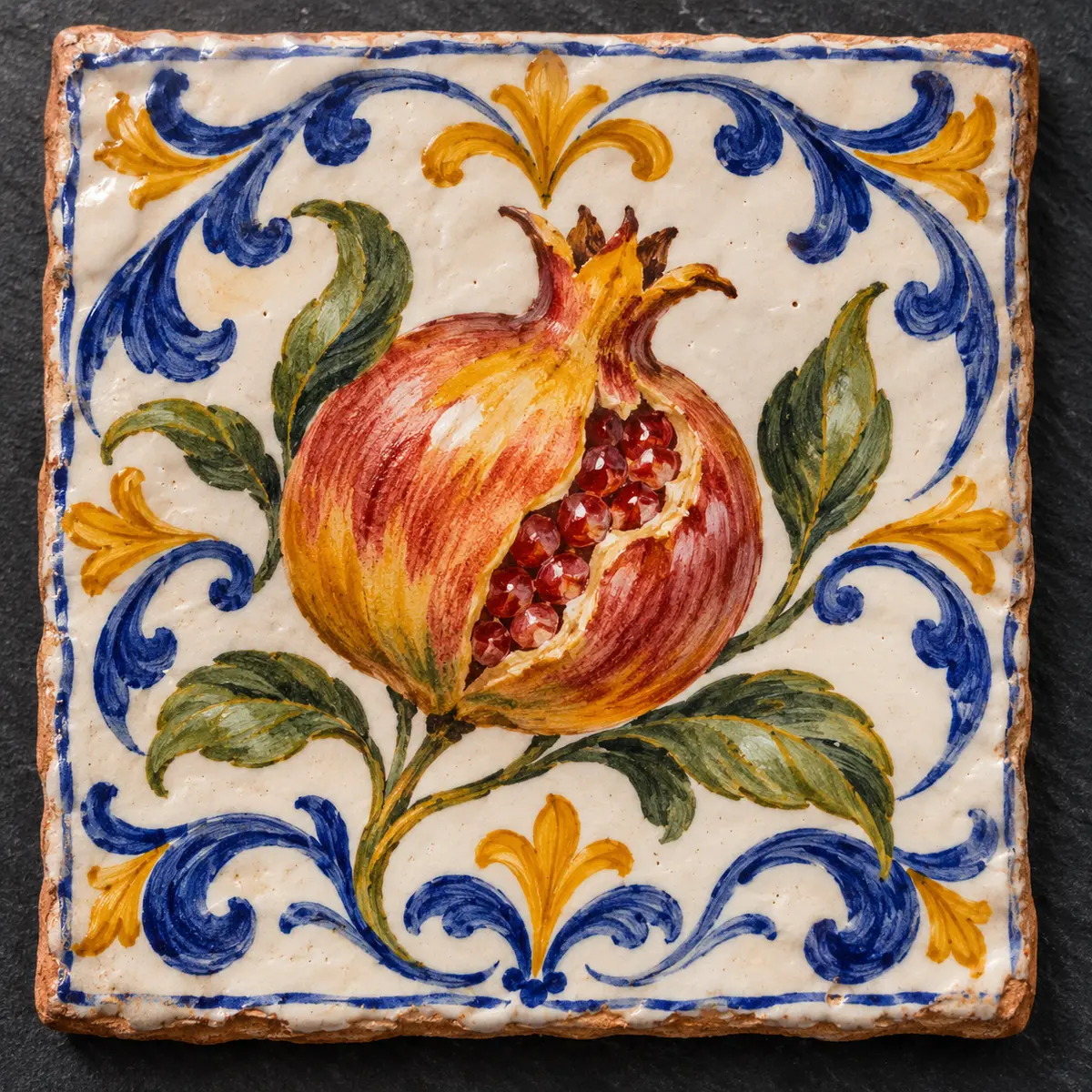
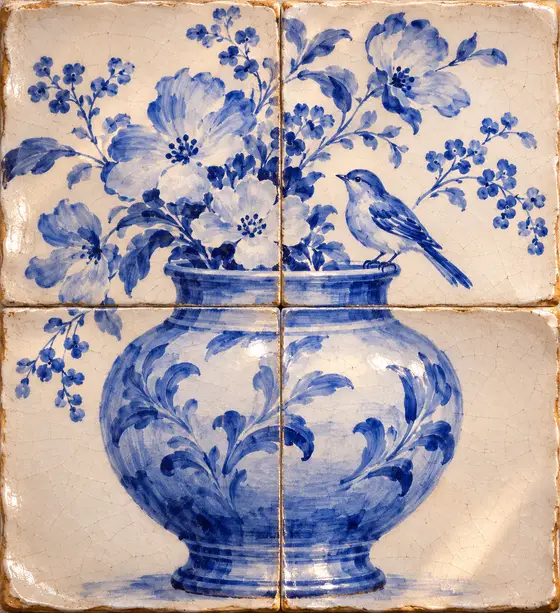
From the mid-16th century, majolica reached Portugal: painting directly on an opaque white tin glaze, with Italian and Flemish influence. It allowed figures and free designs to be painted on the tile.
Majolica reached the Iberian Peninsula from Italy. Portuguese sources date its arrival to the middle of the 16th century and say its origin as a word is unclear: perhaps an Italian phrase for Majorca, from where tiles were shipped, or a form of 'Opera di Mallica', used since the 15th century for wares exported from Málaga. The term faiança, in use from the 17th century, comes from Faenza. The technique replaced painting on a piece that had already been fired and then glazed, and it changed what a tile could show.
The people behind the change are named in English Wikipedia. The Italian potter Francisco Niculoso settled in Seville in 1498 and brought majolica with him. Until the middle of the 16th century the Portuguese went on importing tiles, mostly from Spain and some from Antwerp. Portuguese production then grew up, with Flemish potters setting up workshops. Marçal de Matos is credited with Susanna and the Elders (1565) at the Quinta da Bacalhoa, and Francisco de Matos made the Miracle of St Roch (1584), the first dated Portuguese azulejo composition.
This is a general description, not confirmed to a single source.
Source: pt.wikipedia.org, en.wikipedia.org, vam.ac.uk
Read about it: From alicatado to azulejo: how Moorish tilework reached Portugal →
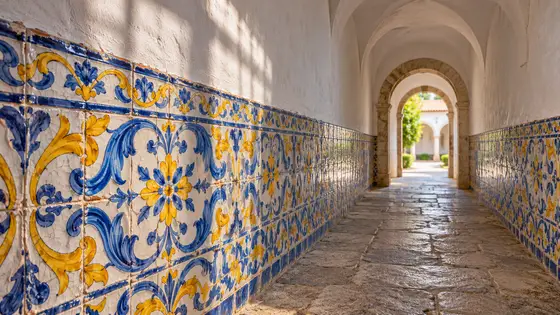
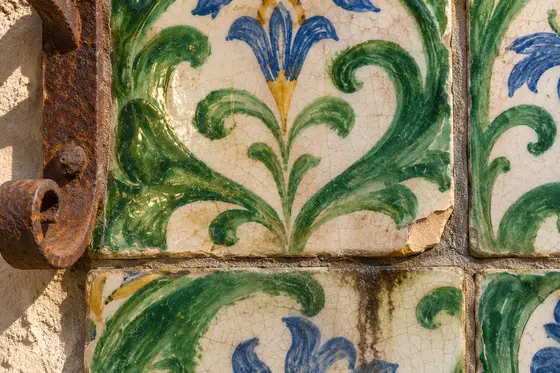
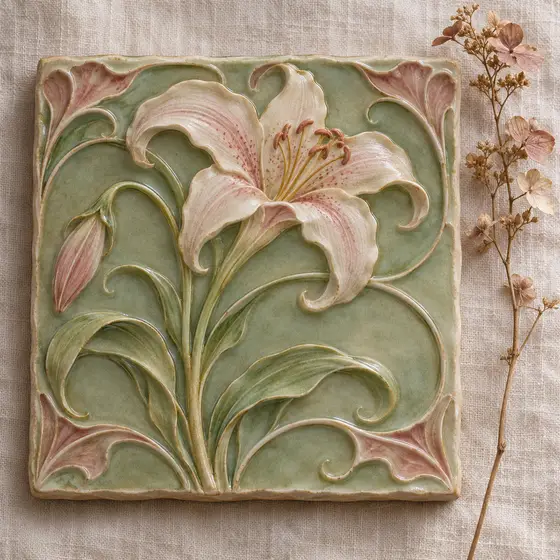
AI-generated illustration in the manner of the tradition, not a photograph of a specific object.