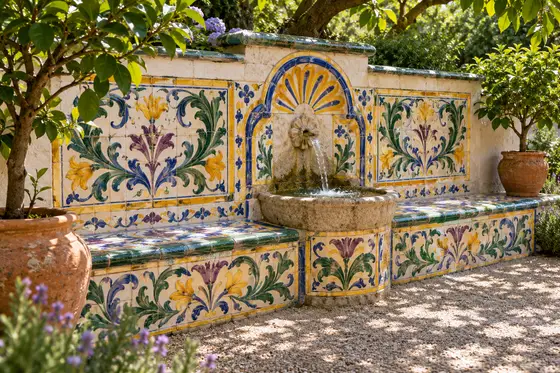
I Tile types and patterns · Plate 017
Padrão corridor
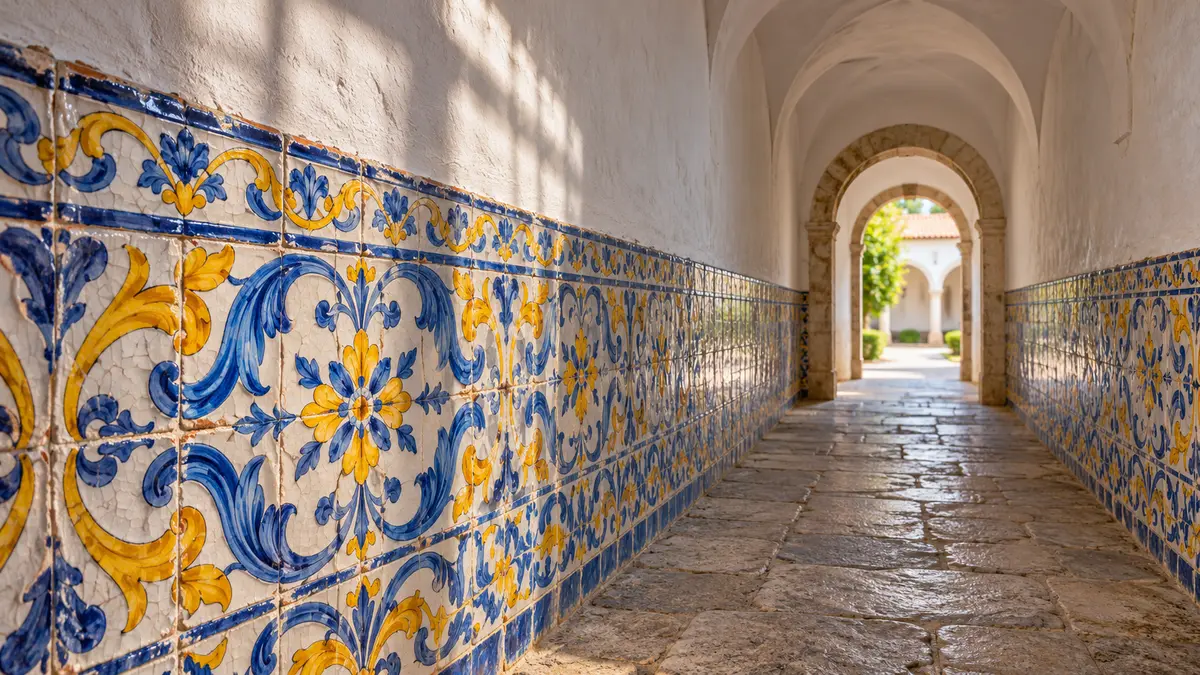
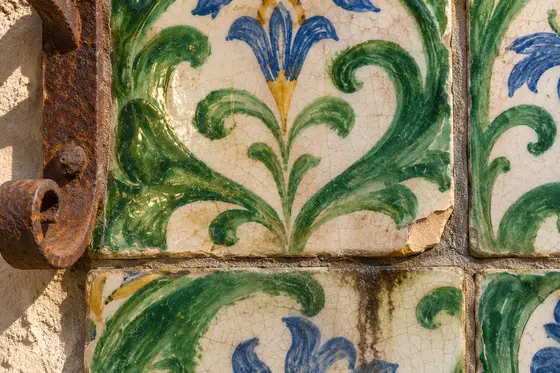
Pattern tiles can cover large surfaces such as corridors and stairways, where the repetition gives rhythm to the space.
Portuguese Wikipedia illustrates pattern tilework, tile covering of large surfaces, with examples that include the cemetery cloister of the Convento de Cristo in Tomar, and a blue-and-white set of sixteen pieces in the Igreja Matriz of Argoncilhe. At the Paço de São Cipriano in Tabuadelo, a pattern is finished with a faixa, a strip of half tiles that may or may not close a panel. A silhar, or dado, is the covering that rises from the floor and is ten to twelve tiles high.
Dampness and dirt explain part of the appeal. The V&A writes that, in the Netherlands, tiles moved from floors to walls because the thin tin glaze was vulnerable, and that tiles suited skirtings, fireplaces and corridors, which were prone to dirt and damp. The Portuguese Romantic period used pattern tile to soften urban façades, in the way wallpaper, introduced at the same period, softened interiors. And after the 1755 earthquake, pattern azulejos were used to rebuild Lisbon quickly and cheaply.
This is a general description, not confirmed to a single source.
Source: pt.wikipedia.org, vam.ac.uk, en.wikipedia.org
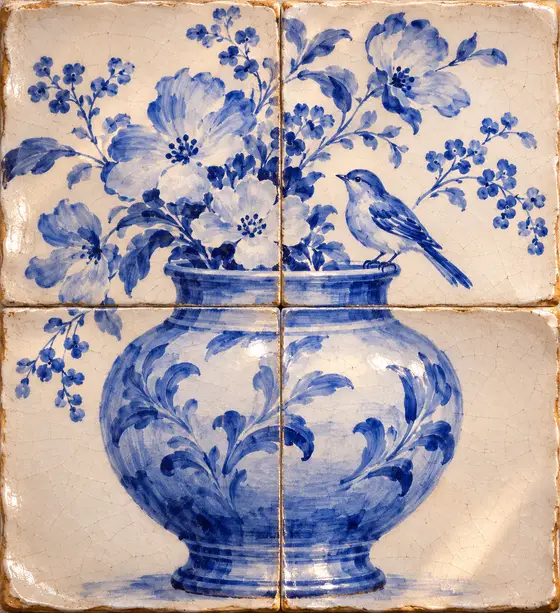
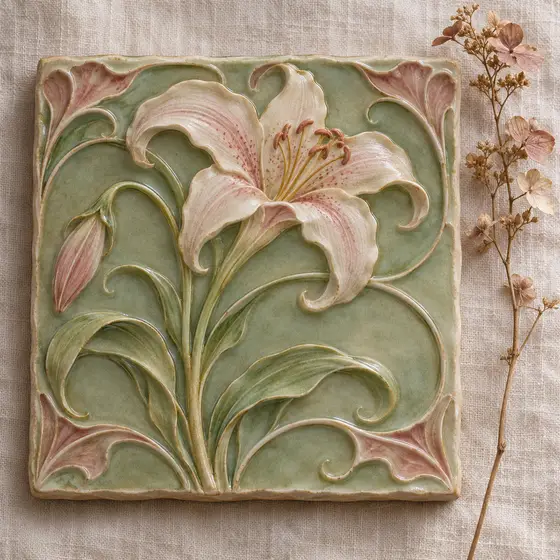
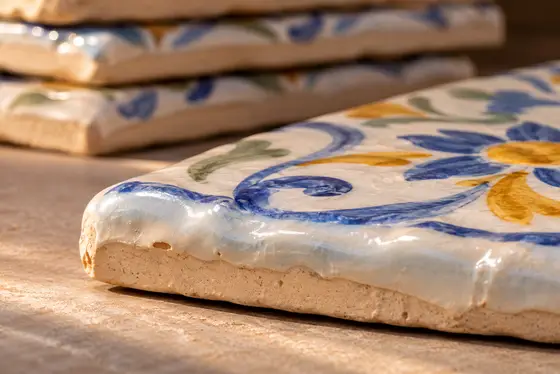
AI-generated illustration in the manner of the tradition, not a photograph of a specific object.