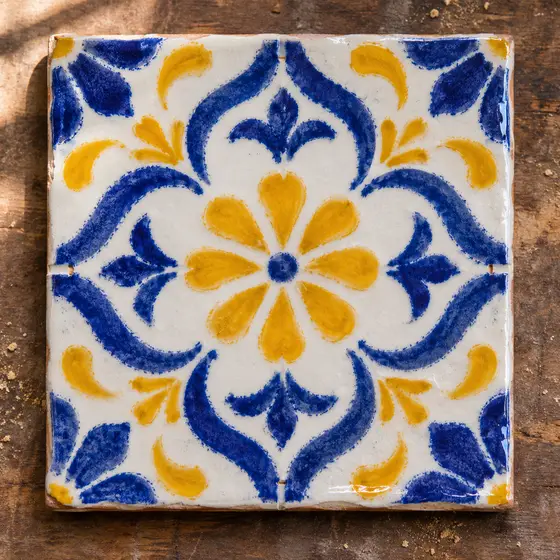
I Tile types and patterns · Plate 052
Tile edge profile
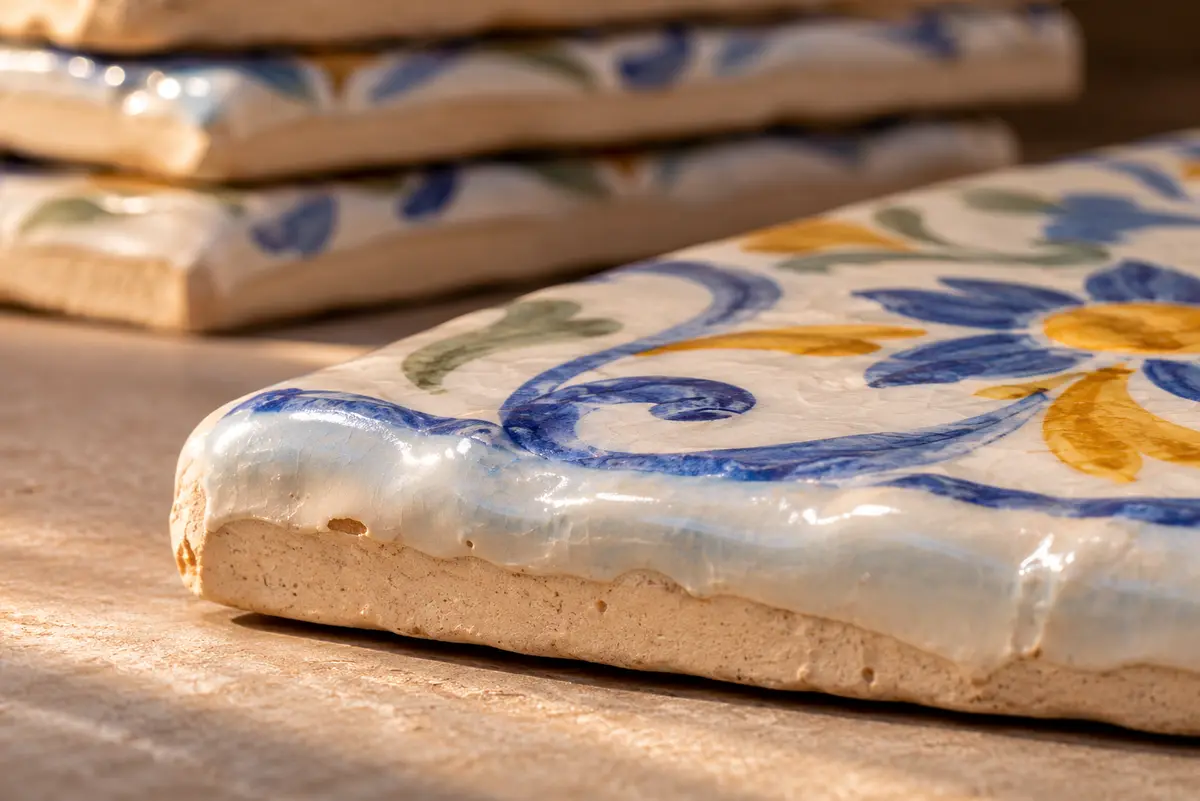
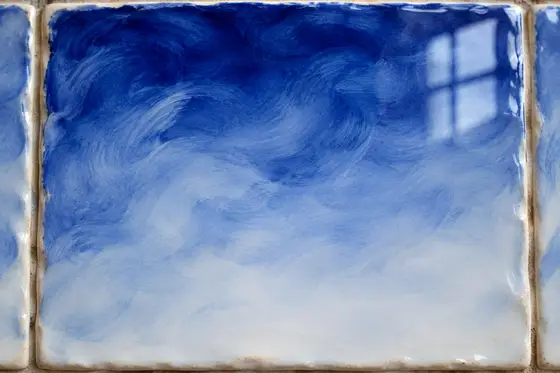
The edge of a handmade tile has small irregularities: the glaze may roll over a slight bevel, and pieces differ a little in size.
From the 16th century until the 19th, Portuguese tiles were usually square, between 13.5 and 14.5 cm a side, according to Portuguese Wikipedia. That range is itself a clue that size was never exact. The edges of early relief tiles carried their own geometry: in the aresta method raised ridges pressed into soft clay separated the colours, and in the related cuenca technique, English Wikipedia says, the ridges prevented the colours from bleeding into each other during baking.
Size and flatness depend on how the clay is shaped. From around 1600, the V&A says, Dutch tiles became smaller and thinner, which made them cheaper to produce and transport. Richard Prosser's dust-pressing of 1840 gave drier tiles that dried faster and warped less. Press-moulded tiles also warp less than hand-rolled ones, and a bent tile will most likely warp in the final firing. Sant'Anna, a Portuguese maker of hand-painted standard tiles, says differences in size and colour are characteristic of its product.
This is a general description, not confirmed to a single source.
Source: pt.wikipedia.org, en.wikipedia.org, vam.ac.uk, tilesoc.org.uk, ceramicartsnetwork.org, santanna.com.pt
AI-generated illustration in the manner of the tradition, not a photograph of a specific object.