I Tile types and patterns · Plate 020
Cobalt wash gradient
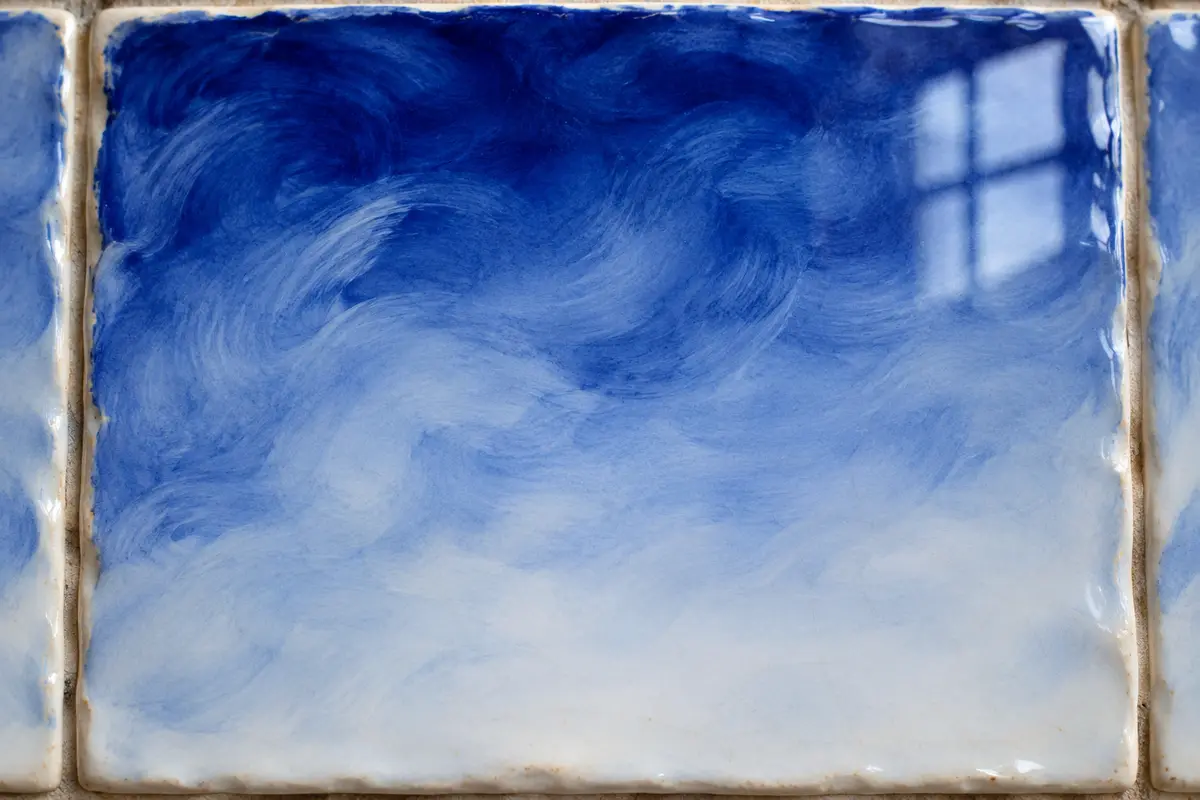
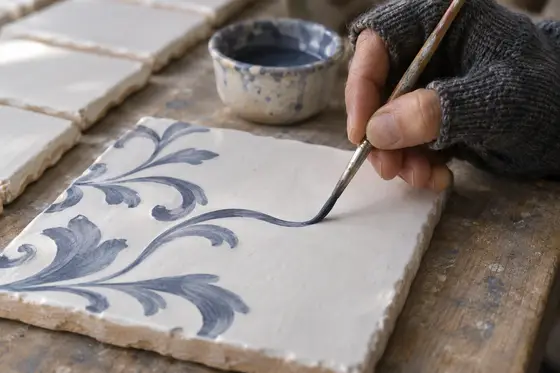
The soft blue of a sky on a tile panel can come from a thin wash of cobalt. The raw glaze absorbs pigment quickly, so soft gradations need light, careful strokes.
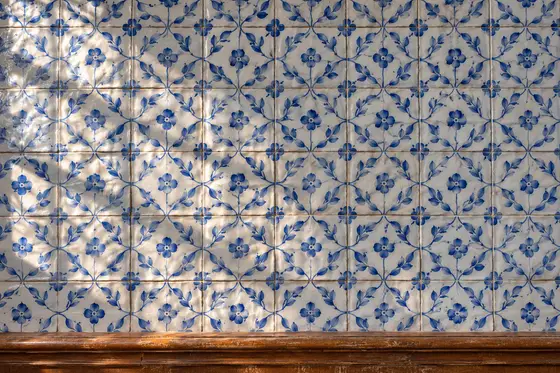
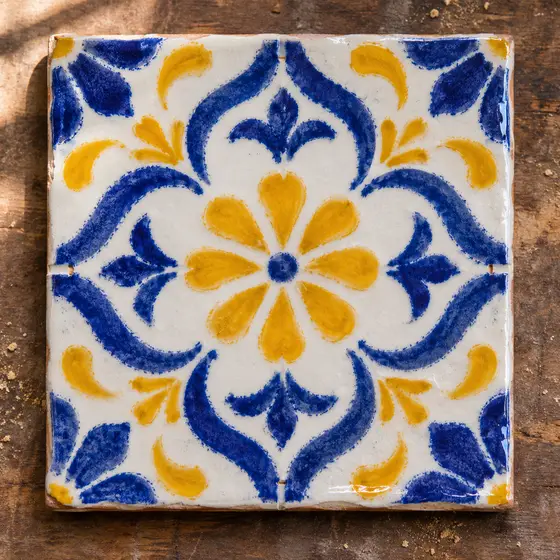
Blue on a tile comes from cobalt. Portuguese sources list the metal oxides of the tile palette: cobalt gives blue, copper green, manganese brown and black, iron yellow and tin white. The colours are not what the painter sees at the bench: they are revealed only after the second firing, when the tile returns to the kiln. A blue sky is therefore a prediction, made on a powdery white surface that cannot be corrected once the pigment has been absorbed.
The V&A describes the surface as powdery and highly absorbent, and says that is what permits painting of considerable refinement. It also writes that in the Netherlands blue and white tiles became dominant from 1625, influenced by Chinese porcelain, and that virtually all polychrome decoration was abandoned. Portuguese sources add that the blue came from China and the refinement of materials from the Netherlands. The Portuguese vocabulary also separates 'grande fogo' decoration, painted over the glaze and fired above 1200 °C, from 'third-fire' decoration at a moderate temperature.
This is a general description, not confirmed to a single source.
Source: pt.wikipedia.org, collections.vam.ac.uk, vam.ac.uk
AI-generated illustration in the manner of the tradition, not a photograph of a specific object.