I Tile types and patterns · Plate 027
Pombaline-era tiles
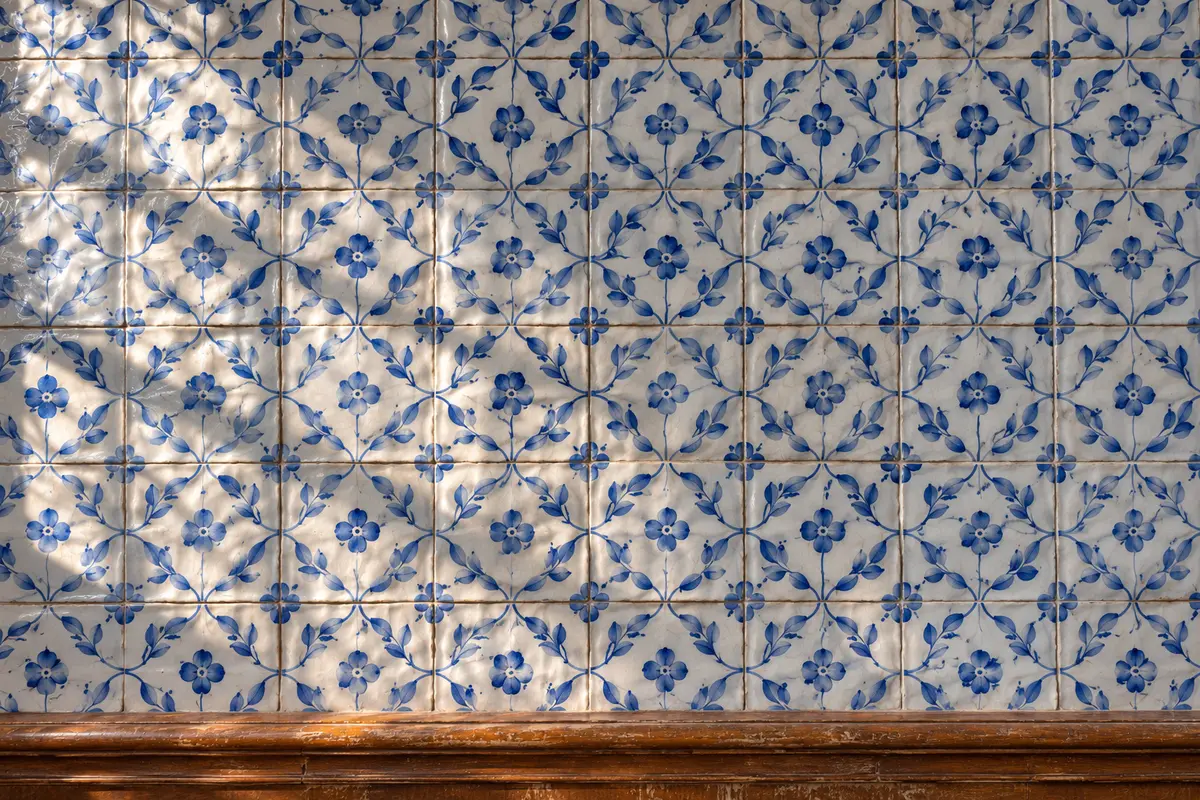
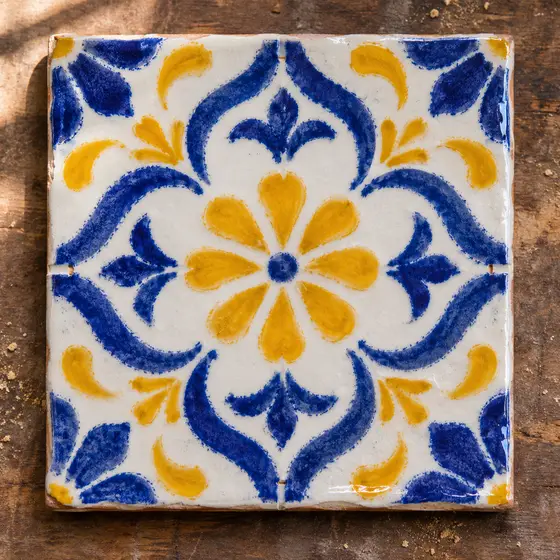
After the 1755 earthquake, the rebuilding of Lisbon brought the sober, functional Pombaline tile: repeated patterns that were cheap and quick to apply.
After the earthquake of 1755, Portuguese sources say, the unexpected need to rebuild Lisbon brought back the pattern azulejo. As a low-cost material it could be applied quickly and made the buildings more attractive. Small register panels with patron saints, protection against natural disasters, appeared on façades, and door and window friezes already carried a neoclassical taste, more rational and almost without decoration. The type is called Pombaline after the Marquis of Pombal, in charge of the reconstruction.
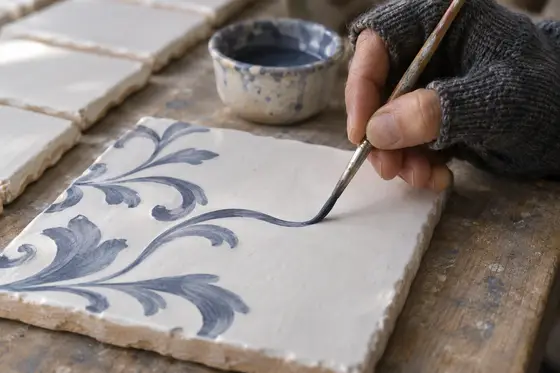
The makers are named in both sources. Sant'Anna, founded in 1741, played an important role in rebuilding Lisbon and still works entirely by hand. English Wikipedia names the Real Fábrica de Louça do Rato, with the master designer Sebastião Inácio de Almeida and the painter Francisco de Paula e Oliveira, which became an important maker of the characteristic Rato tiles when Neoclassical designs with more subdued colours appeared, introduced into Portugal by the engravings of Robert and James Adam. Francisco Jorge da Costa was another tile painter of the period.
Source: pt.wikipedia.org, en.wikipedia.org
Read about it: After the earthquake: a royal factory and the pattern tile →
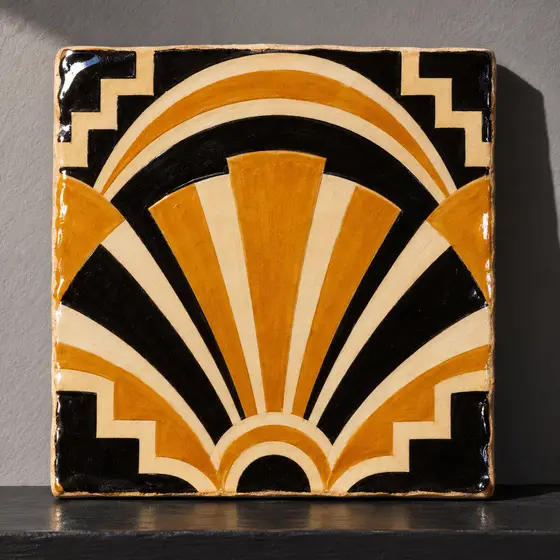
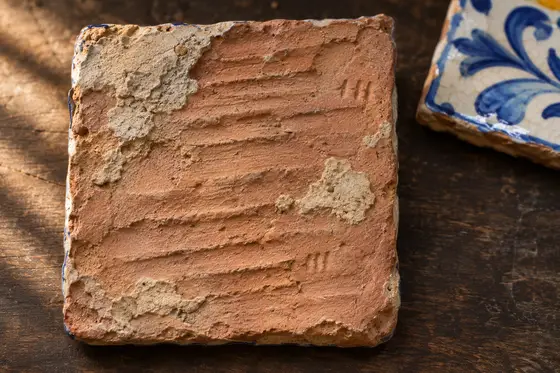
AI-generated illustration in the manner of the tradition, not a photograph of a specific object.