I Tile types and patterns · Plate 028
18th-century floral tile
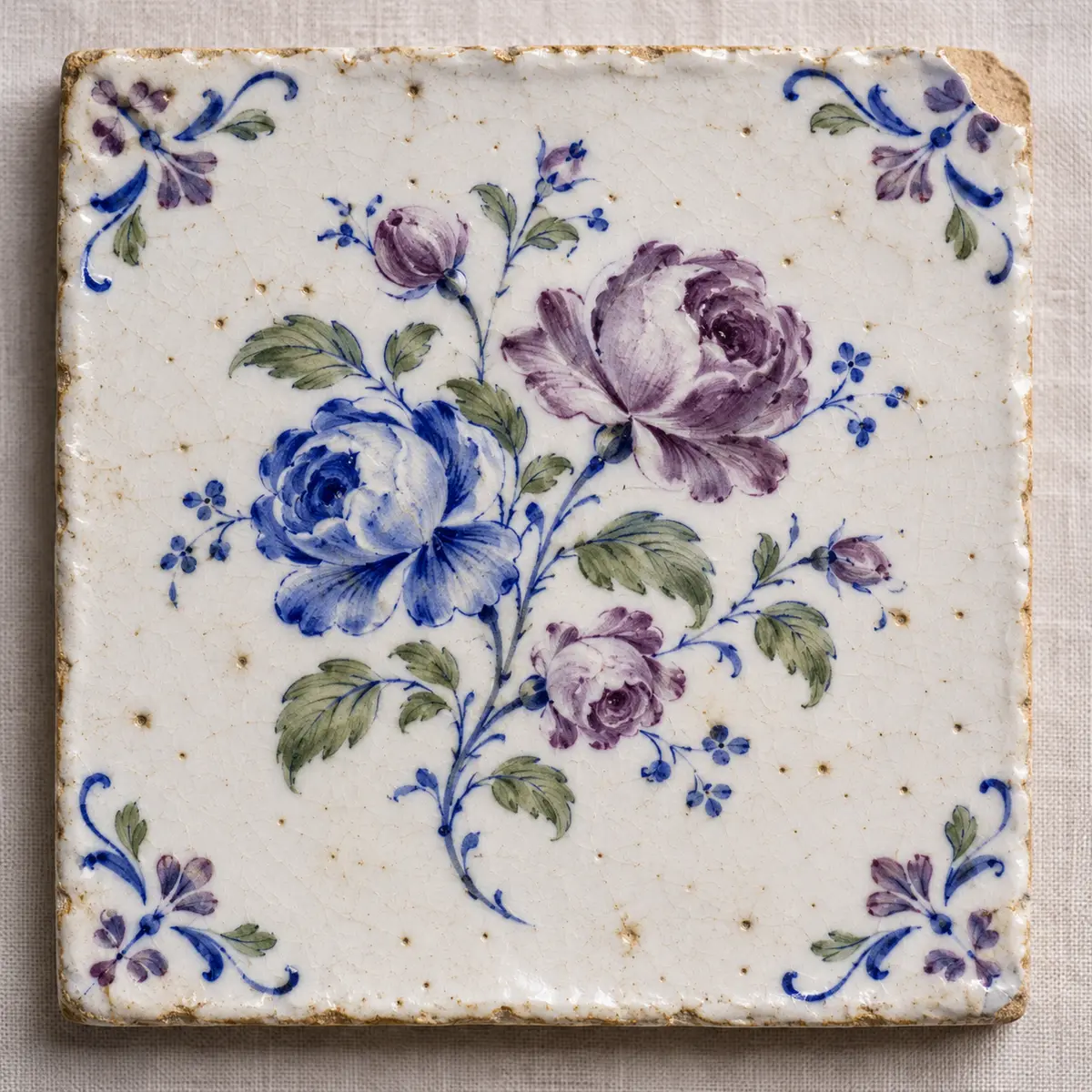
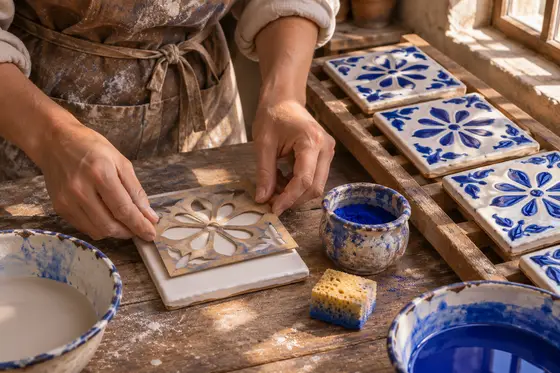
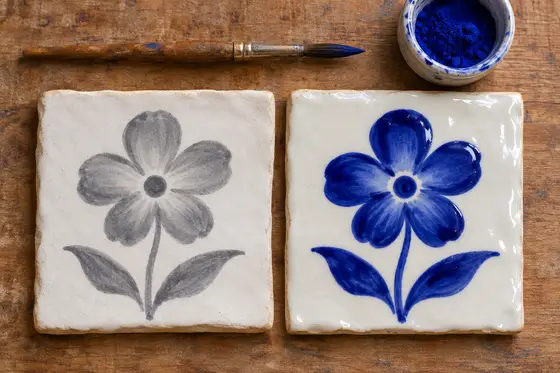
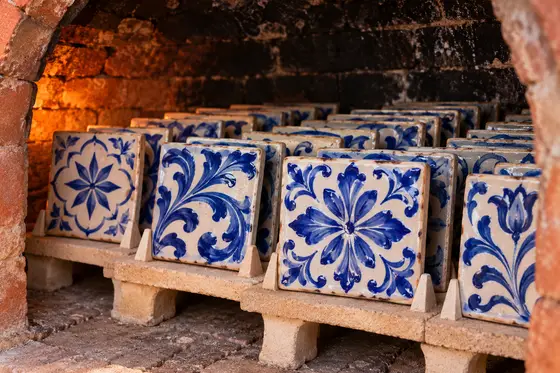
Some 18th-century pattern tiles repeat a sprig or bouquet of flowers on each piece. This illustration evokes that floral taste without copying a specific tile.
Floral sprigs fit the Rococo taste that reached tiles around the middle of the 18th century. Portuguese sources say polychromy returned, at first in yellow, green and violet, with later central scenes in violet only, and that ornaments based on shell books by Gideon Saint became lighter and more graceful. Frames lost much of their volume, and asymmetry took hold in flower and leaf motifs. English Wikipedia says mass-produced tiles of the time acquired a more stereotyped design, with polychrome irregular shell motifs.
The subjects of Rococo tile were as light as the ornament. Portuguese sources say Watteau's engravings dictated the themes of gallant, bucolic and idyllic scenes, which fit gardens perfectly. English Wikipedia gives fine examples in the façade and gardens of the Mesquitela palace in Carnide, Lisbon, and in the Corredor das Mangas at the Queluz National Palace. It adds that the taste moved, in the 1740s, from monumental narrative panels to smaller and more delicately executed ones, and that François Lemoyne's work was an influence on tile designs.
This is a general description, not confirmed to a single source.
Source: pt.wikipedia.org, en.wikipedia.org
AI-generated illustration in the manner of the tradition, not a photograph of a specific object.