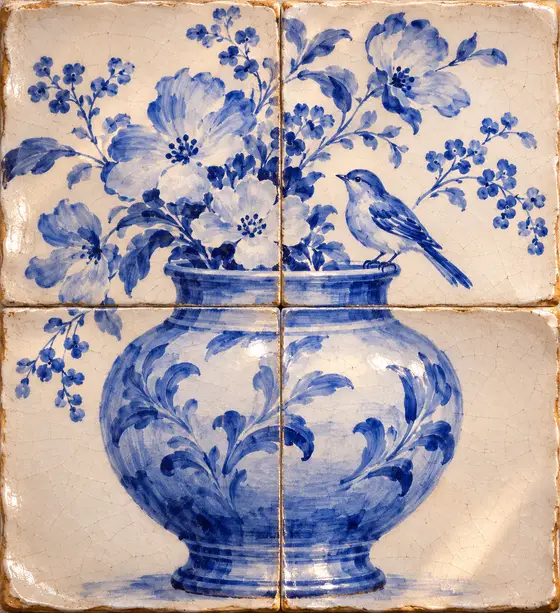
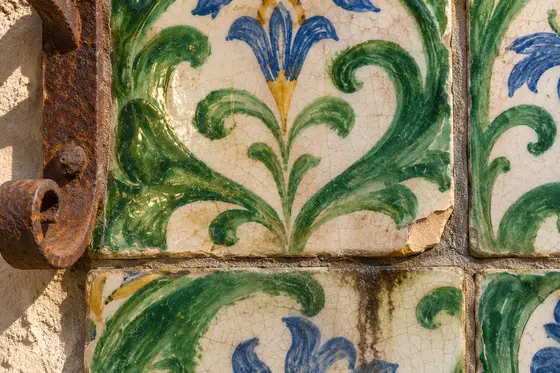
I Tile types and patterns · Plate 049
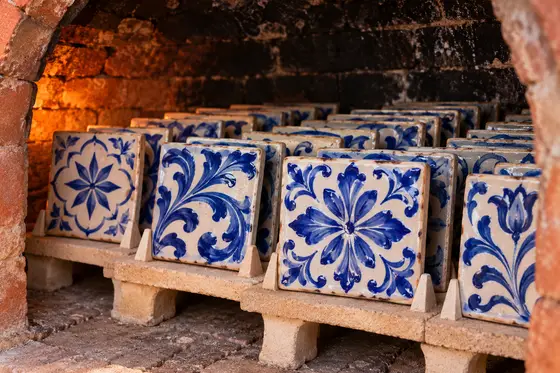
Unfired and fired side by side
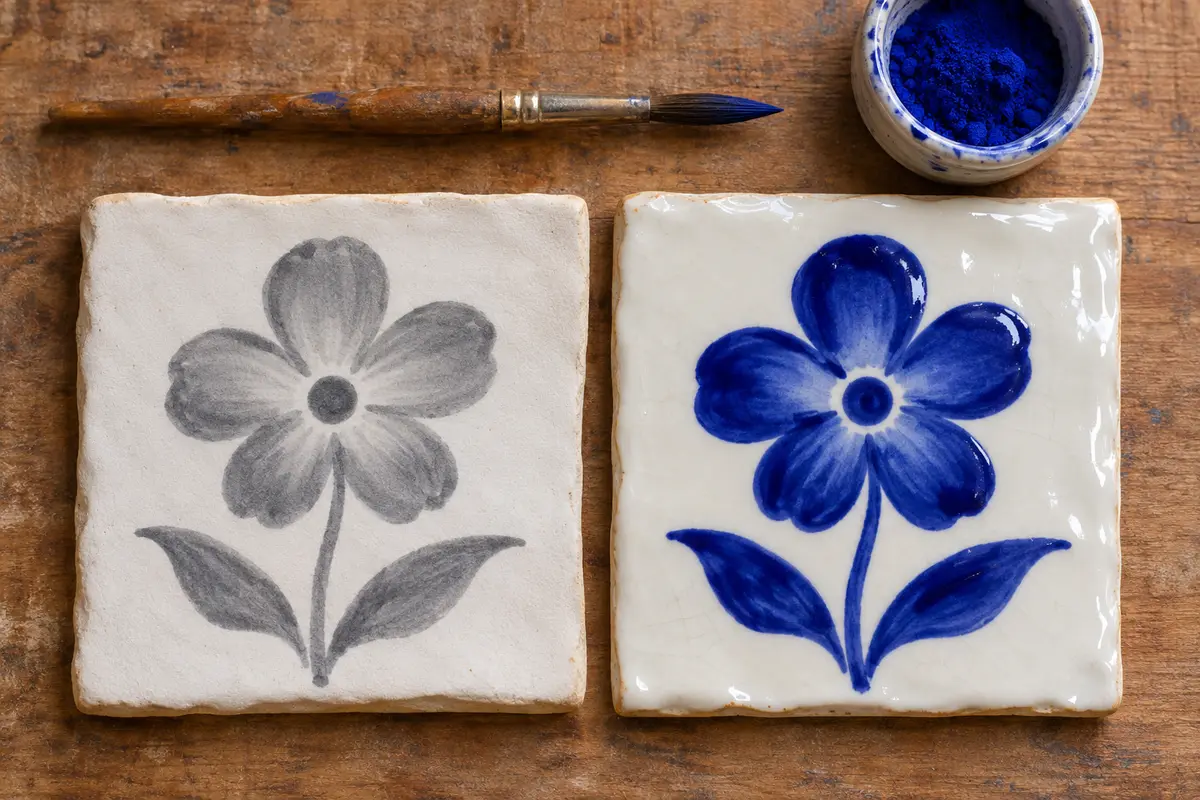
Pigments painted on raw glaze look dull and only show their final colour after firing, so painters must foresee the result.
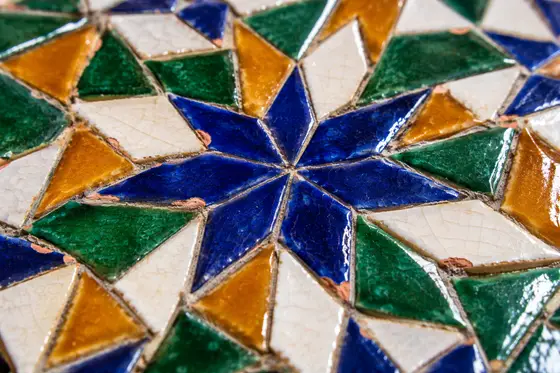
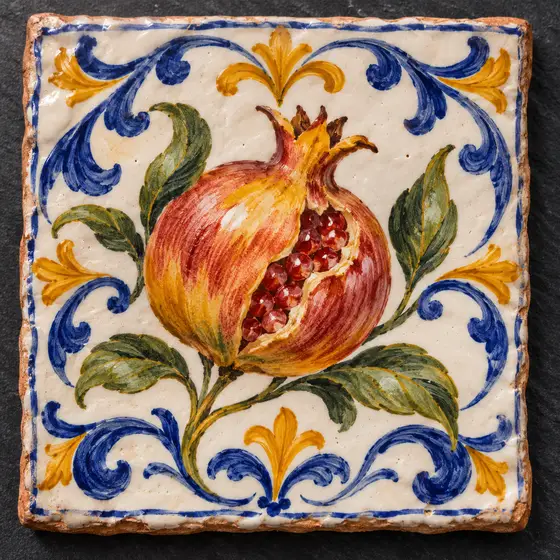
Maiolica, developed in Italy in the mid-16th century, let ceramicists paint directly on the glaze, which Aramco World calls a much faster and cheaper way of making tiles than the older moulded and cut ones. Portuguese Wikipedia explains the catch: in majolica the glaze vitrifies in the second firing, and the colours are revealed only after it. The pigments named there are cobalt for blue, bronze for green, manganese for brown, antimony for yellow and iron for red, the last rarely used early on.
A study of 17th-century tiles by LNEC found a palette far wider than blue alone: blues, yellows, oranges, greens, purple, browns and a quasi-black for the contours. Its authors noticed layering in the yellow and doubted whether it meant the tile had been fired again, so they planned to test whether the effect could be reproduced in a single firing. The V&A's description of tin-glazed tiles gives the sequence that frames all this: a first biscuit firing, a glaze, then decoration in coloured pigment and a second firing.
Source: pt.wikipedia.org, aramcoworld.com, repositorio.lnec.pt, collections.vam.ac.uk
AI-generated illustration in the manner of the tradition, not a photograph of a specific object.