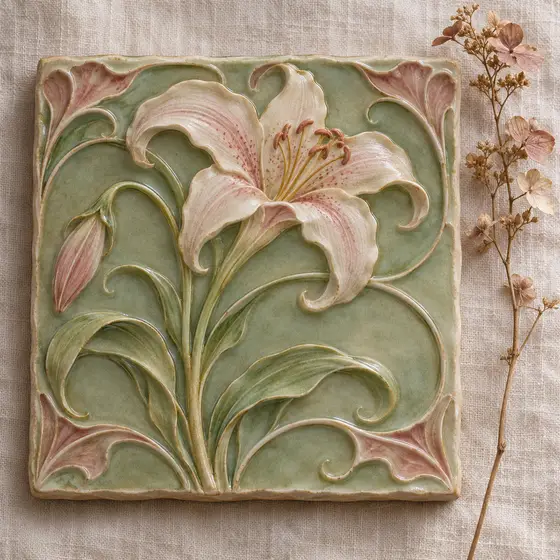
I Tile types and patterns · Plate 003
Alicatado cut-piece detail
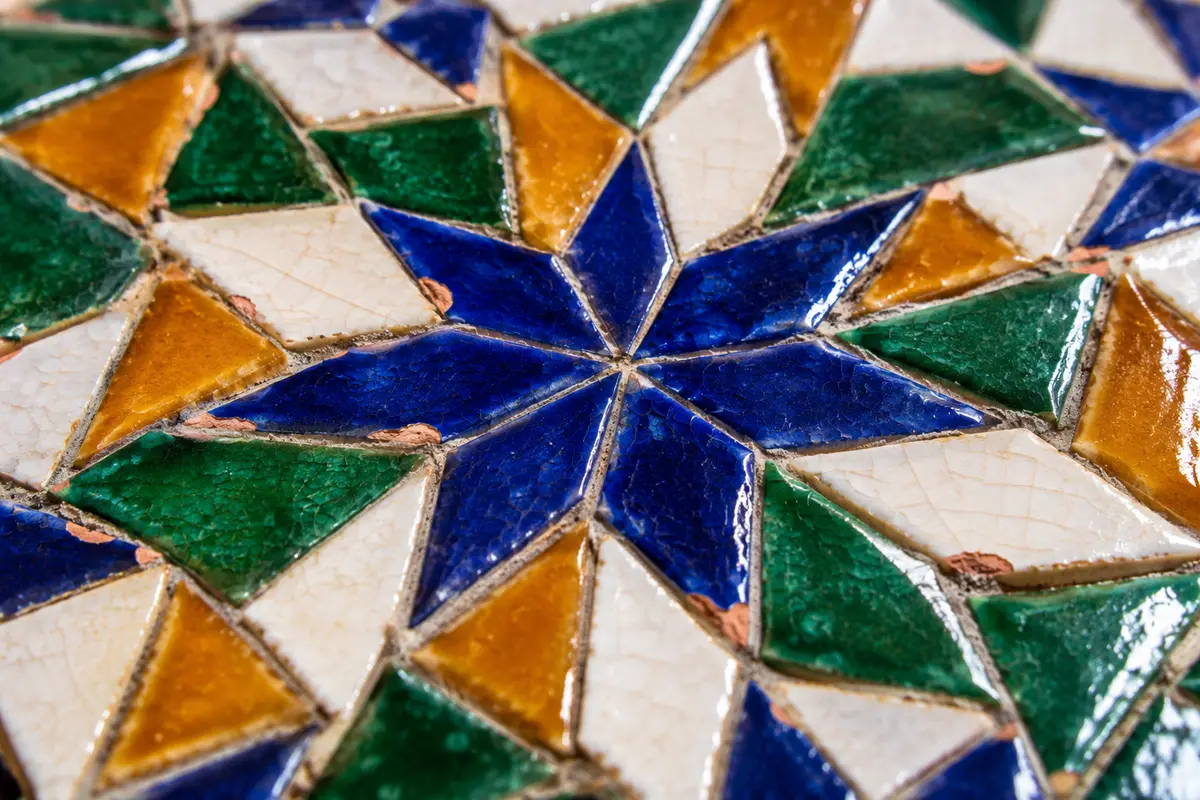
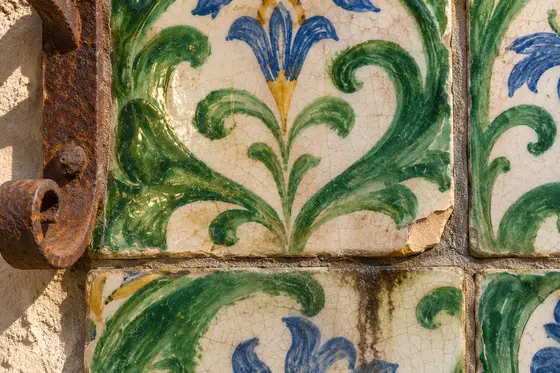
Seen close up, each alicatado piece carries a single colour of glaze and is cut to fit its shape, set tight against its neighbours as in a mosaic.
The vocabulary explains the craft. In Portuguese, alicatado is built from alicers, also called tacelos: small pieces of a single glaze colour cut with the help of a turquez. The name is slightly misleading, since no alicates (pliers) are involved. The Spanish and English forms come from the Arabic qata'a, meaning to cut. The word azulejo itself comes from Arabic al-zillij, 'polished stone', because the original idea was to imitate Byzantine and Roman mosaics; it has no direct link to the word azul.
English Wikipedia notes that demand for Mudéjar-style decoration grew beyond what tile mosaic workshops could supply, because every piece had to be cut and fitted by hand. The pressure to find new methods led, towards the late 15th and early 16th centuries, to the moulded cuenca or arista tile of Seville, which was similar to the older cuerda seca but more efficient for mass production. Portuguese sources describe the same slow labour as the reason alicatado fell out of use. Seen close up, a surviving panel is a record of hours of patient cutting.
Source: en.wikipedia.org, pt.wikipedia.org
AI-generated illustration in the manner of the tradition, not a photograph of a specific object.