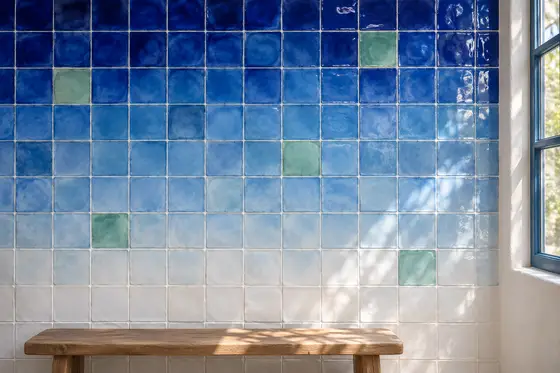
I Tile types and patterns · Plate 004
Corda seca tile
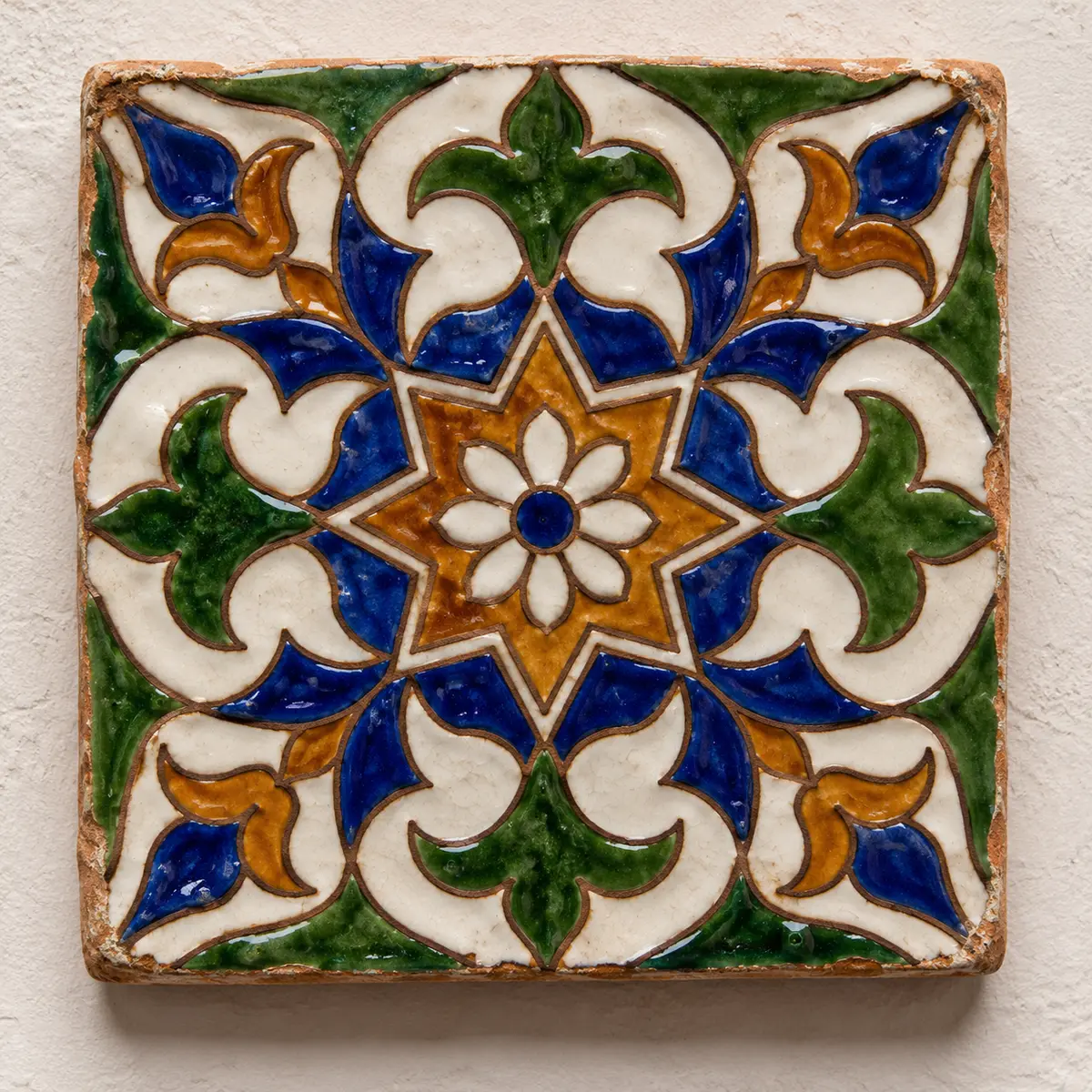
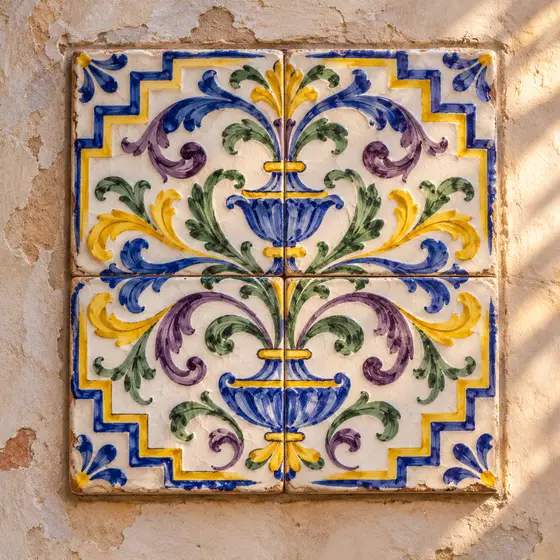
In corda seca, a line containing a fatty substance and manganese, drawn before firing, keeps the glazes of different colours from running together, leaving a dark line between them.
Corda seca, Spanish cuerda seca, means 'dry cord'. Portuguese sources date its use here to the end of the 15th and the start of the 16th century and describe it like this: the motifs are grooved into the still-damp clay with a cord soaked in linseed oil and manganese oxide, so that the enamels do not mix during painting and the second firing. The cord leaves a dark line behind. It is a different idea from alicatado: one tile holds several colours, and the line does the work of the cut.
The Victoria and Albert Museum describes the method slightly differently: a wax line drawn on the surface acted as a resist outline, and coloured glazes were applied into the spaces between. Its purpose was to stop the colours running into each other, although sometimes they did, because the line melted away in the firing. Both accounts agree on the principle. In Portugal the technique appears at the Sintra National Palace, where a reinforcing use of corda seca, combined with aresta, is recorded in several rooms.
Source: pt.wikipedia.org, collections.vam.ac.uk, en.wikipedia.org
Read about it: From alicatado to azulejo: how Moorish tilework reached Portugal →
AI-generated illustration in the manner of the tradition, not a photograph of a specific object.