I Tile types and patterns · Plate 025
Grande Produção panel
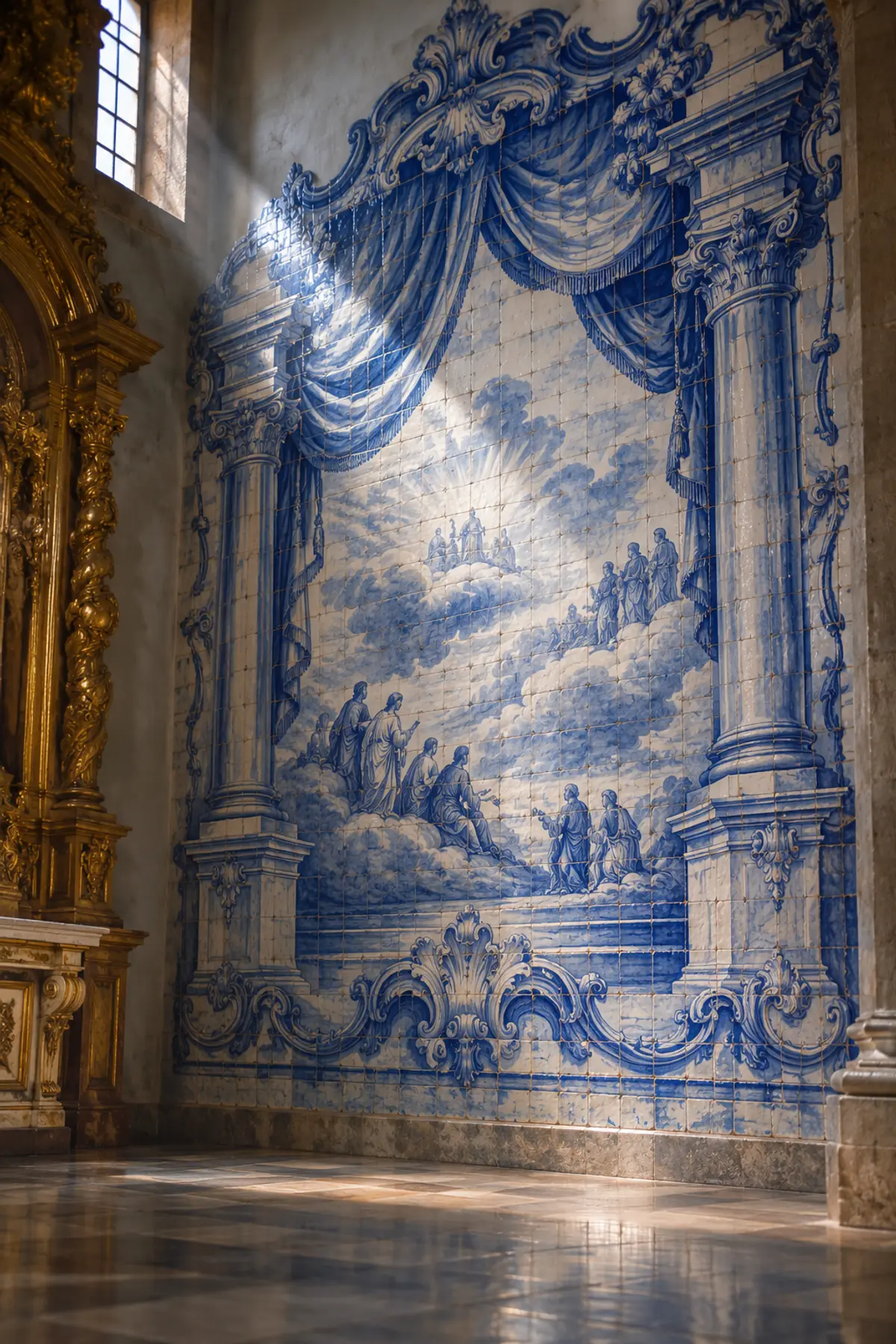
The Grande Produção names the great cycles of historiated panels with baroque frames, which peaked in the 18th century under King João V.
Portuguese sources tie the Grande Produção to money. The wealth of João V's reign, drawn from Brazil's gold and diamond mines, allowed an unprecedented rise in tile production and the largest cycles of historiated panels. Orders came from Brazil as well. The aesthetic is baroque and theatrical, with scenes that are bucolic, mythological, religious (biblical and Marian), hunting scenes, scenes of court life and allegories, and with frames so exuberant that they can weigh almost as much as the scene.
The roteiro in Portuguese Wikipedia names places for the Grande Produção: the Convento de São Vicente de Fora, the church of São Lourenço in Azeitão, the Palácio da Mitra at Santo Antão do Tojal and the Quinta de Manique at Alcabideche. Painters active until the 1755 earthquake include Nicolau de Freitas, Teotónio dos Santos, Valentim de Almeida and Bartolomeu Antunes. In churches the tile reaches over every surface, ceilings and vaults included, and complements the gilded woodcarving of the Portuguese baroque.
Source: pt.wikipedia.org, en.wikipedia.org
Read about it: Why Portuguese tiles turned blue and white →
AI-generated illustration in the manner of the tradition, not a photograph of a specific object.